Where Do Grasshoppers Live? Grasslands to Deserts
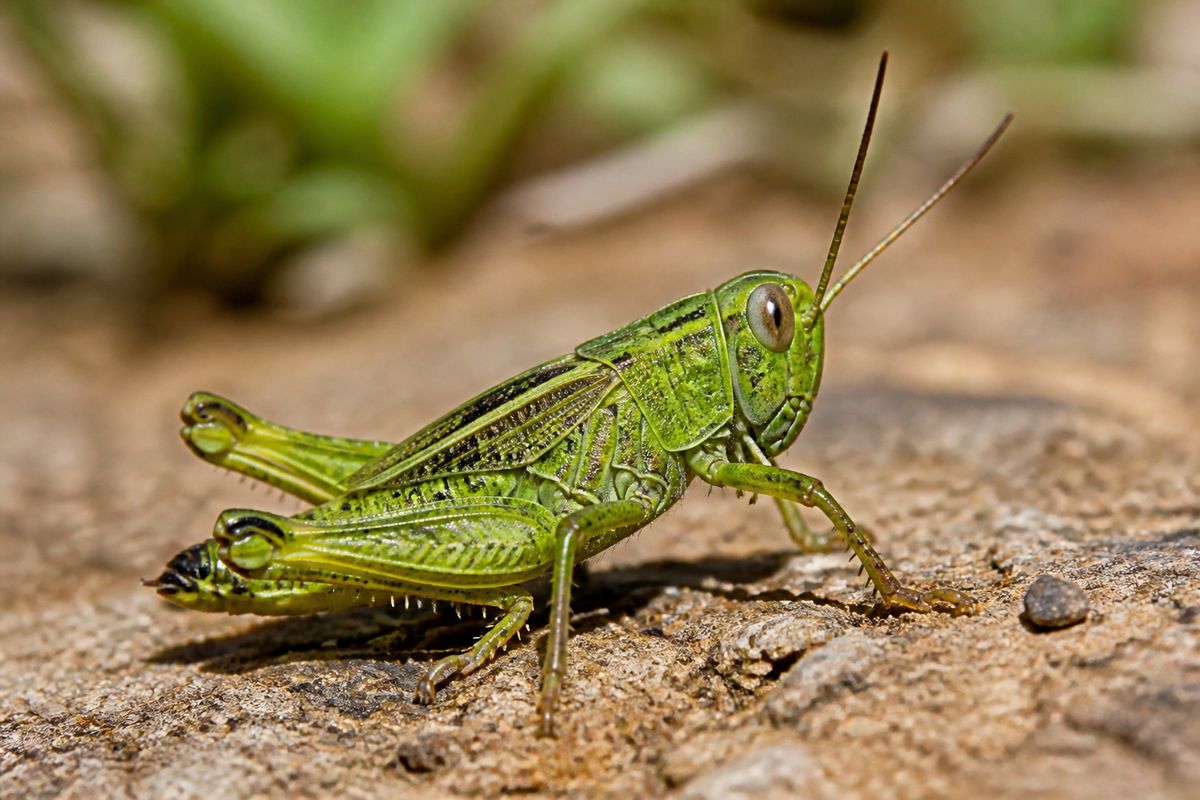
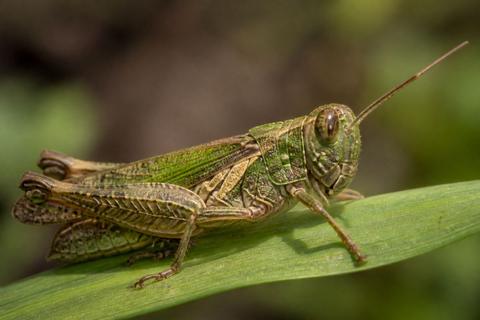
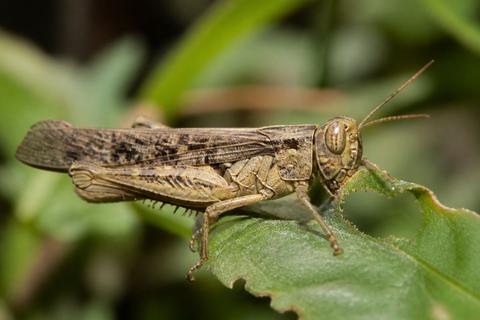
Where do grasshoppers live? Almost everywhere there's open vegetation. Grasshoppers occupy grasslands, farm fields, forest edges, deserts, and even wetlands, with the specific habitat depending on the species. More than 10,000 grasshopper species have been classified worldwide, and each has settled into the terrain, plants, and climate that fit its body and diet.
What Counts as a Grasshopper
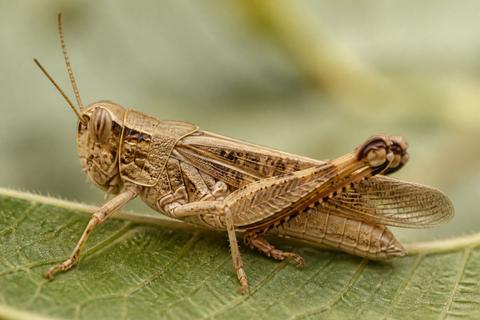
Grasshoppers make up the suborder Caelifera, in the order Orthoptera alongside crickets and katydids. They're built for jumping: enlarged hind femurs power leaps many times their own body length, and most species also fly on a second pair of hardened forewings. Many produce sound by rubbing a hind leg against a wing vein, a method called stridulation, rather than by rubbing wings together as crickets do.
Grassland and Prairie
Grasslands are the default grasshopper habitat. Open ground with continuous grass cover gives them both food and a place to lay eggs, since most species deposit egg pods a few centimeters into bare or sparsely vegetated soil. In North America this means tallgrass and shortgrass prairie; in Africa and South America it means savanna. Grass species diversity within a site tends to support more grasshopper species, since many are picky about which grasses or forbs they'll eat.
Farm Fields and Pastures
Row crops and hayfields function as artificial grasslands, and grasshoppers move into them readily. Wheat, alfalfa, and soybean fields can host large numbers during outbreak years, and the University of Wyoming's field guide notes that the migratory grasshopper, Melanoplus sanguinipes, has adapted especially well to disturbed agricultural land, including weedy rangeland, plowed sandy soil, and abandoned cropland. Because a single female can lay several egg pods per season, populations in farmland can build quickly enough to strip a field's edge in a matter of days. Growers manage this with crop rotation, field-margin mowing, and timed insecticide application while nymphs are still small and concentrated.
Forest Edges and Clearings
Grasshoppers thin out inside closed-canopy forest, where shade limits grass and forb growth, but they're common along the edge where sunlight reaches the ground. Clearings, trail margins, and recently logged patches fill in with the same low vegetation grasshoppers rely on elsewhere, which is why edge habitat often holds a different mix of species than the open field or prairie nearby.
Deserts and Arid Scrub
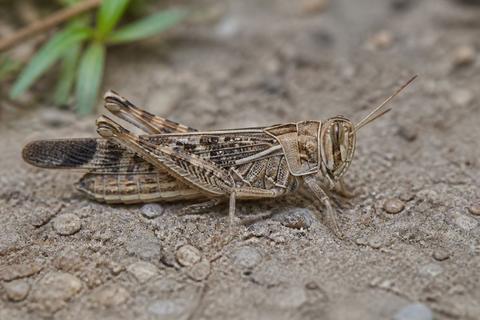
Several grasshopper groups live in true desert, not just its margins. Band-winged grasshoppers and other arid-adapted species tolerate high daytime heat and go dormant, or reduce activity, during the driest stretches. Their close relative the desert locust, Schistocerca gregaria, shows how far this adaptation can go: the Food and Agriculture Organization notes it prefers semi-arid to arid land and lays eggs in moist sandy soil, with rainfall driving its survival and reproduction across roughly 16 million square kilometers of Africa, the Near East, and South-West Asia during quiet periods. When rain triggers a population boom, solitary desert locusts shift into a gregarious phase and form the swarms the region is known for.
Wetlands and Marsh Edges
A smaller number of species live in consistently moist ground, along marsh borders, irrigation ditches, and riverbanks where sedges and moisture-tolerant grasses grow. Most grasshoppers avoid standing water and saturated soil, since it interferes with egg-laying, so wetland species tend to stick to the drier fringe rather than the wet interior.
Range by Continent
North America
Grasshoppers occur across the continent but are most abundant in the western interior, where prairie and rangeland dominate. The migratory grasshopper ranges through most of the continental US and Canada, though it's largely absent from the Atlantic and Gulf coasts.
South America
Species here split between Amazon rainforest specialists and open-country grasshoppers of the Cerrado and Pampas grasslands, with little overlap between the two groups.
Europe
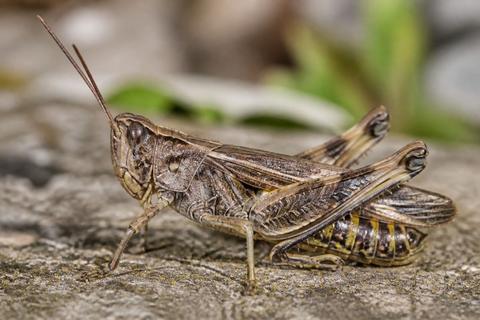
The common field grasshopper, Chorthippus parallelus, is typical of European meadows and pasture. Populations are generally stable, helped by habitat protections in several countries, though intensive farming has reduced numbers locally.
Asia
Climate here ranges from Central Asian desert to Southeast Asian subtropics, and grasshopper communities track that split: arid-adapted species in the west, and species tied to rice paddies and monsoon vegetation further east and south.
Africa
Africa holds both ordinary grassland grasshoppers and the desert locust described above. Savanna and bushveld support the bulk of species diversity, while a smaller set of specialists handle the Sahara's margins and the arid Horn of Africa.
What Actually Determines Habitat
Temperature and Rainfall
Grasshoppers are cold-blooded, so temperature sets their activity level directly; most species need warm days to feed and develop. Rainfall matters just as much on the other end, since drought stress in vegetation can concentrate sugars in plant tissue and, in some documented outbreaks, make grasshoppers develop faster and survive better.
Vegetation
Grasses cover the baseline diet for most species, but flowering forbs add protein and other nutrients that affect egg production. A site with only one or two plant species usually supports fewer grasshopper species than one with a mixed grass-and-forb community.
Land Use
Converting grassland to row crops, pavement, or subdivisions removes egg-laying ground and forage in one step. Some species tolerate the change and move into field margins or vacant lots; others decline sharply once continuous grassland is broken into small, isolated patches.
Why Habitat Mapping Matters
Knowing where grasshoppers live isn't just academic. Farmers use it to time scouting and treatment before nymphs mature and disperse, and it explains outbreak patterns that otherwise look random, since a wet spring after a dry year is a known setup for population spikes in several North American species. For anyone watching a backyard or a field edge, the pattern holds everywhere grasshoppers are found: more open ground, more sun, and more grass cover means more grasshoppers.