Peppermint Oil for Garden Plants: Protecting Plants from Pests
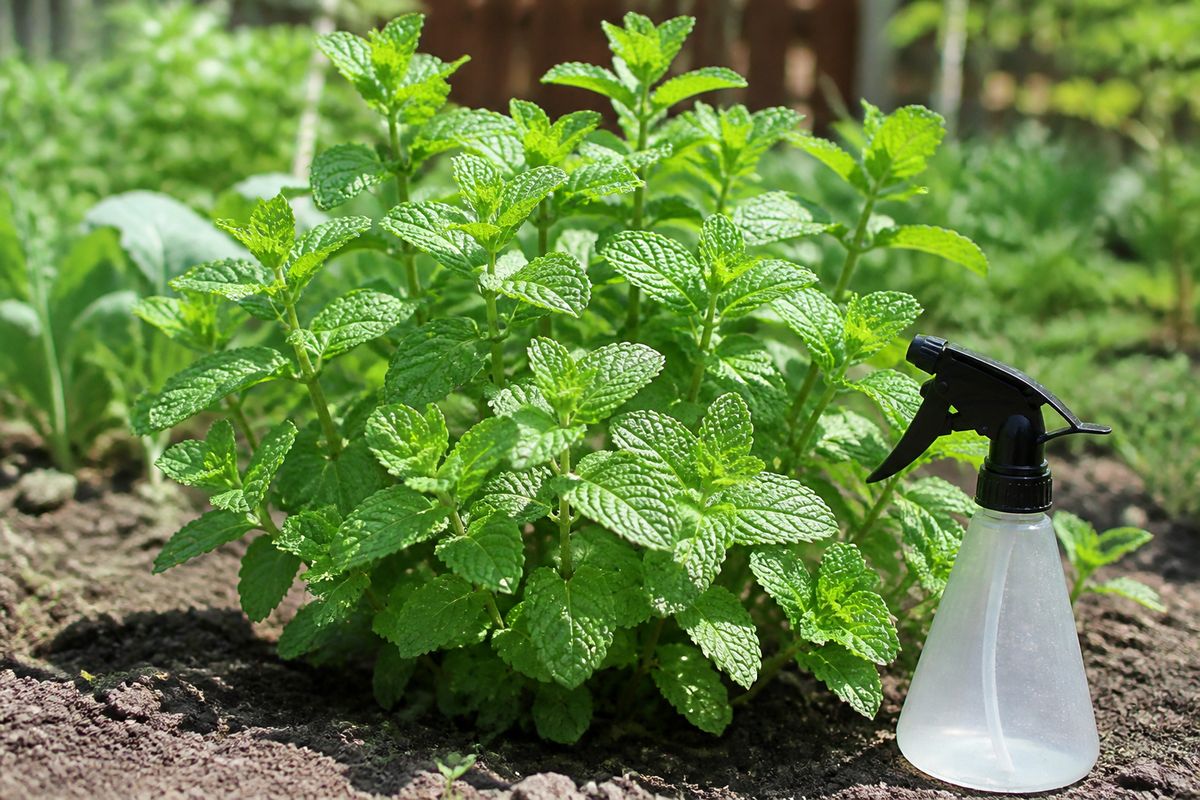
If you are seeing leaf damage, sticky residue, or pests clustering on your favorite plants, peppermint oil for garden plants is one of the milder tools you can reach for while you deal with the real cause. It will not clear an infestation on its own. At usable garden dilutions, peppermint oil is a short-lived scent deterrent, not a pesticide, and it needs frequent reapplication to do anything at all. Used carefully and reapplied on a schedule, it can reduce how many new pests settle on treated leaves. Used the wrong way, strong mixes and bad timing can scorch the foliage you're trying to protect.
For more help, see our Homemade Peppermint Pest Repellent Spray (DIY Recipe) guide.
What Peppermint Oil Can and Cannot Do in the Garden
How peppermint oil affects common garden pests
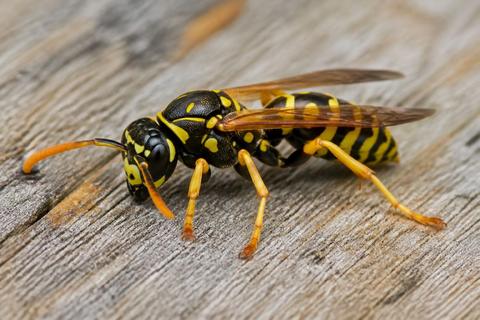
Peppermint oil's strong menthol smell disrupts how some pests find food and navigate to a plant, so it can help discourage aphids, whiteflies, and ants from settling in a treated area. Lab research on peppermint oil against pea aphids and other pests describes it as a promising biorepellent, not a stand-in for an insecticide, and results vary a lot by pest species, life stage, and concentration: older larvae of some chewing pests showed real resistance even to concentrated doses in controlled tests (Kolodziejczyk-Czepas et al., 2023). At the dilute strength safe for garden foliage, do not expect peppermint oil to kill pests on contact. It is a "keep them moving" tool, not a cure.
- Treat the plants you are protecting, plus the nearby flight paths (paths, bed edges, and the base of walls).
- Spray when foliage can dry slowly, not when pests are actively laying and feeding.
- Reapply on a schedule, since the scent fades as the oil evaporates.
Why it works as a short-term deterrent, not a cure
Peppermint oil is volatile, meaning it evaporates fast. It does not leave a lasting chemical barrier across a bed the way a residual pesticide would; it changes pest behavior for a few days at most, then needs to be reapplied. If pests are already established deep in curled leaves, tight stems, or rolled foliage, a surface scent cannot reach them. Use peppermint oil to slow new arrivals, and remove what is already there by other means.
- Start with sanitation: remove heavily infested leaves and wipe off sticky residue when you can.
- Spray both sides of accessible leaves and the stems where pests land.
- Pair with direct control (hand removal, hose spray, or a targeted treatment) once populations are rising, since the spray alone will not stop an active outbreak.
When peppermint oil is not the right solution
Peppermint oil is the wrong choice for widespread damage that needs immediate control, or for pests that are physically protected from a leaf spray. Caterpillars inside rolled leaves, borers inside stems, and soil-dwelling pests are essentially unreachable with a surface application. It is also a poor fit in hot sun, drought stress, or right before a pollinator-heavy day: heat and moisture stress raise the risk of leaf burn, and the same oil that deters pests can affect visiting bees and other beneficial insects.
- Skip peppermint oil if leaves are already scorched or plants are wilting in heat.
- Choose a different method for pests sealed inside stored goods or enclosed grow areas.
- Use a targeted treatment when you see eggs or larvae inside protected plant tissue.
Is Peppermint Oil Safe for Plants?
Signs a plant is reacting badly to spray
Peppermint oil can injure plants when the mix is too strong, poorly diluted, or applied while the plant is already stressed. Watch for crisping leaf edges, yellowing between veins, spreading dark patches, and leaf curl that shows up within 24 to 48 hours of spraying. Essential oils in general are known to cause this kind of phytotoxicity (growth reduction, chlorosis, and leaf scorch) by damaging cell membranes and chlorophyll in the leaf. Plants that are dry, heat-stressed, or recently fertilized take up more oil and show damage faster.
- Stop spraying immediately if you notice leaf burn, blistering, or rapid curling.
- Rinse the plant with a gentle stream of clean water if symptoms start soon after application.
- Wait several days before any new treatment, and test on one small area first next time.
How dilution and timing reduce leaf damage
The goal is a mix strong enough to carry a deterrent scent but too dilute to burn foliage. Use 10 to 15 drops of 100% pure peppermint essential oil (Mentha piperita) per 1 cup (240 ml) of water, plus about 1/8 teaspoon of dish soap to emulsify the oil so it disperses instead of sitting in streaks on the leaf. Spray when temperatures are below 85°F (29°C) and skies aren't overcast or humid, since heat above roughly 85°F and slow-drying conditions are two of the biggest risk factors for oil and soap-based leaf damage, according to University of Maryland Extension's plant phytotoxicity guidance (UMD Extension). Stop spraying at least a few hours before dusk so leaves dry fully instead of sitting wet overnight.
- Mix in a clean spray bottle and shake well right before each use.
- Spray lightly, to the point of coverage, not runoff.
- Avoid spraying in bright sun or on drought-stressed plants.
Plants and conditions that need extra caution
Some plants tolerate oils and strong scents worse than others, especially anything with fine, thin leaves or plants already under stress. Be extra cautious with seedlings, freshly set transplants, and soft-leaved herbs. Roses, peppers, and young brassicas are also worth watching during heat waves, since oil can concentrate on waxy or textured leaf surfaces and add to existing stress.
- Do not spray newly emerged seedlings until they are established and hardy.
- Avoid spraying right after pruning, since fresh cuts absorb more.
- Skip spraying in high wind or high humidity, when drift or slow drying raise the risk.
How to Use Peppermint Oil for Garden Plants
Mixing a simple spray for leaves and stems
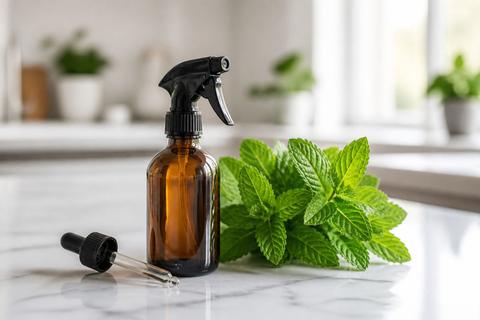
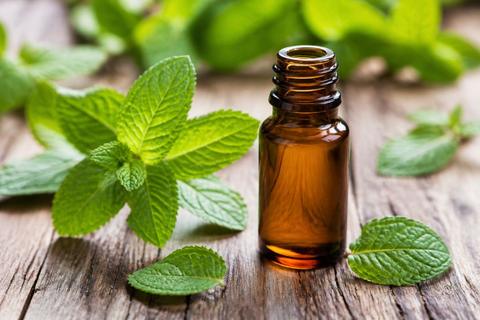
Use a consistent recipe so the concentration stays predictable from batch to batch. Use peppermint essential oil, not peppermint extract or mint flavoring; extracts are usually diluted in alcohol with very little active oil and will not produce a comparable scent barrier. Mix 10 to 15 drops of 100% pure peppermint essential oil per 1 cup of water, add the dish soap, then shake until the mixture looks uniform rather than oily streaks on top.
- Add 1 cup water to a spray bottle.
- Add 10 to 15 drops peppermint essential oil.
- Add about 1/8 teaspoon dish soap.
- Cap and shake, then shake again right before spraying.
Where to spray for the best pest control
Placement matters more than volume. Spray where pests land and travel first: leaf undersides, stems, and the soil line at the plant's base. For yard pests like ants, run a thin band along the base of walls, bed borders, and known entry points instead of soaking the whole area. Avoid blanketing an entire lawn or bed; concentrate the spray where you're actually seeing activity.
- Spray leaf undersides, stems, and the top of the crown area.
- Treat bed edges, nearby pathways, and the first foot (30 cm) around problem plants.
- For ants, spray along trail origin points, window sills, and door thresholds.
How often to reapply after rain or watering
Peppermint scent fades fast as the oil evaporates, and rain washes off whatever residue remains, so this is not a "spray once and forget it" product. Reapply every 2 to 3 days during active pest season under normal dry conditions, and reset the clock after any heavy rain, overhead watering, or sprinkler spray that reaches the foliage. If pests keep showing up between applications, shorten the interval to daily until activity drops, then taper back to roughly once a week for maintenance.
- Reapply every 2 to 3 days in dry weather.
- Reapply right after rain or sprinkler watering.
- Once activity drops, switch to a maintenance interval of about once per week.
Peppermint Pest Control for the Garden and Yard
Using peppermint oil around beds, borders, and pathways
A border spray creates a buffer strip that encourages pests to move on rather than cross into the bed. Use the same diluted recipe and spray a narrow band along the outside edge of beds and pathways near the plants, keeping it low and targeted rather than spraying overhead. This can help reduce ants that patrol bed borders to farm aphids for honeydew, though the effect fades within days and needs upkeep.
- Spray a 6 to 12 inch (15 to 30 cm) strip along bed edges.
- Focus on corners, dense plant clusters, and spots where pests keep returning.
- Reapply after rain, since border sprays lose their scent quickly outdoors.
Treating entry points where pests move in
Pests tend to travel predictable routes: along foundations, under steps, around vents, and through doorways. Treat those entry points lightly to discourage movement without oversaturating the area. For ants, run a thin line along the trail and threshold areas where they seem to originate. For flying pests that hover near plants, spray nearby resting surfaces like trellis rails and the undersides of fence rails.
- Identify where pests appear first, then treat that spot before spraying the whole garden.
- Spray along door thresholds, window sills, exterior baseboards, and vent areas.
- Mix fresh and shake well before each use, since the oil separates from water quickly.
Using peppermint spray safely near pets and pollinators
Peppermint oil is strong enough that safety is part of the method, not an afterthought. Keep pets off freshly sprayed surfaces until the leaves dry and the scent settles. Avoid spraying open flowers while pollinators are actively working them, since the oil's odor and residue can interfere with foraging. If bees are active on the plant, spray in the late afternoon when activity drops, and aim for foliage and pest entry points rather than blooms.
- Keep pets indoors or away from the area until the spray has fully dried.
- Avoid spraying while bees are actively foraging on flowers.
- Store essential oil out of reach of children and pets, and wear gloves when mixing.
Peppermint Oil for Plant Pests: Best Practices and Limits
Which pests are most likely to be deterred
Peppermint oil works best against pests that respond to smell and sit exposed on the leaf surface. Aphids and whiteflies may settle less when the spray is applied to the leaf areas they land on, and ants can be discouraged from running trails into beds, which indirectly helps because ants protect and spread aphids. For chewing insects, effects are inconsistent: peppermint oil is genuinely toxic to some pests at higher, non-garden-safe concentrations in lab tests, but the same research found it can also harm beneficial predators like ladybug larvae at those higher concentrations, and resistance increases with the pest's life stage (PMC, 2023). At the diluted strength that's safe for garden foliage, treat any pest reduction as a mild side effect of the deterrent, not a kill.
- Use it as a deterrent for aphids, whiteflies, and ants by spraying landing zones and bed borders.
- Apply early in the season, before populations build up.
- Expect slow, behavior-based results, not a quick kill.
When to pair sprays with other garden controls
Peppermint oil is most useful as one part of a plan, not the whole plan. Combine it with steps that remove what the spray can't reach: pruning out infested shoots, blasting aphids off with a hose, or using insecticidal soap for direct contact control. If outbreaks keep coming back, look at the underlying causes too, like over-fertilizing (which produces soft, pest-attracting growth) and poor air circulation (which stresses plants and invites pests).
- Remove the worst-affected leaves first, then use peppermint oil to reduce new landings.
- Combine mechanical control (hand removal, hose spray) with peppermint deterrence.
- Adjust watering and fertilizing so plants aren't under constant stress.
How to avoid overstressing young or tender plants
Young plants have thinner leaf tissue and less resilience, so oil stress shows up sooner. Seedlings, fresh transplants, and soft-leaved herbs need a lighter dilution and a more cautious schedule. Use the lower end of the range (10 drops per cup) for sensitive plants, and spot-test one leaf or one plant before treating an entire bed.
- Use 10 drops per cup for seedlings and tender foliage; save 15 drops for mature, hardier plants.
- Spray during mild temperatures, keep the mix light, and avoid runoff.
- Pause peppermint oil at the first sign of leaf burn and switch to a gentler control method.
Peppermint Plants, Spearmint, and Mint That Takes Over
Choosing peppermint or spearmint for your garden
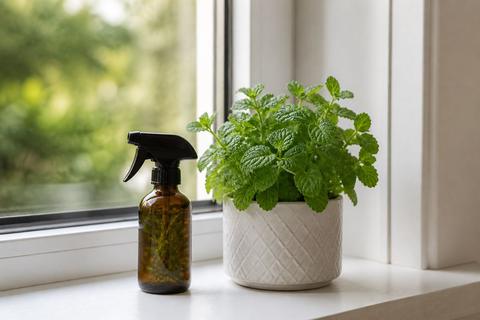
Peppermint and spearmint are both mint-family plants, but they don't behave identically. Peppermint spreads aggressively through underground runners and will take over a bed if left unmanaged; spearmint spreads too and still needs containment. Growing either one near the garden does not substitute for spraying, since the living plant's scent is much fainter than a distilled essential oil spray, so if pest deterrence is the goal, keep the plant contained and rely on the spray as the main tool.
- If you want mint on-site for convenience, plant it in a pot or clearly defined bed.
- Use separate containers for peppermint and spearmint so you know what's growing where.
- Don't rely on the living plant alone for pest control; use the diluted spray as your main deterrent.
How to care for peppermint plants in containers and beds
Peppermint does best when its roots are contained and growth is kept in check. In containers, use a well-draining potting mix so the soil doesn't stay waterlogged. In beds, sink a physical root barrier at planting depth to slow runner escape. Prune regularly to keep growth compact, water consistently without letting pots dry out completely, and feed lightly so the foliage doesn't get overly lush and floppy.
- Grow mint in containers at least 12 inches (30 cm) wide with drainage holes.
- Prune tips regularly to keep growth compact.
- In beds, install an underground barrier and remove any runners that escape it.
How to get rid of peppermint plants when they spread too far
Mint regrows from small leftover root fragments, so removal takes more persistence than it looks like it should. Water the area first to loosen the soil, then dig deeply to lift out roots and runners rather than just pulling top growth. Keep checking the area and pulling new shoots weekly for several weeks after the initial removal. A thick mulch layer can slow light-driven regrowth, but you'll still need to pull any shoots that push through.
- Water the area first, then dig deeply to lift runners and root fragments.
- Remove runners from the soil rather than leaving them to dry in place.
- Monitor and pull regrowth weekly for several weeks, since mint can resprout from leftover pieces.
Common Mistakes That Can Harm Plants
Using oil too concentrated for foliage
Most spray damage comes from mixing too strong or skipping dilution altogether. Essential oils are concentrated, and leaf burn happens when droplets sit on foliage at a strength the plant can't tolerate. A high drop count on a product label doesn't mean it's safe for every plant type in your yard. Start at 10 drops per cup, and only increase toward 15 if you see no leaf stress and pest activity is still a problem.
- Use 10 to 15 drops per 1 cup of water, with emulsifying dish soap.
- Never substitute peppermint extract or flavoring for essential oil.
- If you see burning, dilute further and reduce the spray volume next time.
Spraying in hot sun or on drought-stressed plants
Hot sun combined with oil raises the risk of leaf scorch, and drought-stressed leaves are less able to recover from any residue or moisture imbalance the spray causes. Spray during mild temperatures and skip plants that are already drooping from lack of water. If the soil is dry, water first, wait until the plant looks turgid again, then spray later in the day.
- Spray before peak heat, aiming for morning or late afternoon.
- Avoid spraying wilted or drought-stressed plants.
- Don't spray if wind will carry the mist onto non-target plants.
Confusing a repellent with an insecticide
Peppermint oil is a deterrent, not a substitute for insect control products, and it is sold and labeled that way for a reason: home-use plant-oil repellents like peppermint are exempt from EPA registration specifically because they're considered minimum-risk, which also means the EPA has not evaluated their effectiveness the way it evaluates registered pesticides (US EPA). If you treat an active infestation expecting the spray to knock pests out, they will keep multiplying while you wait. When pests are already damaging leaves, use peppermint oil to slow further spread and add a direct-contact control for the pests you can reach.
- Treat peppermint oil as behavior control, not a guaranteed kill method.
- Pair it with direct control when you see egg clusters, heavy feeding, or a large population.
- Focus applications where pests land and travel, not everywhere in the garden.
Frequently Asked Questions
Is peppermint oil good for plants?
It can help as a mild pest deterrent when properly diluted, but it is not a universal treatment and will not resolve an active infestation on its own.
Will peppermint oil harm plants?
It can, especially if mixed too strong or sprayed during heat, drought, or bright sun. Always test a small area first and use a gentle dilution.
Is peppermint oil safe for plants?
Usually, when it's diluted correctly and applied with some care, but safety depends on the plant type, concentration, and application conditions.
Can I use peppermint oil for garden plants and yard pests?
Yes, it's commonly used as a light repellent spray around garden plants, beds, and yard edges, but results are inconsistent and it needs frequent reapplication to keep working.
How do I care for peppermint plants so they do not spread too much?
Grow them in containers or a clearly defined bed, prune regularly, and remove runners before they establish in nearby soil.
How do I get rid of peppermint plants if they become invasive?
Dig out roots and runners thoroughly, keep pulling regrowth, and monitor the area for several weeks, since mint can return from leftover root fragments.