DIY Peppermint Spider Spray: Does It Keep Spiders Away?
If you've been searching for peppermint oil for spiders after finding a few too many in your house, here's the honest answer: it can reduce spider activity in the area you spray, but it will not clear out spiders that are already established, and it wears off fast enough that you'll be reapplying it every few days.
For more help, see our Homemade Peppermint Pest Repellent Spray (DIY Recipe) guide.
How peppermint oil affects spiders
What spiders actually react to
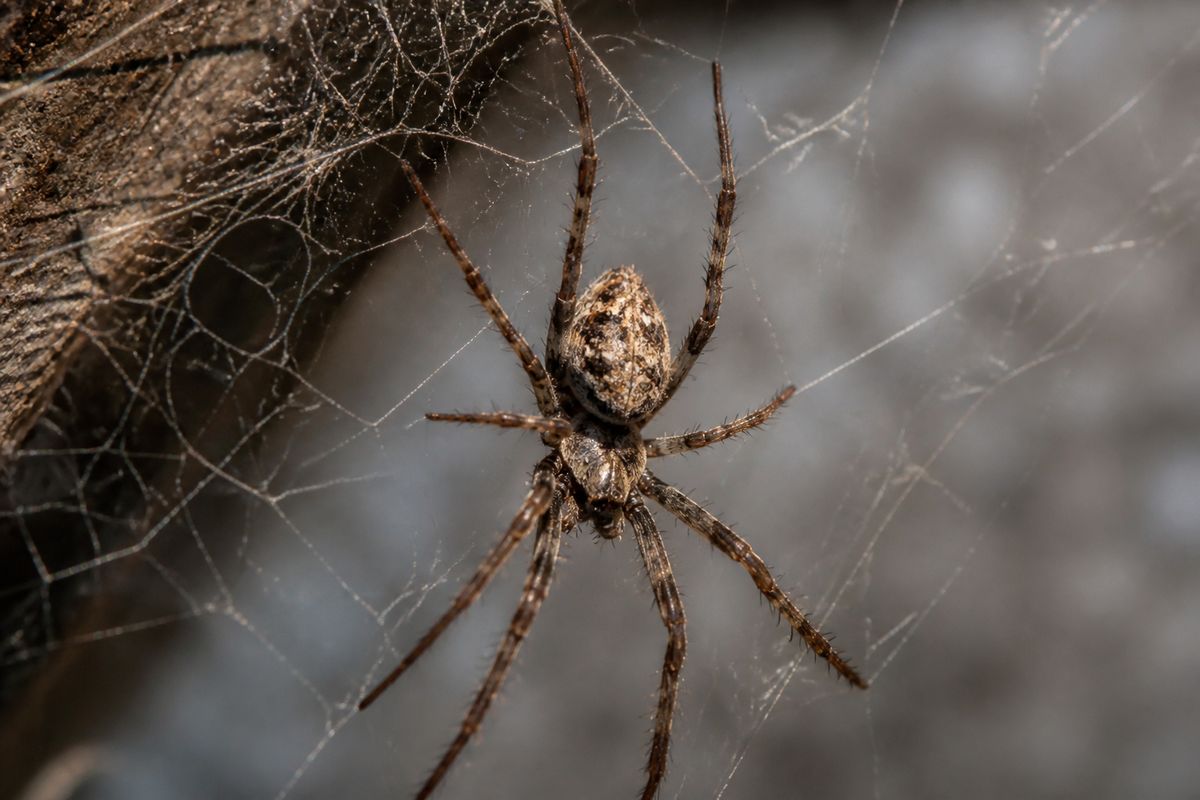
Spiders sense their environment through fine hairs on their legs that pick up airborne chemicals, not through a nose. Peppermint essential oil releases menthol-heavy vapor that some species avoid. In a choice-test study run by researchers at the University of Ulm and the University of Toronto Scarborough, brown widow spiders (Latrodectus geometricus) and European garden spiders (Araneus diadematus) avoided peppermint oil in more than 75% of trials, while a third species, the false widow Steatoda grossa, showed no real preference either way. That's a fair summary of where the evidence actually stands: peppermint repels some spiders, some of the time, and the effect is species-specific, not universal.
The same researchers noted an important limit: their tests only measured whether spiders avoided entering a treated area, not whether the scent could push out a spider that had already settled in. So a peppermint boundary works more like a "do not enter" sign than an eviction notice. Read the study summary at Entomology Today.
Why you shouldn't expect a kill, only a deterrent
Peppermint oil is not registered by the EPA as an insecticide, and the National Pesticide Information Center notes that the health risks and efficacy of essential oil repellents haven't been studied nearly as thoroughly as conventional pest-control products, with mixed results depending on the oil and the target. See the NPIC insect repellents fact sheet. That matches what pest-control guidance generally recommends: treat peppermint spray as a mild, short-term deterrent, not a substitute for removing spiders and closing off entry points.
Direct, saturating contact can stress or kill small soft-bodied insects, but spiders are more resilient and retreat fast. Once a spider is behind furniture, inside a wall void, or tucked into a web, spray isn't reaching it. If you're finding spiders already inside, expect the spray to slow down new sightings along the areas you treat, not to eliminate an existing population.
Why results vary from house to house
Spider species, home layout, and how you spray all change the outcome. Some species are more sensitive to the scent than others, so the same spray that seems to work in one home may do almost nothing in another. Airflow matters too: scent fades fast near vents, ceiling fans, or in warm rooms, so a spray that lasts a couple of days in a still closet might be gone in hours in a drafty hallway.
Placement changes the result more than concentration does. A tight perimeter along baseboards, corners, and entry seams gives the scent a consistent boundary. Spraying open floor space or furniture tops spreads the oil too thin to matter, and spiders will still find comfortable gaps to hide in.
Making a peppermint spider spray that's actually mixed right
Ingredients to use and skip
Use 100% pure peppermint essential oil (Mentha piperita) only. Peppermint extract and "mint" flavoring are diluted for cooking and contain far less menthol, so they won't produce the same scent barrier. You'll also need plain water and a small amount of dish soap, which acts as an emulsifier so the oil disperses in water instead of floating on top.
Skip bleach, ammonia, and other harsh cleaners entirely; they don't improve the repellent effect and add real risk to people, pets, and finishes. Skip high concentrations too. More oil doesn't make the spray last longer, it just raises the chance of eye and throat irritation and surface staining.
The recipe
- Fill a 16-ounce spray bottle with plain tap water.
- Add 10 to 15 drops of 100% pure peppermint essential oil.
- Add about 1/4 teaspoon of mild dish soap to emulsify the oil into the water.
- Cap the bottle and shake for 20 to 30 seconds until combined.
- Label the bottle with the date, then test on a small hidden spot before spraying a full area.
The mixture separates again within minutes because oil and water don't stay blended; that's normal. Shake before every use. Mix only what you'll use within a week or two rather than making a large batch.
Storing and refreshing the batch
Keep the bottle in a cool, dark cabinet, away from kids and pets. Heat and light break down essential oils faster, which shortens how long the spray stays effective even before you use it.
If the scent has faded noticeably or the nozzle keeps clogging with separated oil, toss the batch and mix a fresh one rather than trying to stretch it. Never spray it near food-prep surfaces or sinks; if you get overspray anywhere you prepare food, wipe it down with a damp cloth afterward.
Where and how to spray it for the best chance of results
Baseboards, corners, and entry points
Treat this as perimeter work, not general room spraying. Spiders travel along edges, so that's where the scent needs to be.
- Vacuum first and remove any webs or egg sacs you can see.
- Lightly mist baseboards and the lowest 2 to 3 inches of wall trim.
- Spray directly into corners and behind or beside furniture where you've noticed activity.
- Run a light mist along the floor-wall seam and any visible cracks, then let it air dry.
Don't mop right after spraying; wet-mopping will strip the scent barrier you just applied. Clean after the spray has dried instead.
Windows, doors, and garages
These are the gaps spiders (and their prey) actually use to get inside.
- Spray window tracks and the inside/outside edges of frames you can reach.
- Treat door thresholds and the exterior frame where the door meets the house.
- In garages, spray along the door opening perimeter and the edges of roll-up door tracks.
- Avoid spraying directly onto stored boxes or fabric you're keeping long-term, since odor and residue can linger.
If you can, seal obvious gaps with caulk or weather stripping at the same time. A scent barrier on an open gap is only a speed bump.
How often you'll need to reapply
Peppermint oil is volatile, meaning it evaporates on its own, so the "barrier" weakens every day whether or not anyone cleans it.
- Reapply every 2 to 3 days for the first week.
- After that, once or twice a week is typically enough if you're not seeing new activity.
- Reapply after mopping, wiping down, or heavy vacuuming of treated surfaces.
- Reapply outdoor entry points after rain, since moisture washes the oil away.
If spiders keep showing up despite staying on this schedule, that's usually a sign you need better vacuuming and gap-sealing, not a stronger mix.
Does peppermint oil kill spiders or just repel them?
Repellent, not pesticide
Peppermint oil functions as a mild repellent, not a spider killer. Some spiders avoid the scent, which is different from the spray being toxic enough to eliminate an infestation. Spiders that are already indoors and tucked into webs, wall voids, or behind furniture are effectively out of reach of a surface spray.
Direct, heavy contact might affect a spider caught directly in the mist, but you shouldn't count on it as pest control. Its real job is discouraging spiders from lingering in the specific spots you treat.
What to actually expect after spraying
Expect fewer spiders lingering right at the treated edges within a day or two, not an empty house. If spiders were already inside before you started spraying, they can still turn up in untreated rooms.
A short-term uptick in sightings right after your first treatment is common. That's usually spiders relocating away from the treated zone into a nearby untreated one, not the spray backfiring. Keep tracking where webs reappear so you know if the perimeter is holding.
When to switch strategies
If spiders keep showing up daily for more than two weeks despite consistent spraying, vacuuming, and gap-sealing, the spray isn't solving the actual problem. That's usually a sign of an open entry point you haven't found, or a prey-insect problem feeding the spiders in the first place.
Multiple entry routes, damaged screens, or activity in crawl spaces and wall voids are all good reasons to call a pest control professional rather than keep escalating the DIY approach.
Safety considerations for homes, pets, and surfaces
Kids and pets
Peppermint essential oil can irritate skin, eyes, and airways in people and in pets, especially in a small or poorly ventilated room.
- Spray when kids and pets are out of the room, and keep them out until it's dry.
- Open a window or run a fan while you work.
- Don't spray floors pets will walk across repeatedly right afterward.
- If you have birds, fish, or small pets, skip indoor use unless a vet has specifically cleared it. Cats in particular can react badly to concentrated essential oils.
Stop and wipe down the area with a damp cloth if anyone gets watery eyes, a cough, or skin irritation.
Surfaces that can stain or dull
Test on a hidden spot first. Unsealed wood, natural stone, and glossy finishes can react to essential oil residue.
Be extra cautious with:
- Unsealed wood, natural stone, and delicate or glossy finishes.
- Carpet and other fabric, where oil can leave a lasting stain.
- Electronics, thermostats, and screens.
Wipe visible residue after the spray dries. If you see dulling or streaking, switch to lighter applications or a different method on that surface.
Ventilation
The scent builds up fast in small rooms and basements.
- Spray in short bursts and step out to let the air clear.
- Open a window or run a fan during and after application.
- Keep the spray away from HVAC returns, or it'll spread through the whole house.
- Cover food-prep areas before spraying nearby, and wipe any overspray.
Peppermint oil plus other home remedies
Vinegar and peppermint: use them separately
Vinegar helps indirectly, by cutting grime and dust where insects (spider prey) tend to collect. It isn't a spider repellent itself.
- Wipe down baseboards and edges with a diluted vinegar-water mix first.
- Let the surface dry completely.
- Apply the peppermint spray afterward as a separate step.
Don't combine them in the same bottle. Vinegar's acidity interferes with how the oil and soap emulsify, so the mixture gets less consistent, not more effective.
Cleanup and sealing matter more than the spray
Peppermint oil can't fix what's actually drawing spiders indoors, which is usually a food source (other insects) or an open gap. Reducing both makes the repellent's job easier.
- Vacuum baseboards, corners, and under furniture regularly with a crevice tool.
- Clear leaf litter, cardboard, and clutter away from doors and windows.
- Caulk and weather-strip gaps around frames and utility entry points.
- Repair torn screens and close gaps under eaves and garage doors.
What not to mix into a DIY spray
Skip combining peppermint oil with:
- Bleach or ammonia-based cleaners.
- Drain cleaners or other acids.
- Heavily fragranced commercial pest sprays.
Mixing doesn't "boost" the repellent effect, it mainly adds irritation risk. Keep the peppermint spray to water, oil, and a bit of dish soap, and use separate products for actual cleaning.
When peppermint spray isn't enough
Signs you're past the DIY-spray stage
Peppermint spray is suited to reducing casual activity, not clearing an established population. Watch for:
- Multiple spiders daily in the same rooms.
- Webs rebuilding in the same corners within days of removal.
- Spiders showing up in several unconnected areas of the house.
- Egg sacs near baseboards, closets, or garage corners.
If flies, moths, or other insects are also showing up in numbers, spiders have a reason to keep coming regardless of what you spray, since you haven't removed their food source.
A more complete plan
- Vacuum up webs and egg sacs, then empty the canister or bag right away so nothing survives inside it.
- Reduce cardboard, stored fabric, and clutter along walls.
- Seal cracks around door frames, window trim, and utility penetrations.
- Put out sticky traps along baseboards to see where spiders are concentrating.
- Cut down on outdoor lighting that attracts insects, and fix standing water or leaks.
Once those are handled, peppermint spray works as a supporting layer, not the main strategy.
When to call a professional
Bring in a pest control professional if webs are spreading across multiple rooms, or spiders are concentrated somewhere you can't reach yourself, like crawl spaces, wall voids, or behind built-in cabinetry. A pro can find entry points you'd miss and treat both the spiders and the insects feeding them.
If two weeks of consistent spraying and cleanup hasn't changed anything, that's the point to stop DIY-only and get an inspection.
Frequently Asked Questions
Does peppermint oil keep spiders away?
It can reduce activity for some species when used as a tight perimeter treatment along baseboards, corners, and entry points, but it's not a guaranteed fix. Research on household spider species found some species avoided peppermint scent in most trials while another showed no clear response, so results depend heavily on which spiders you're dealing with. It also fades within days, so it only works if you keep reapplying and pair it with cleanup.
Does peppermint oil kill spiders?
Not reliably. It's a repellent, not an insecticide, and it isn't EPA-registered as a pesticide. Heavy direct contact might affect a spider caught in the spray, but spiders hidden in webs or behind furniture are unaffected. If you want spiders gone, vacuum them up directly and use the spray to discourage new ones from settling in the same spot.
How do you make peppermint spray for spiders?
Mix 10 to 15 drops of 100% pure peppermint essential oil and about 1/4 teaspoon of mild dish soap into a 16-ounce spray bottle of water. Shake well, since the oil and water separate again within minutes. Test on a hidden spot before spraying a full area, and use peppermint essential oil specifically, not extract or flavoring.
Where should I spray peppermint oil for spiders?
Along the paths spiders actually use: baseboards, window tracks, door thresholds, wall corners, and garage entry points. Spraying open floor space or furniture tops wastes the mixture, since a perimeter treatment is what creates a consistent scent boundary.
Is peppermint oil safe to use indoors?
In modest concentrations with good ventilation, yes, for most households. It can still irritate eyes, skin, and airways at stronger concentrations or in small, closed-up rooms, and it can be harmful to cats and other small pets. Spray when kids and pets are elsewhere, let it dry, and keep it off food-prep surfaces.
Does peppermint oil repel skunks too?
The evidence for that is thin and inconsistent, so don't rely on it as a skunk solution. Removing food attractants and closing off entry points under decks, sheds, and porches does far more to keep skunks away than any scent spray.