Peppermint Oil for Roaches: Does It Repel Them?
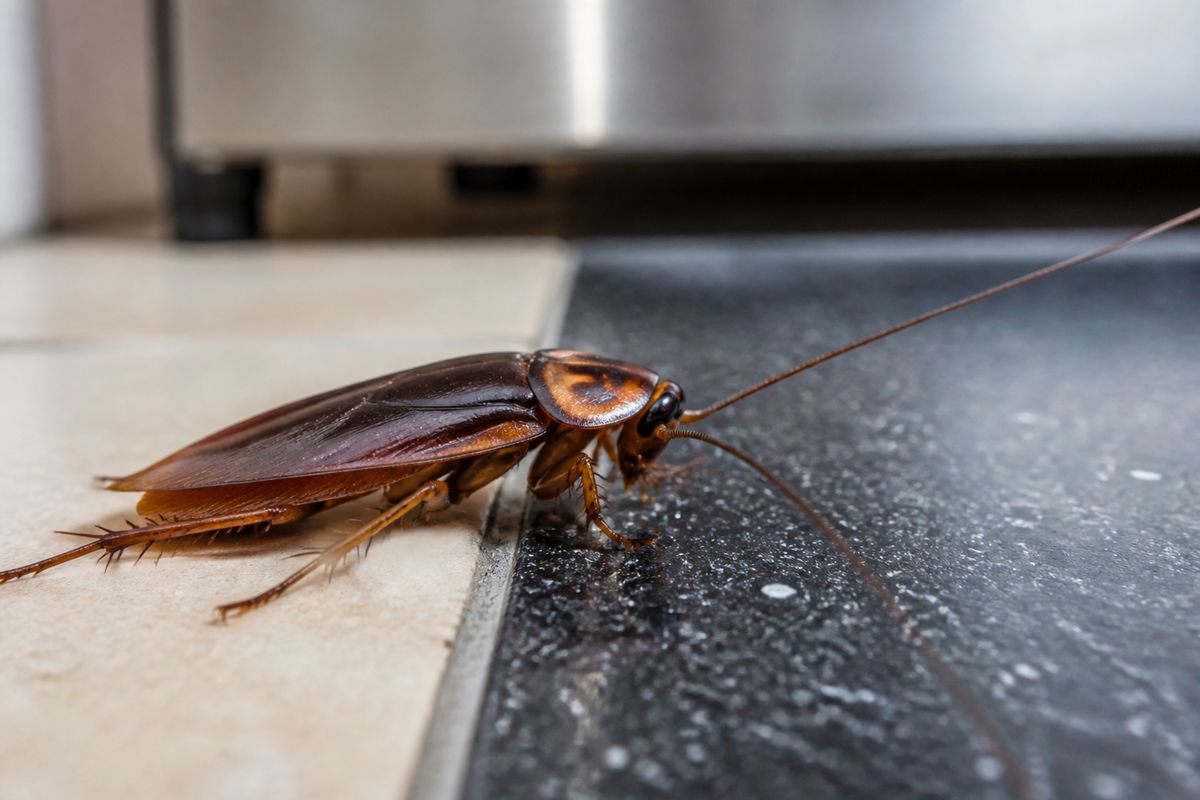
Seeing roaches around your kitchen, bathroom, or laundry area is stressful. If you are trying peppermint oil for roaches, you want to know whether it actually keeps them away or if you are just masking the problem. The honest answer: the scent can push roaches out of a treated spot for a short while, but it is a mild deterrent, not a pesticide, and it does not solve the root causes of an infestation.
For more help, see our Homemade Peppermint Pest Repellent Spray (DIY Recipe) guide.
What peppermint oil can and can't do
Why people use peppermint oil around roaches
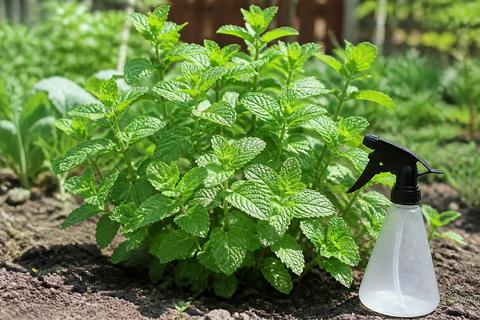
People use peppermint oil because it has a strong, sharp menthol-like odor that many insects find unpleasant. That scent can discourage roaches from lingering at a treated doorway, baseboard line, or crack they use as a travel route. It also feels like a low-tox option compared with insecticides, and it's inexpensive to try between deeper pest control steps.
However, peppermint oil is not a targeted roach product and it is not registered by the EPA as a pesticide for cockroach control the way a labeled insecticide is. It does not mimic a food source, and it does not act like bait that roaches carry back to a nest. Treat it as a temporary scent barrier, not a control program.
What the research actually shows
Peer-reviewed testing backs up the "mild, short-term" framing rather than the "kills roaches" claims you'll see on some sites. In one lab study on the brown-banded cockroach published in the Journal of Arthropod-Borne Diseases, mint oil produced roughly 59-69% repellency at various concentrations, but it was the weakest of the five essential oils tested, and the authors said additional study was needed before recommending it for practical, real-world use rather than the lab bench.
That gap between lab conditions and your kitchen matters. Lab repellency and toxicity tests typically use undiluted or highly concentrated oil, often as a sealed-chamber vapor (fumigant) exposure, not a diluted spray drifting across an open room. The Entomological Society of America's own review of essential oils in pest management notes that the same volatility that makes these oils act as fumigants also makes them evaporate fast, "reducing efficacy," which is why repeated application is typically required, and it flags that replicating lab results in actual homes remains one of the biggest open challenges in the field.
Does peppermint oil kill roaches or just bother them?
For a household spray, peppermint oil is not a dependable roach killer. Lab studies that recorded roach mortality generally relied on prolonged, concentrated vapor exposure inside a closed container, conditions you cannot recreate by misting a countertop. In a normal home, the realistic effect is behavioral: the odor makes roaches avoid or reduce activity near the treated area for a period of hours to a few days, not a kill.
The real issue with roaches is where they live and breed, not just where they walk in the open. Peppermint oil may bother them briefly, but baiting, traps, sealing, and sanitation are what actually reduce the population.
How roaches respond to peppermint
Do cockroaches avoid peppermint scent?
Some roaches show avoidance of strong plant-based odors, including peppermint, especially when the scent is fresh and concentrated. If you spray along a travel path, you may see fewer roaches crossing that line for a short window, typically while the scent is still strong to the nose.
This effect depends heavily on exposure. Roaches often stay deep in harborage areas, where scent levels are much lower than at a treated surface. If your infestation is inside cabinets, behind baseboards, or within appliance gaps, peppermint spray on visible surfaces will miss the places that matter most.
Will peppermint keep roaches away from treated areas?
Peppermint can reduce activity near treated surfaces for a limited time, but it does not create a lasting protective barrier. The oil evaporates within hours to a couple of days, and residue wears off faster with cleaning, wiping, or humidity. If you stop treating and the environment stays inviting, roaches move back in.
Use peppermint to reduce movement in specific spots while you run the real plan (baits, sanitation, sealing). Treat it as short-term deterrence, not a fence that holds.
When roaches may ignore peppermint entirely
Roaches ignore peppermint when conditions favor them more than the odor deters them. Common reasons: a strong food source, steady water, warm harborage close by, and gaps where roaches can bypass the treated area entirely.
Other factors reduce results too. A mix that's too dilute, using peppermint extract or flavoring instead of essential oil, or spraying the wrong locations means the scent won't stay strong enough to influence behavior. Heavy cleaning also removes residue, cutting off the effect before it helps.
How to mix and use peppermint oil for roaches
A basic spray recipe
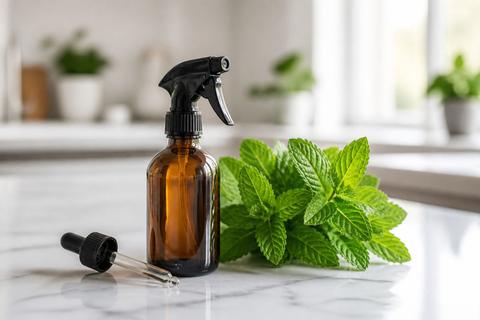
Use 100 percent pure peppermint essential oil (Mentha piperita), not peppermint extract or peppermint-scented cleaning products, since those don't carry enough menthol/menthone to have any effect.
- Fill a spray bottle with 1 cup (240 ml) of water.
- Add 10 to 15 drops of peppermint essential oil.
- Add about 1/4 teaspoon of dish soap to help the oil emulsify and mix into the water instead of floating on top.
- Cap and shake hard for 30 seconds.
Shake again right before each use, since the oil separates from the water as it sits. Make a fresh batch every few days; the scent, and the deterrent effect with it, fades as the mixture ages.
Best places to spray for maximum effect
Target the places roaches travel and enter your home. Spray lightly along surfaces that act like pathways, not heavy wet puddles that linger where people touch.
- Spray along baseboards and window sills where gaps allow movement.
- Treat door thresholds and areas around entry gaps.
- Spray under sinks, around plumbing access, and behind the lower panel of appliances, only where it's dry and safe to treat.
- Focus on cracks and crevices you can see, especially where you've already spotted roaches.
Keep the application thin and consistent. Reapply every 2 to 3 days, and sooner if the area gets mopped, rained on, or the scent has faded enough that you can't smell it anymore.
What not to spray and where residue can be a problem
Avoid spraying peppermint oil where residue can cause issues or where it can contact food. Oil-based residue can cling to finishes and leave a smell you'll notice for days.
- Do not spray directly on food-contact counters, inside open pantry shelves, or near clean utensils.
- Avoid soaking fabric, including rugs, couch cushions, and curtains, since the scent lingers and can irritate people.
- Do not spray electronics vents, exposed wiring, or areas near sensitive finishes; some materials react poorly to essential oils.
- Keep pets away from wet, treated surfaces. Cats in particular can be sensitive to concentrated essential oils.
If you need to treat a spot near food, rely on sealing and baits there instead, and save peppermint spray for non-contact areas.
How effective peppermint oil really is
Where it may help as a short-term deterrent
Peppermint oil is most useful for quick, small-area relief. It can reduce movement along entry points, limit activity in a specific room for a night or two, and buy you time while you set up bait stations and seal gaps.
It's most likely to feel effective in low-level situations, not a full infestation. If you're seeing an occasional roach wander in from a neighboring unit or during a seasonal surge, the scent can shorten how long it lingers in your living space.
Why it is not a standalone roach control method
Peppermint oil does not reach the core roach habitat. Cockroaches hide in wall voids, behind cabinetry, inside appliance cavities, and under insulation, places your spray physically cannot penetrate. Once the scent fades, normal roach behavior resumes.
Even where deterrence works temporarily, it does not kill eggs or stop breeding. Without baits and sanitation, the population keeps growing quietly while you focus on odor control.
Peppermint oil vs. baits, traps, and professional treatment
Roach baits and gel stations target the source of the problem: roaches eat the bait and spread it to others in the colony through grooming and contact. Sticky traps help you monitor activity and estimate numbers, but they don't meaningfully reduce an active breeding population on their own.
Professional treatment differs because licensed technicians can use residual insecticides and crack-and-crevice application that reaches where roaches actually live. Peppermint oil can support those steps by discouraging movement in the meantime, but it should not replace baiting or a labeled insecticide when you have a real infestation.
Other peppermint pest claims to separate from roaches
Bats, rats, mice, and other animals: what peppermint can realistically do
Peppermint oil claims for larger animals tend to overpromise even more than the roach claims. Roaches are small insects with a strong reaction to concentrated odor; bats, rats, and mice rely far more on shelter, food, and established routes than on avoiding a single smell.
You might notice brief odor-based avoidance right after application, but that doesn't mean the animals leave for good. They return once the scent fades and access points remain open.
Real control for animals comes from exclusion, cleanup, and habitat removal, not scent sprays.
Why a car, garage, or engine area needs different treatment
Garages, cars, and engine bays have different materials and different risks. Essential oils can stain finishes, degrade certain plastics and rubber over time, and build up a strong odor inside an enclosed cabin.
A vehicle also has its own pathways, tires, undercarriage gaps, stored items, that need cleaning and exclusion, not just scent. If you suspect roaches in a garage, focus on sealing entry points, removing clutter, and placing baits safely in cracks and voids rather than relying on spray-based scent barriers.
Pet and surface safety considerations
Peppermint oil can irritate pets and people if it contacts eyes or if pets lick treated surfaces. Use it only where you can control access, and keep pets away from sprayed areas until they've fully dried.
Ventilate the room while spraying, and avoid high-touch surfaces. Never apply it inside food storage or on surfaces pets regularly walk across. If anyone in the household is sensitive to strong scents, start with the smallest area possible and stop if you notice breathing irritation or repeated sneezing.
Better ways to get rid of roaches
Find food, water, and shelter sources first
Roaches need three things: food, water, and hiding places. Reduce all three and any deterrent effect, peppermint or otherwise, has a much better chance of holding.
- Clean up crumbs and spills daily, and vacuum along baseboards regularly.
- Fix drips under sinks, check around refrigerators, and wipe condensation from plumbing areas.
- Store food in sealed containers, move pet food into closed containers, and empty trash frequently.
- Remove clutter that gives roaches harborage, especially cardboard piled near walls.
Once resources are scarce, roaches have to search harder and travel farther, which is exactly when baits and targeted treatment work best.
Use baits, traps, and targeted insecticides correctly
Place roach baits where roaches actually travel: in cracks, under sinks, behind appliances, and along wall edges. Don't put bait out in the open center of a room, where it dries out or gets picked up by kids or pets.
- Use gel bait stations or syringe-style bait placements, following the label for placement and frequency.
- Put sticky traps along edges, behind appliances, and near suspected entry points to monitor activity over time.
- If using an insecticide, stick to labeled crack-and-crevice applications rather than broad fogging, which mostly scatters roaches instead of killing them.
Read the product label for safety directions, and keep people and pets away from treated areas for as long as the label specifies.
Seal entry points and prevent reinfestation
Sealing is what stops future roaches from getting in at all. A spray's odor fades in days; a sealed gap stays blocked indefinitely.
- Inspect around pipes, under sinks, around window frames, and behind baseboards for gaps.
- Use caulk for small openings and appropriate materials (steel wool, hardware cloth) for larger gaps.
- Add door sweeps and repair damaged weather stripping.
- Address gaps around electrical conduits only in the manner allowed by your local code.
After sealing, keep monitoring with sticky traps so you can catch any remaining hotspot quickly.
Frequently Asked Questions
Does peppermint oil repel roaches?
It can help discourage roaches in some situations because the strong smell is unpleasant to them, but it's a weak, short-term deterrent rather than a reliable solution. Peer-reviewed testing puts mint oil's repellency at roughly 59-69% under lab conditions, and even that was the weakest result among the essential oils tested. Peppermint oil works best when applied along travel routes and entry points, right after mixing, and only alongside efforts to address the food, water, and harborage that actually drive the infestation.
If roaches already have an established home in wall voids or behind appliances, a surface spray will not reach them. Use peppermint as support, not as your main control method.
Does peppermint oil kill roaches?
Not in any practical household sense. Lab studies that recorded roach kills generally used concentrated or undiluted oil as a sealed-chamber vapor over many hours, not a diluted spray in an open room. At the concentrations and application methods realistic for a home, peppermint oil disrupts and repels more than it kills, and it will not replace baiting or infestation control. If you want to reduce a roach population, you need a method that affects the colony, especially bait products that roaches carry back and share.
Peppermint oil can be part of a plan to reduce movement while baits and sealing do the actual work.
How do you mix peppermint oil for roaches?
Mix 1 cup of water with 10 to 15 drops of 100 percent pure peppermint essential oil, then add about 1/4 teaspoon of dish soap to help the oil emulsify into the water instead of separating.
Use essential oil, not peppermint extract or flavoring, since those don't carry a strong enough concentration of menthol and menthone, the compounds responsible for the smell insects react to. Shake well before every use, spray thinly, and avoid food-contact surfaces.
Where should you spray peppermint oil for roaches?
Focus on entry points, baseboards, under sinks, behind appliances, and other travel routes, not food-contact surfaces or places where residue could cause problems. Spray lightly along visible cracks and crevices, then along the edges where roaches move at night.
Avoid spraying inside open food areas, on meal-prep counters, or on surfaces pets can lick. Reapply every 2 to 3 days for continued deterrence, and sooner after cleaning removes the scent.
Will peppermint oil help with a serious roach infestation?
It can be a minor supporting measure, but a serious infestation needs sanitation, sealed entry points, roach baits, and often professional pest control. Peppermint may briefly reduce sightings, but it does not kill eggs or reach the hidden harborage inside walls and appliance cavities where an established population actually lives.
For larger infestations, prioritize bait placement and sealing first, and use peppermint only as a short-term deterrent while you bring the population down.
Sources
- Sharififard M, Safdari F, Siahpoush A, Kassiri H. "Evaluation of Some Plant Essential Oils against the Brown-Banded Cockroach, Supella longipalpa (Blattaria: Ectobiidae): A Mechanical Vector of Human Pathogens." Journal of Arthropod-Borne Diseases, 2016 (peer-reviewed, hosted on PubMed Central). Verified: reports mint oil repellency of 59.1-68.8% across concentrations, states mint was the least effective of the five oils tested at lower concentrations, and concludes additional study is needed before practical/field application.
- Entomology Today (Entomological Society of America), "Essential Oils: An Untapped Resource for Managing Urban Insect Pests," 2022. Verified: confirms essential oils' high volatility causes rapid evaporation that reduces efficacy (repeated application needed), and states replicating laboratory results in the field/homes is one of the biggest open challenges.