Peppermint Oil for Gnats: How to Reduce Fungus Gnats
If tiny flying bugs keep hovering around your houseplants, you are probably dealing with fungus gnats, not fruit flies. Peppermint oil for gnats is a common search because the scent seems like it should drive them off, and menthol does have a measurable repellent effect on some flying insects. But treat it as a mild, short-lived deterrent, not a pesticide. It does not kill the larvae breeding in your potting mix, and the adult-repelling effect fades within roughly half an hour to a few hours as the oil evaporates.
For more help, see our Homemade Peppermint Pest Repellent Spray (DIY Recipe) guide.
What Peppermint Oil Can and Can't Do
How peppermint scent affects gnats
Peppermint oil is one of the essential oils the UC Statewide IPM Program lists as eligible for use as a repellent, and its menthol content can make flying adults linger less near a treated pot. That is the extent of what it reliably does. It is not registered or tested as a way to kill an established gnat population, and it does nothing to the larvae already living in the soil.
In a Journal of Medical Entomology study on mosquitoes, peppermint oil produced a strong drop in attraction right after application, but the effect was only reliable for about 30 minutes before repellency fell off sharply. Fungus gnats are a different insect, but the same volatility applies: peppermint is a scent-based deterrent that needs frequent reapplication, not a set-and-forget treatment.
Why peppermint may repel, but not eliminate, infestations
Fungus gnats lay eggs and develop as larvae in the top layer of moist potting mix, feeding on fungus, algae, and decaying organic matter. Spraying peppermint oil into the air and onto the soil surface may make fewer adults want to stick around, but it does not reach eggs or larvae below the surface, and it does not change the moist conditions that let them thrive there.
You will get more lasting results by pairing peppermint with source control (drying cycles, debris removal) and direct controls for adults and larvae (sticky traps, a larvicide) than by relying on peppermint alone.
When peppermint oil is unlikely to help
Peppermint oil is unlikely to make a dent when the source is active breeding in a pot that never gets to dry out, because reapplying scent every few days will not outpace a larval population that keeps hatching. It also will not help if the insect isn't a fungus gnat at all. Drain flies and fruit flies breed in sinks, drains, and food waste, not potting soil, so spraying peppermint near your plants will not reach where those pests actually live.
If your watering schedule keeps the top inch of soil damp on a fixed calendar rather than as-needed, expect new adults no matter how often you spray.
Identify the Gnats You're Dealing With
How to tell fungus gnats from fruit flies and drain flies
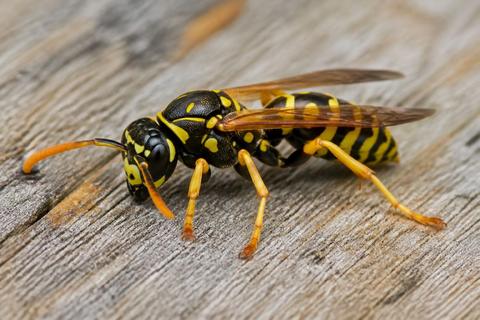
Use behavior and location first. Fungus gnats are small, dark, moth-like flies that hover around plant soil, especially right after you water. Fruit flies are usually red-brown, drawn to ripe fruit and garbage, and cluster near kitchens. Drain flies are fuzzy-looking and gather near drains, bathrooms, and sinks rather than houseplants.
A quick check: leave a piece of ripe fruit out to see if fruit flies show up, and check drains with a flashlight for drain fly larvae in the gunk lining the pipe. If the insects show up mainly when you disturb potting mix, fungus gnats are your main suspect.
Signs the problem is coming from houseplant soil
Look for gnats concentrated just above the pot, with a burst of activity right after watering. If you see tiny pale larvae in the top inch of soil, that confirms breeding is happening in your plant mix. Adults also tend to rest on windows, plant stems, and the rim of the pot where the soil meets air.
If several plants share the same soil bag, potting bench, or watering tray, treat them as one group, since adults move between pots quickly.
Why the source matters for treatment
UC IPM's fungus gnat guidance centers on avoiding overwatering and improving drainage, which only helps if the pest is actually a fungus gnat. Fruit flies need food-source removal and kitchen sanitation. Drain flies need drain cleaning and moisture elimination in the plumbing. Treating the wrong source with peppermint spray just wastes time while the real breeding site keeps producing adults.
Start wherever you see the most adults resting. If it's around plant soil, focus on the pot environment first.
Use Peppermint Oil Safely Around Houseplants
Best ways to apply peppermint oil near plants
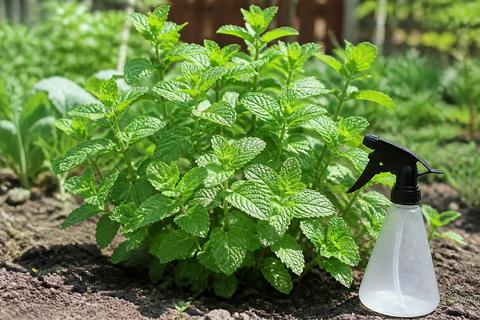
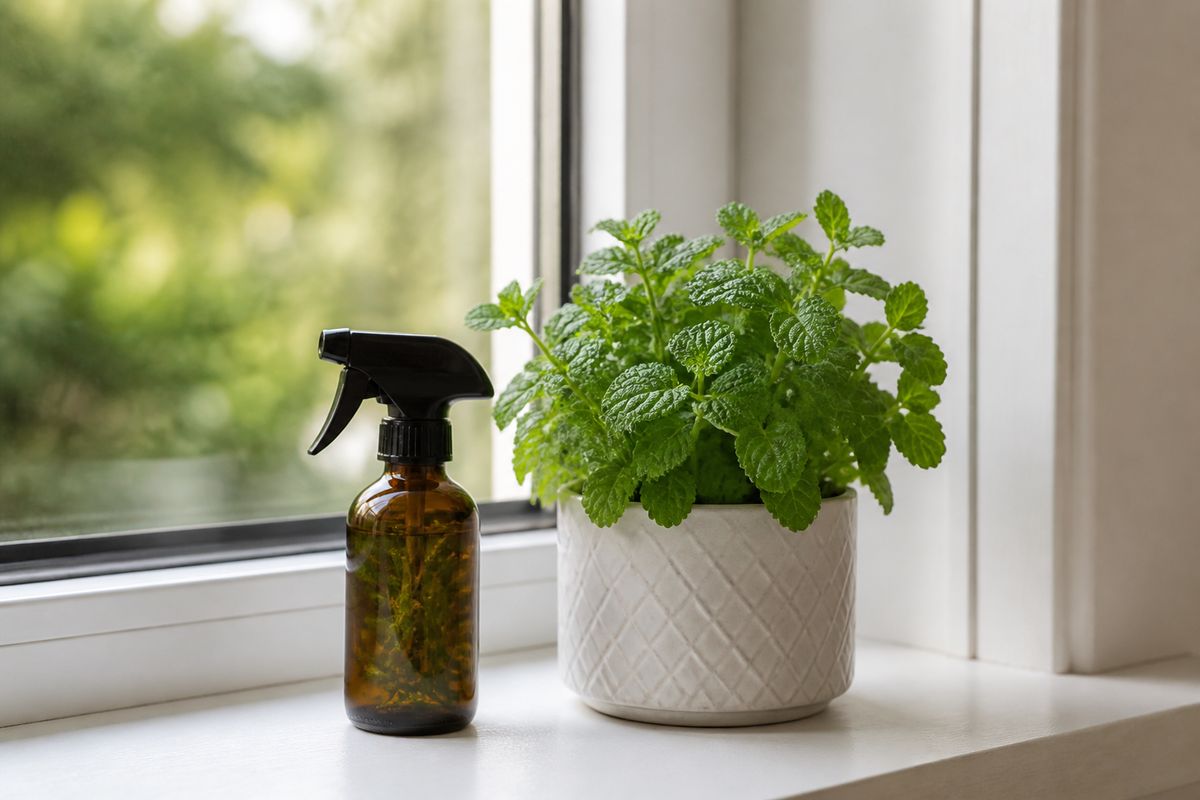
Use peppermint oil as a light repellent mist, not a soil drench. The goal is deterring adults in the air and at the soil surface without adding more moisture.
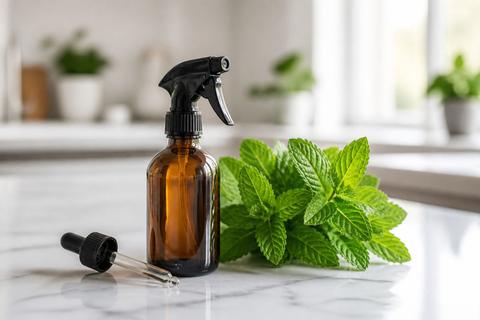
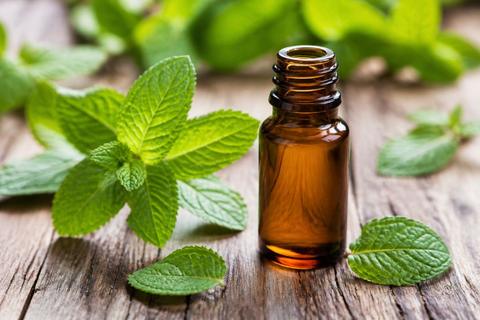
- Mix 10 to 15 drops of 100% pure peppermint essential oil (Mentha piperita) into 1 cup (240 ml) of water.
- Add about 1/8 teaspoon of liquid dish soap so the oil emulsifies instead of floating on top, then shake well before each use.
- Lightly mist the air around the plant and the top of the soil from 8 to 12 inches away. Do not soak the mix.
- Reapply every 2 to 3 days, and again after any watering that leaves the surface damp, since the scent weakens as it dries and evaporates.
How to dilute it without harming leaves or roots
Essential oils can scorch leaves or irritate roots at high concentrations. Start at the lower end of the dilution (10 drops per cup) and only increase it if a test spray causes no leaf spotting or curling after 24 to 48 hours.
- Use essential oil, not peppermint extract or mint flavoring. Those are diluted for cooking, contain different additives, and will not behave the same way in a spray.
- Spot-test one leaf and a small patch of soil first before treating the whole plant.
- Avoid pouring the mixture directly into the crown (where stem meets soil) or along the main watering channel.
Keep the soil surface from getting soggier from the spray itself. Over-wetting still feeds the fungus and algae that larvae eat.
Where to avoid spraying
Skip spraying directly into open blooms, and avoid misting soil mixes that already stay wet for long stretches, since you would just be adding moisture on top of moisture. Stay away from heaters, vents, and fireplaces, where added airflow can stress plant tissue faster.
- Go very light on fuzzy-leaf plants like African violets, or skip them.
- Skip the undersides of thin leaves that show spotting easily.
- Keep the spray away from electronics, and wipe any overspray off hard surfaces so it doesn't leave residue.
If a plant sits in a watering tray, keep the spray out of the standing tray water. You're aiming for a light deterrent near the soil surface, not another wet layer.
Reduce Fungus Gnats at the Source
Let the soil dry out between waterings
Fungus gnat eggs and larvae need consistently moist top soil to survive. UC IPM's guidance is direct on this point: allow the surface of container soil to dry between waterings, which is a bigger factor in gnat numbers than any spray.
- Press a fingertip into the top inch of soil. If it feels dry and light, water. If it's still cool and damp, wait.
- When you water, water thoroughly until it drains from the bottom, then empty the saucer or tray right away.
- After watering, leave the surface alone rather than misting it, aside from an occasional light peppermint application.
This single change interrupts the breeding cycle more than any repellent spray will.
Remove decaying plant matter and debris
Larvae feed on organic debris sitting on the soil surface: dead leaves, fallen stems, and old mulch. Removing that food source cuts down breeding right away.
- Pull off dead leaves or spent stems resting on the surface.
- Use a spoon or chopstick to lift out decomposing bits from the top layer.
- If the surface looks crusty or fungal, skim off the top 1/4 to 1/2 inch and discard it.
Work gently, especially in smaller pots, so you don't disturb the root ball underneath.
Improve drainage and airflow in pots
Poor drainage keeps the mix wet for longer, which is exactly what gnats need. Confirm the pot can actually shed excess water.
- Make sure the container has drainage holes. If it doesn't, repot into one that does.
- Check that there's no water-retention layer trapping moisture under the mix.
- Use a lighter, well-aerated potting mix, adding perlite where it helps water move through faster.
Better airflow at the soil surface helps it dry between waterings instead of staying damp for days.
Combine Peppermint Oil with Proven Controls
Use sticky traps to catch adult gnats
Yellow sticky traps are a standard recommendation for catching adult fungus gnats, and they double as a way to track whether adults are still emerging after you change your watering habits.
- Place yellow sticky cards at soil level in each affected pot.
- Use one trap per pot, or one larger trap for a cluster of plants.
- Leave traps in place through treatment, then keep one more trap up for a week after sightings stop.
Peppermint discourages some adults from lingering; sticky traps catch the ones that show up anyway. Used together they cut the flying population faster than either alone.
Treat soil larvae with targeted options
Adults are the part you notice, but larvae are what keep the cycle going. A soil drench aimed at larvae addresses the part peppermint oil cannot touch.
- Look for a larvicide labeled for fungus gnats, such as a Bacillus thuringiensis israelensis (Bti) product.
- Apply it to the soil so it reaches the top layer where larvae feed.
- Keep up the drying schedule afterward so any surviving larvae have less habitat.
Peppermint can reduce how many adults linger. Larval control is what actually ends the infestation.
Repotting and soil replacement for severe infestations
When an infestation is heavy, repotting removes the egg and larva layer along with the old mix. It's the fastest reset when multiple generations are already established.
- Remove the plant and shake off as much old soil as you can.
- Rinse the roots gently, check for damage, and repot into fresh mix.
- Wash the pot if you're reusing it, then let the new mix dry between waterings from the start.
This is worth doing when the soil has stayed wet too long to fix with drying alone, or when you can't keep up with moisture control.
Prevent Gnats From Coming Back
Watering habits that discourage fungus gnats
Prevention comes down to moisture control. Water based on how dry the soil actually is, not a fixed calendar, and never let a pot sit in standing water.
- Water only once the top inch of soil has dried out.
- Empty saucers and trays as soon as excess water drains through.
- Go easy on bottom watering long-term in gnat-prone setups, since it can keep the top layer damp longer than you'd expect.
With multiple plants, hold them all to the same moisture standard so gnats don't just persist in the one pot you're less strict about.
Soil and potting mix choices that help
Choose a mix that drains well and dries in a reasonable time. Dense, compact mixes that stay soggy after watering are the ones that keep breeding gnats.
- Pick a quality indoor potting mix with good aeration.
- Add perlite, or use a mix formulated for airflow, if your plants tend to stay wet too long.
- Don't reuse old, gnat-infested topsoil. Replace the surface layer at minimum.
Clean containers matter too, especially if that pot has had gnats before.
Simple monitoring steps for recurring problems
Monitoring catches a new problem early, before larvae build up in the soil again. Sticky traps and a quick soil check do most of the work.
- Keep one sticky trap near any plant with a history of gnats.
- Check the soil surface for new adult activity on watering days.
- Test the top inch weekly with a finger, and adjust watering right away if it's staying damp.
Once you see a stretch of dry soil and no new adults, the infestation is under control.
Frequently Asked Questions
Do gnats hate peppermint oil?
Peppermint's strong menthol scent does discourage some gnats from lingering, but it does not kill an infestation on its own. Adults may avoid a freshly treated area for a while, and larvae keep developing in the soil if moisture and breeding conditions don't change.
Treat peppermint as a support step, not the fix for the actual cause.
Does peppermint oil get rid of gnats?
It can reduce the number of adults you notice for a short time, but it is not a stand-alone solution for fungus gnats. Stop at peppermint alone and the larvae in the potting mix keep developing, so new adults keep showing up every few days.
Pair it with drying habits, sticky traps, and a larvicide for a result that actually holds.
Do gnats like peppermint?
No. The scent tends to deter rather than attract them, though how much it helps depends on the gnat species and how often you reapply. If the real source is a drain or fruit waste, peppermint sprayed near houseplants won't reach it.
Identify the source before you decide peppermint isn't working.
Does peppermint repel gnats?
It can repel some adult gnats for a short window, roughly a few hours at most before the scent fades, which lines up with how quickly peppermint's repellent effect drops off in published mosquito-repellency testing. It is not a guaranteed or long-lasting fix.
Use it to knock down adult pressure while you handle the soil conditions underneath.
Will peppermint oil work for fungus gnats in plant soil?
It offers limited, short-term deterrence near the plant, nothing more. Fungus gnats are ultimately a moisture problem, so drying out the soil, clearing breeding debris, and using traps or a larvicide matter more than any spray. Peppermint does not replace moisture control or larval targeting.
For the fastest result, treat adults and larvae at the same time rather than relying on one method.
Sources
- UC Statewide IPM Program (UC ANR), Pesticide Active Ingredients Database, Peppermint Oil profile
- Journal of Medical Entomology (Oxford Academic), "Efficacy of Active Ingredients From the EPA 25(B) List in Reducing Attraction of Aedes aegypti to Humans"
- UC Statewide IPM Program (UC ANR), Pest Notes: Fungus Gnats