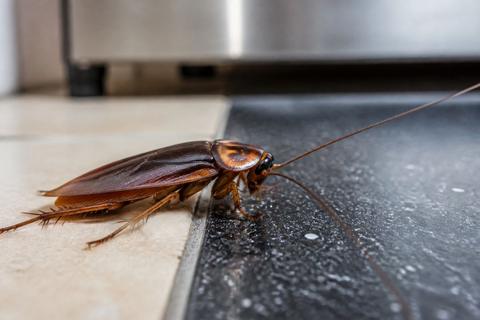
Does Peppermint Oil Repel Bugs? What It Works On
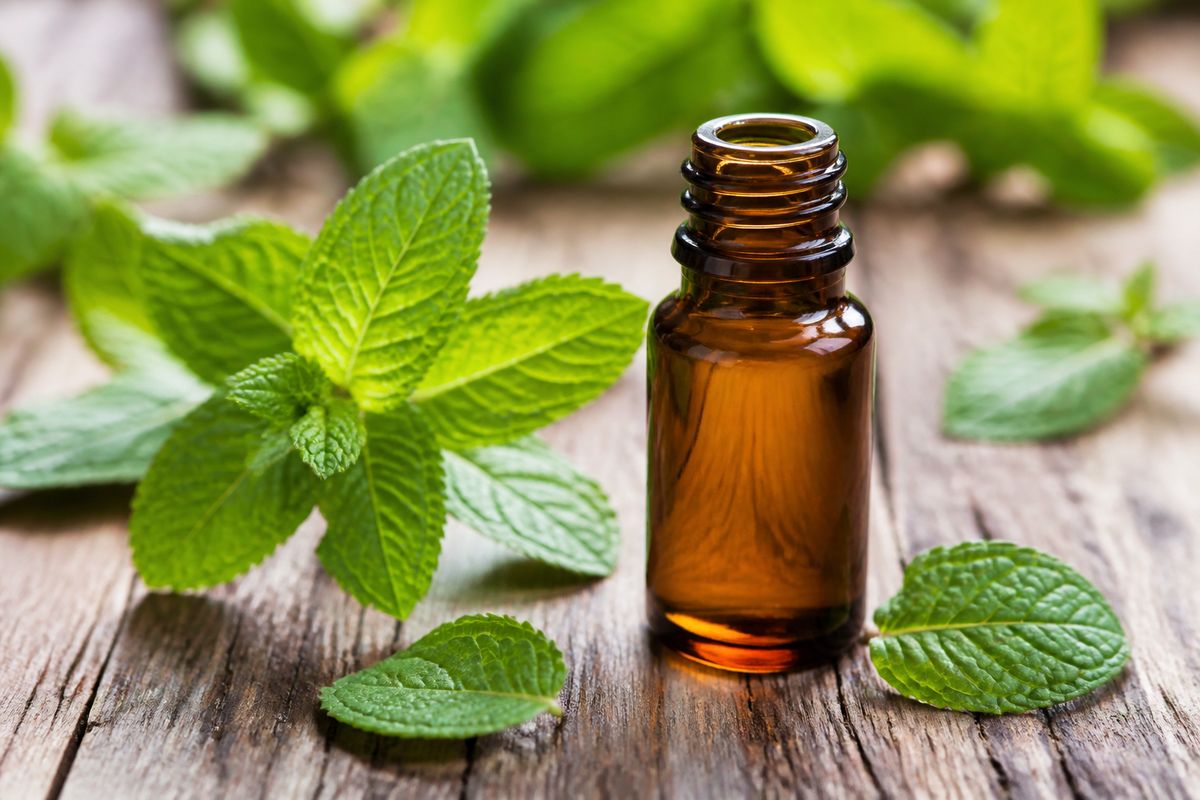
Does peppermint oil repel bugs? Yes, for a short list of species, and only for a few days at a time. It is not a pesticide, it will not solve an active infestation, and it will not touch eggs or nests. Here is what it actually works on, the dilution that has held up in testing, and where people waste it.
For more help, see our Homemade Peppermint Pest Repellent Spray (DIY Recipe) guide.
How peppermint oil works as a repellent
Why the scent can discourage some pests
Peppermint oil's menthol content overwhelms the scent trails and odor cues that many insects use to find food and navigate. A 2020 Journal of Economic Entomology field trial found that peppermint and spearmint oil, applied as a 10% dip, kept European red ant colonies from nesting in treated pots for the full 15-week study, longer than neem oil or d-limonene held up in the same test. Repellent effect confirmed in that trial. That is a real result, but it was measured against one ant species in a controlled setting, applied at a specific concentration, and reapplied before it faded. It is not evidence peppermint oil stops every ant, spider, or crawling pest at whatever strength you spray from a bottle.
The effect depends on concentration, how fresh the application is, and whether the pest actually has to cross or land on the treated surface. Spray it into open air and most of it does nothing; let the scent fade for a week and whatever effect existed is gone.
What peppermint oil does and does not do
Peppermint oil is a deterrent, not a pesticide. It can make some insects avoid a treated line or pause before crossing it. It does not kill insects hiding in walls, nests, or deep cracks, and it will not stop new pests from getting in if door seams, window screens, and gaps under baseboards are still open.
Treat it as a "make this spot less attractive" tool, not a control method. Pair it with sealing entry points and removing food and moisture sources, the things that actually decide whether pests stay. Peppermint oil's job is to reduce traffic through specific zones, nothing more.
When peppermint oil is mostly a masking smell
In a lot of homes, peppermint oil just masks odor without changing pest behavior. If something else is drawing pests in, food crumbs, pet water, garbage, standing moisture, the mint smell competes with a stronger incentive and loses. The pest walks through the treated zone and keeps looking until it finds what it came for.
This shows up most with established infestations. A fresh spray can make a room smell minty for a day or two while the pests keep doing what they were doing somewhere else in the house. Peppermint oil works best in narrow, specific spots, not as a whole-house fix.
What bugs peppermint oil may repel
Stink bugs and other scent-sensitive insects
Stink bugs and other insects that rely heavily on odor cues to find shelter are among the more responsive targets for peppermint oil. A strong menthol smell can make them pause or redirect rather than settle.
Apply it where stink bugs actually land when they enter, window ledges, exterior door frames, interior sills, and reapply on a short schedule since the scent fades fast. Peppermint oil will not stop a full stink bug invasion, but it can cut down how many settle in the treated entry zones.
Ants, spiders, and occasional household invaders
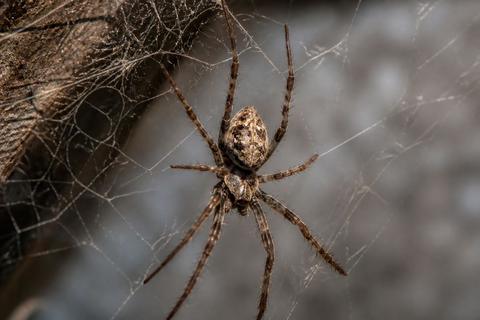
Ants and some spiders are the pests with the best evidence behind peppermint oil. Ants navigate by pheromone trail, and a strong competing odor can disrupt that trail long enough to redirect foragers. For spiders, a 2018 Journal of Economic Entomology study using a two-choice test tube found that peppermint oil made brown widow spiders and cross spiders avoid the treated side in more than 75% of trials, though it had no measurable effect on a third species tested (Steatoda grossa). Study details. The researchers were explicit that this only keeps spiders from moving into an area; it does not evict one that has already settled there.
Apply along the ant trail itself and around baseboards, not as a room spray. For ants, treat the walking line and the cracks they use, inside door edges, under sinks after cleaning. For spiders, focus on corners, wall edges, and entry points rather than open floor space. Results vary by species, so do not expect the same outcome against every ant or spider you find.
Why results vary by species, concentration, and contact
Different pests respond differently to menthol, and some species barely react at all. Concentration matters because a diluted spray can smell strong to a person and register as almost nothing to an insect. Contact matters just as much, since a pest has to move through or land on the treated surface to be affected by it.
Too little oil gives you scent with no real deterrent behind it. Spraying only into the air misses the contact zone entirely. And if entry points and attractants stay in place, pests keep coming regardless of how much peppermint you use. It works best as a targeted barrier at a consistent strength, not a general-purpose spray.
What bugs are attracted to peppermint oil, if any
Peppermint oil is not a lure for common household pests. Apparent "attraction" is usually the room, not the oil, a dirty corner, moisture, or nearby food will pull pests in regardless of what scent is nearby.
Peppermint extract is a different product than peppermint essential oil, and it is usually weaker and diluted with additives. If you use extract expecting the same effect, the smell is often too faint to do anything, which is why some people conclude peppermint "does nothing." Use 100% pure peppermint essential oil (Mentha piperita) for a consistent result, and deal with the attractants first.
How to use peppermint oil around the house
Spraying peppermint oil on cotton balls and in entry points
Cotton balls concentrate the scent in a tight space, which is useful right at an entry gap.
- Add 10 to 15 drops of 100% pure peppermint essential oil to each cotton ball.
- Place cotton balls near entry points, window tracks, behind radiators, at door thresholds.
- Keep them away from direct pet access, kids, and ignition sources.
- Replace cotton balls every 2 to 3 days. The menthol aroma evaporates faster than it looks like it should.
Check activity again after 48 hours. If pests are still showing up, move the treatment closer to the actual path they use, not just where you assume they are entering.
Mixing a safe DIY peppermint spray
For surfaces, a diluted spray beats soaking the area.
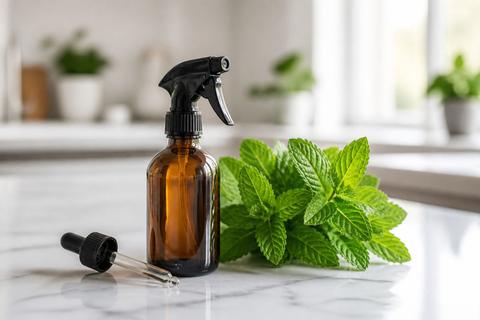
- In a spray bottle, mix 1 cup (240 mL) water with 10 to 15 drops peppermint essential oil and a drop of dish soap to help it emulsify.
- Shake well for 30 to 60 seconds before each use.
- Spray lightly on baseboards, door frames, and cracks. Do not flood the surface.
- Test a small hidden area first since some finishes react to oil.
Use essential oil, not extract or flavoring. Extract carries added sugars and carrier ingredients that dilute the menthol content and can leave residue.
Using it in rooms, closets, and around baseboards
Target the routes pests actually travel, then work on cutting off new access.
- Spray along baseboards in affected rooms, focusing on corners and edges behind furniture.
- Treat closet thresholds and the underside of door frames where drafts pull insects in.
- Mist lightly under sinks and behind toilets, only after cleaning up dust and spills first.
- Leave the treated area dry and undisturbed so the oil has time to work.
For ants, trace the trail back toward the entry point and treat that line specifically. For spiders, prioritize edges and corners over open floor space.
How often to reapply for the smell to last
The scent is doing the work, and it evaporates. Stick to a schedule instead of waiting until you notice it has faded.
- Reapply every 2 to 3 days for spot deterrence.
- Reapply after cleaning, since wiping and soap residue strip the oil film.
- Reapply after rain or high humidity if the entry point is exposed outdoors.
- If pests are still active after a week of consistent reapplication, switch tactics: seal the entry point, remove the attractant, and use control matched to the actual species.
A strong smell in the room does not mean the treatment is reaching the pests. What matters is contact on the surfaces they cross.
Peppermint oil for animals and yard pests
What it may do to squirrels and raccoons
An unpleasant, unfamiliar odor can make squirrels and raccoons avoid a spot briefly, but food availability and safe nesting options matter more to them than smell.
Use peppermint oil as a short-term deterrent where you cannot install a physical barrier right away. The scent fades within days, and the animals come back once it does. For anything longer than a few days, remove what is drawing them in (bird seed, fallen fruit, open trash) and add physical barriers like secured bins and sealed access points.
Does peppermint deter deer, or is that mostly anecdotal?
Mostly anecdotal. Some people report success, but deer behavior depends on season, hunger, local pressure, and what else is available to eat nearby. Peppermint odor alone does not reliably stop deer from feeding if the plants are accessible and nothing else is disrupting them.
If you try it, treat peppermint oil as a temporary hedge, not a fence. Apply it on fence lines and vulnerable plants and refresh it often. Pair it with actual fencing and plant choices that deer avoid for anything that needs to hold up over a season.
Why rabbits are different and when peppermint is not a solution
Rabbits browse at close range and adapt quickly once they learn a "treated" area is still edible. Scent alone rarely stops them the way it can interrupt an ant trail.
Peppermint can be one layer, but it is not a dependable answer for rabbit damage on its own. If rabbits are actively eating your plants, prioritize hardware cloth fencing, buried edging to stop burrowing underneath, and removing the cover they hide in. Peppermint is a supplement to that, not a replacement for it.
Why bird and rodent claims need caution
Claims about peppermint deterring birds and rodents tend to outrun the evidence. Both groups are driven mostly by food access and shelter. If birdseed, fallen grain, pet food, or open shed gaps are still available, scent will not outweigh that reward.
Be careful with application near animals in enclosed spaces, essential oil vapor can irritate the respiratory tract. Use physical exclusion first and treat scent-based deterrence as a secondary layer in open, ventilated areas only. If you see active nesting, droppings, or gnawing, that calls for control matched to the specific animal, not more spray.
Safety, limits, and common mistakes
When peppermint oil can irritate skin, pets, or lungs
Peppermint essential oil can irritate skin and mucous membranes, especially undiluted or used heavily in a closed room. Wear gloves if your skin is sensitive, and avoid spraying it directly near your face.
Pets need extra caution. Cats and small pets are sensitive to essential oil vapor, and it can irritate their lungs. Keep treated cotton balls and sprayed surfaces out of reach. Stop use and switch to a pet-safe method if you notice sneezing, watery eyes, wheezing, or drooling in an animal nearby.
Why concentrated oil is not the same as a pest-control product
Peppermint oil is a natural ingredient, not a regulated, efficacy-tested pesticide. It performs inconsistently across pest species, surface types, and conditions, and it has no way of reaching insects or nests hidden inside walls.
A strong-smelling bottle is not the same as a predictable outcome. Use it as a deterrent, and when an infestation is actually underway, move to methods that address the pest's life cycle directly: sanitation, sealing, traps, and treatment suited to that specific pest.
Avoiding false confidence from strong smell alone
A minty smell in the room feels like proof it is working, but the deterrent only exists where the oil physically is. Spraying the air and calling it done misses the actual problem spots, entry seams, cracks, and the trails pests use.
Track where you have applied it and keep checking those exact spots. If ants keep crossing the same baseboard, increase the frequency and coverage within a safe dilution and go after the food source drawing them there. For flying insects, target entry points and resting surfaces, not the middle of the room.
When to call a professional exterminator
Call a professional once you see signs of an established infestation: repeated sightings across a week, droppings, egg casings, or damage to walls or wiring. Pests that hide deep, cockroaches inside electrical panels, termites in structural wood, are outside what peppermint oil can reach.
Call sooner if multiple pest types are showing up at once. That usually points to an underlying cause like moisture or a structural gap. A professional can identify the species and apply control that actually matches what you have.
Peppermint plant, peppermint oil, and other benefits
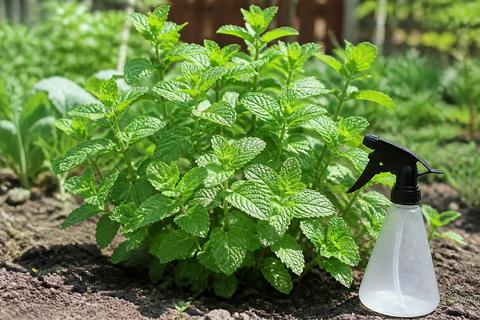
Peppermint plants versus essential oil for pest control
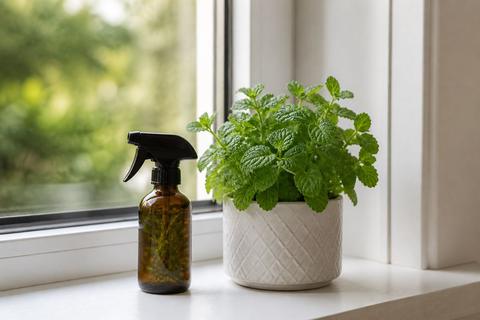
A living peppermint plant gives off scent, but the coverage is limited and inconsistent indoors compared to a concentrated oil applied directly to entry points at a controlled dilution.
Outdoors, a peppermint planting can add a minor deterrent layer along paths and borders, but it will not replace fencing, sanitation, or cutting off food sources. Indoors, essential oil applied at the right dilution and placed correctly is the more practical option.
Health and wellness uses of peppermint
Peppermint shows up in digestive aids, fresh-breath products, and body care for its cooling, soothing effect. Peppermint oil in a diffuser is also used for scent and relaxation, which is a separate use case from pest deterrence.
Keep wellness use and pest-control use separate. Do not fold essential oil diffusing into the same routine as pest treatment around pets or in closed rooms without accounting for both safety concerns.
When peppermint products are for body care, not bugs
Not every peppermint product does anything for pests. Peppermint extract, flavoring, and many scented sprays carry weaker active compounds or added ingredients that change how they perform. A minty lotion or perfume will not deliver the concentrated menthol contact needed for deterrence.
For pest deterrence, use 100% pure peppermint essential oil. Check the label for Mentha piperita and skip anything that only says "peppermint scent" without listing essential oil content.
Frequently Asked Questions
Does peppermint oil repel bugs or just cover up odors?
Both, depending on the pest and the situation. The scent can discourage some insects, but for many pests it mostly masks odor rather than providing lasting control. If pests are already drawn in by food, water, or clutter, peppermint will not remove what is actually attracting them. Use it as a deterrent along entry points and trails, and handle sanitation and sealing so pests lose access to what they need.
What bugs does peppermint oil repel best?
Ants, spiders, and stink bugs show the most consistent response in testing, ants because it disrupts pheromone trails, spiders because the scent alone can make some species avoid an area. Effectiveness still depends on whether pests actually contact the treated surface and how fresh the application is. Apply to baseboards, door thresholds, and travel paths, then reapply every 2 to 3 days since the scent fades.
Does peppermint oil attract bugs?
No. Peppermint oil is not known to attract pests. If pest activity increases after you start using it, that almost always means the actual attractant (food, moisture, clutter) is still present, or the oil is not making contact with where the pests actually travel.
Will peppermint oil keep squirrels, deer, or raccoons away?
It may discourage them for a few days, but the evidence is thin and inconsistent. Food availability and environmental pressure matter more than scent. Remove easy food sources, secure trash, and add physical barriers for anything beyond short-term deterrence.
Is peppermint oil safe to use around rabbits and pets?
Use caution either way. Essential oils can irritate animals, particularly in concentrated form or in a closed space. Keep treated areas out of reach and stop use if you see respiratory irritation or unusual behavior in a pet nearby. For rabbits specifically, peppermint is not a reliable deterrent; physical fencing performs better.
How do I make a peppermint spray for pests?
Mix 1 cup (240 mL) of water with 10 to 15 drops of 100% pure peppermint essential oil (Mentha piperita) and a drop of dish soap in a spray bottle, then shake well. Test on a small hidden area first. Reapply every 2 to 3 days since the scent fades quickly, and spray along baseboards, door frames, and other paths where pests make contact.