What Is the Life Cycle of Locusts? Egg, Hopper, Adult
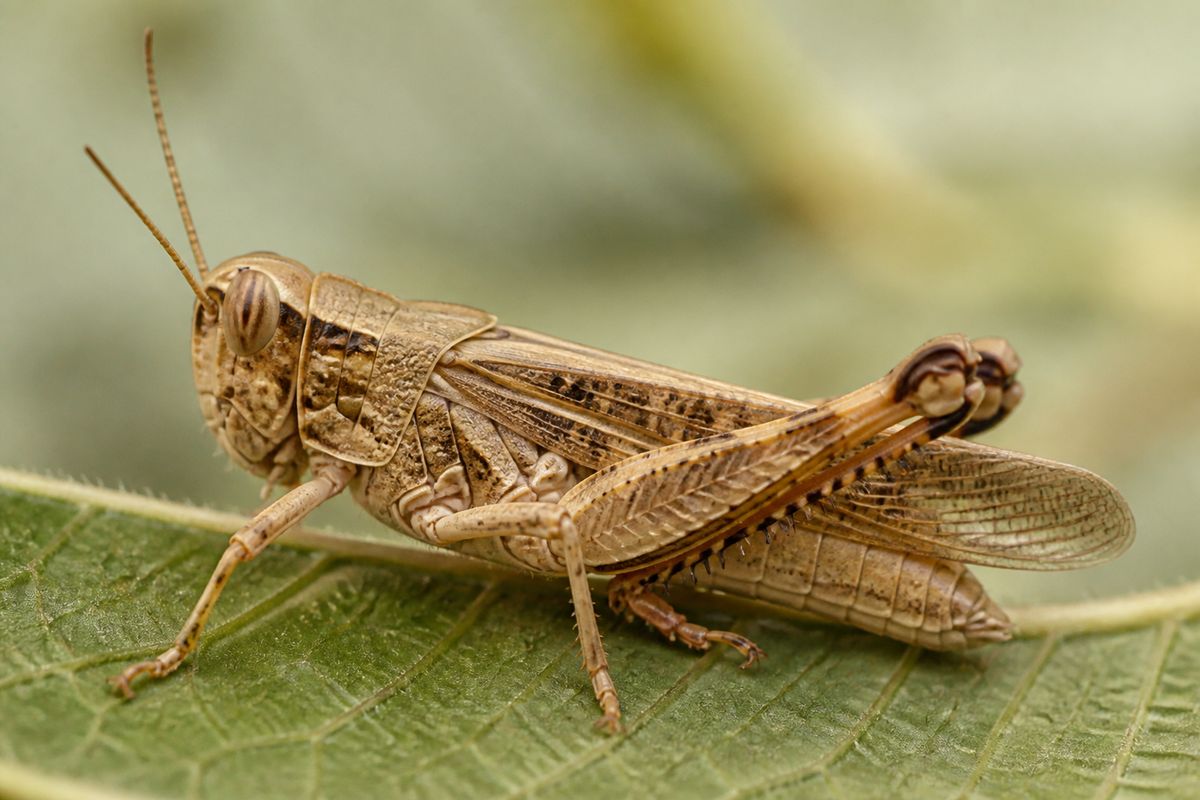
What is the life cycle of locusts? It runs through three stages, egg, hopper (nymph), and winged adult, and the whole process takes roughly two to six months depending on temperature and food supply. Locusts are short-horned grasshoppers in the family Acrididae, and what sets them apart from ordinary grasshoppers is phase polyphenism: the same species can switch between a shy, solitary form and a densely packed, swarming form depending on how crowded the population gets.
Solitary and Gregarious Phases
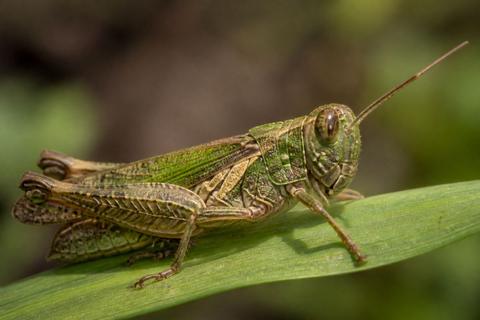
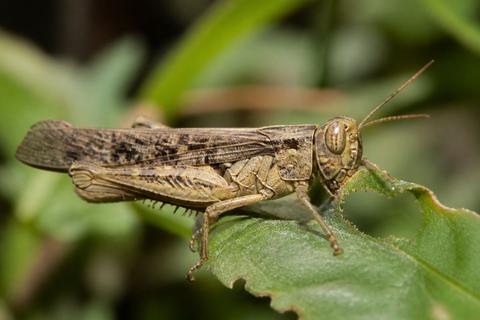
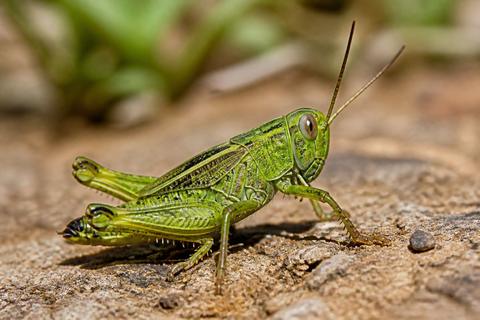
At low population density, locusts behave like typical grasshoppers. They avoid each other, blend into vegetation with green or brown coloring, and stay put. When rain follows drought and vegetation flushes in a small area, egg-laying concentrates and hopper density climbs. Above a crowding threshold, the insects become more active, lose their fear response, darken or brighten in color, and start moving toward each other. This gregarious phase is what turns a local population into a marching band, and eventually a flying swarm.
Egg Stage
A female locust drives the tip of her abdomen into moist sandy soil and deposits an egg pod bound in froth. A solitary female lays about 95 to 158 eggs per pod, while a gregarious female usually lays fewer than 80. Incubation runs from about 10 to 65 days, depending mostly on soil temperature, before the eggs hatch and first-instar hoppers dig their way to the surface.
Hopper Stage: Five to Six Instars
Newly hatched hoppers look like wingless miniature adults. They pass through five to six instars over a period of about 30 to 40 days, molting their exoskeleton at each stage. The first four instars typically last about a week each, while the final instar runs closer to ten days. Hoppers feed constantly on leaves, stems, and shoots, and in gregarious conditions they march together across the ground in bands, stripping vegetation as they go before wings develop in the final molt.
Adult Stage and Reproduction
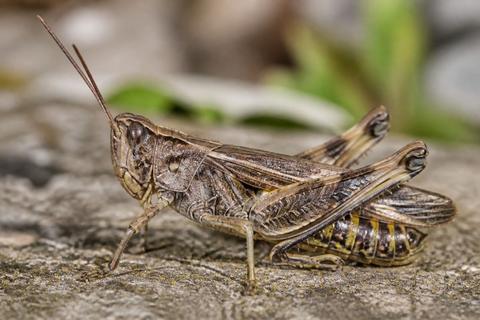
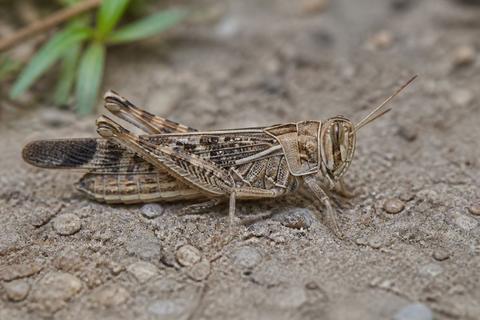
After the last molt, locusts have full wings but cannot fly or breed immediately. Gregarious adults are pink when newly fledged and only turn yellow once sexually mature, a process that more commonly takes two to four months, though it can range from about three weeks to nine months depending on food and weather. A single generation can multiply the population many times over, which is how a local outbreak becomes a regional plague within one breeding season. Adults typically live around three to five months, though this is highly variable depending on species, weather, and ecological conditions.
How Far Swarms Travel
Desert locust swarms fly with the wind, lifting off a couple of hours after sunrise and settling before dusk. On an average day a swarm can travel up to 130 to 150 km or more, and over a week that adds up to well over 1,000 km of travel. A single swarm can pack 40 to 80 million adults into each square kilometer, and swarms themselves range from under 1 km² to several hundred km², which is why an outbreak that starts in one country can reach several others within weeks.
What Triggers an Outbreak
Outbreaks follow a fairly consistent weather pattern: drought that suppresses vegetation and locust competitors, followed by unusually heavy rain that produces a burst of green growth in a concentrated area. Locusts converge on that food source, egg-laying becomes dense, and hopper crowding pushes the population into its gregarious phase. Reduced monitoring in remote breeding areas can let a local build-up go undetected until hopper bands are already forming.
Notable Facts
- Ancient record: Locust plagues appear in some of the oldest surviving agricultural records, including accounts from ancient Egypt, and continue to threaten food security across parts of Africa, the Middle East, and Asia today.
- Same species, different look: A solitary desert locust and a swarming desert locust are the same species. The swarming behavior is a phase change, not a different animal.
- Color signals phase: Pigment shifts during the gregarious phase are driven by hormonal changes, not diet, and field workers use body color as an early indicator of swarm risk.
- Monitoring matters: Agencies including the FAO track breeding conditions in known outbreak zones because catching a population before it turns gregarious is far cheaper than controlling a swarm afterward.
Managing Locust Populations
Control efforts focus on the hopper stage, before wings let the population disperse. Ground and aerial spraying targets hopper bands in known breeding grounds, and satellite-based soil moisture and vegetation data now help agencies predict where the next generation is likely to hatch. Early detection during the solitary phase remains the most effective and least costly point to intervene, since a gregarious swarm that has already taken flight is far harder to contain.