What Are the Characteristics of Locusts? Phase, Color, Diet
What are the characteristics of locusts? They're short-horned grasshoppers in the family Acrididae that switch between two distinct forms: a harmless solitary phase and a destructive gregarious swarming phase. That shift changes their size, color, and behavior so much that early entomologists classified the two forms as separate species.
Size
Typical Length
Most locust species run from about 2 to 15 cm long. The desert locust (Schistocerca gregaria), the species behind most large African and Asian outbreaks, has males roughly 4.5-6 cm and females roughly 5-9 cm as adults, weighing roughly 2 grams each.
How Size Affects Survival
A locust's size shapes how far it can fly on a given day and how much plant material it needs to fuel that flight. Bigger individuals can shrug off some predators but draw the attention of birds and reptiles large enough to take them on. Smaller nymphs move on foot in dense hopper bands before they grow wings and can fly.
Color
Solitary Phase
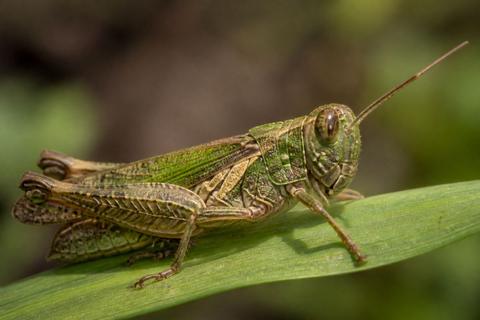
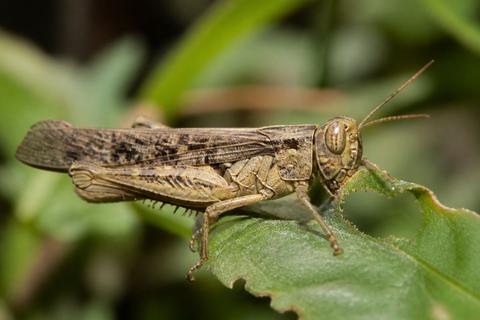
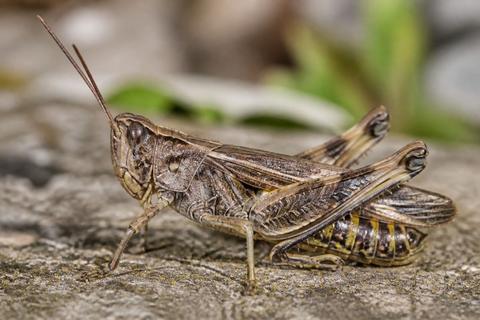
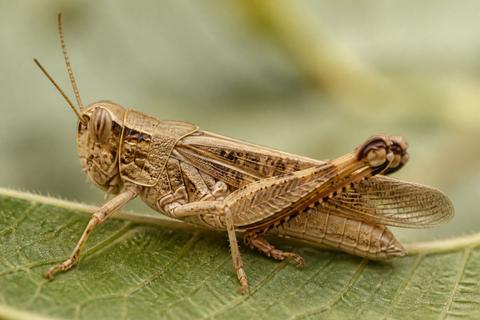
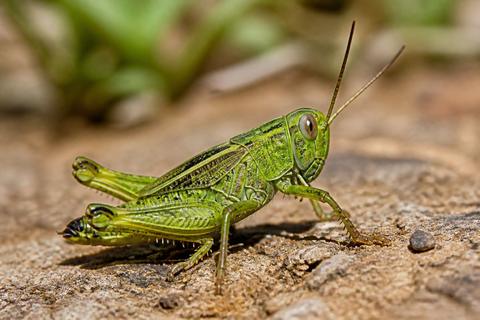
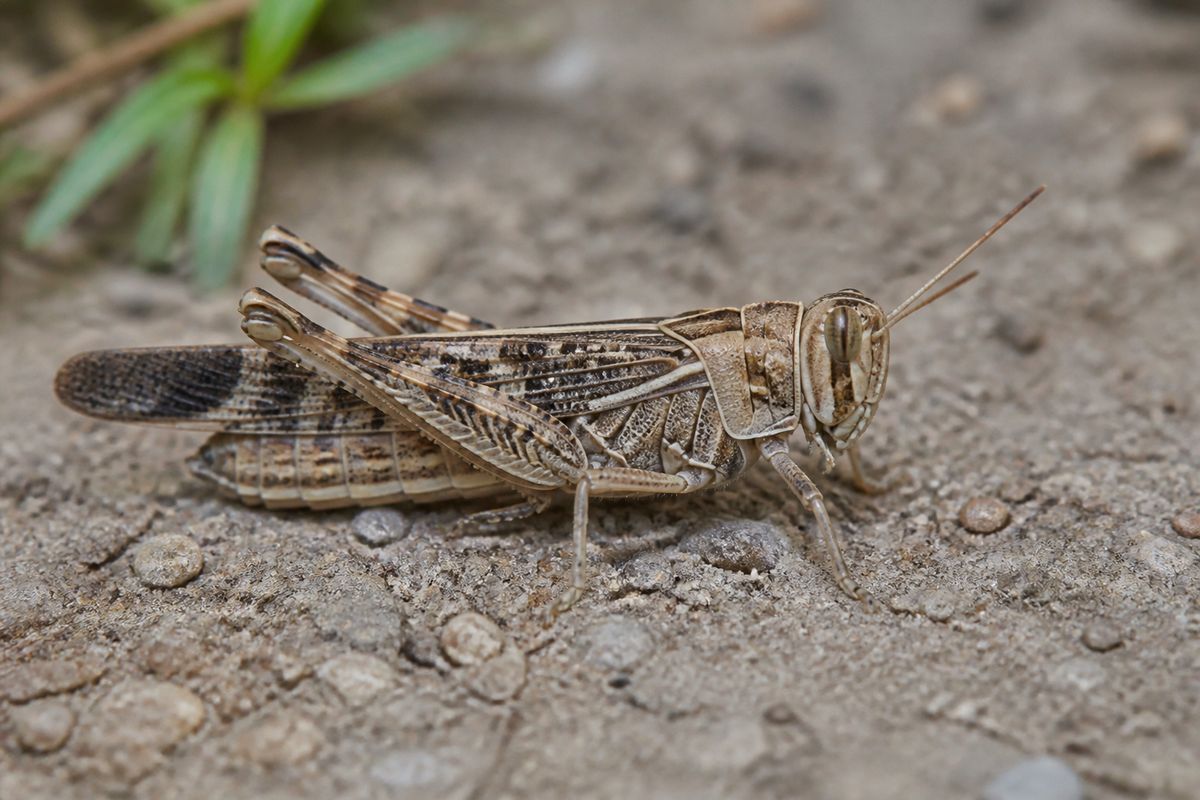
On their own, desert locusts are brown, a color that blends into dry soil and dead vegetation and helps them avoid predators.
Gregarious Phase
Once crowding triggers the shift to swarming behavior, that changes. Gregarious adults turn pink when they're sexually immature and bright yellow once they mature, a color swap driven by hormonal changes rather than diet or age alone. The bright yellow of a mature swarming male is one of the clearest field signs that a solitary population has gone gregarious.
Why the Colors Differ
Camouflage brown suits a lone insect trying not to be eaten. Bright yellow works differently in a swarm of millions, where safety comes from sheer numbers rather than hiding.
Behavior
Feeding
Locusts are herbivores that eat leaves, stems, flowers, seeds, bark, and growing points of nearly any plant, including wheat, barley, millet, and rice. A single adult desert locust eats roughly its own body weight in fresh food each day, about 2 grams. A swarm covering just one square kilometer can hold tens of millions of locusts and eat as much in a day as tens of thousands of people.
Reproduction
Females lay eggs in pods pushed into moist soil using an extendable abdomen. A solitary female lays about 95-158 eggs per pod, while a gregarious female typically lays fewer than 80, and females can lay at least three times in a lifetime.
Life Stages
- Egg: Hatches in roughly 10 to 65 days depending on soil temperature and moisture.
- Hopper (nymph): Passes through five or six instars over about 30 to 40 days, molting its exoskeleton at each stage and growing wing buds by the final instar.
- Adult: Reaches sexual maturity anywhere from a couple of weeks to several months after the final molt, depending on temperature, food, and whether it's in the solitary or gregarious phase.
Swarming
Crowding is the trigger: when hoppers bump into each other repeatedly, physical contact and chemical cues flip their behavior from avoiding other locusts to seeking them out. Swarms typically fly with the wind at 16-19 km/h and can cover 5 to 130 km or more in a single day, taking off a couple of hours after sunrise and settling before dusk.
Communication
Locusts signal each other mainly through touch, especially contact on the antennae and hind legs, and through chemical cues released into the air and onto egg pods. These cues help synchronize hatching and reinforce the pull toward other locusts once a population turns gregarious.
Ecological Role
Predators and Natural Controls
Birds, especially storks and raptors that follow swarms, along with robber flies, mantids, and some rodents, all prey on locusts and normally keep solitary populations in check. Outbreaks happen when a run of drought followed by heavy rain produces the vegetation boom that lets populations explode faster than predators can respond.
Why Outbreaks Matter
Because a swarm can strip a field bare in hours, monitoring solitary populations for the color and behavior shift toward gregarious swarming remains the main defense against major crop losses.