Where Do Crickets Live? Fields, Basements, and Trees
Where do crickets live? Outdoors, most species stay close to the ground in grass, leaf litter, and soil burrows, while a handful of species have moved into houses, basements, and even caves. Crickets belong to the order Orthoptera, the same group as grasshoppers and katydids, and different families within that group have settled into very different corners of the world.
Ground and Field Habitats
Most crickets people notice are ground crickets and field crickets, and they favor open, low vegetation over deep woods.
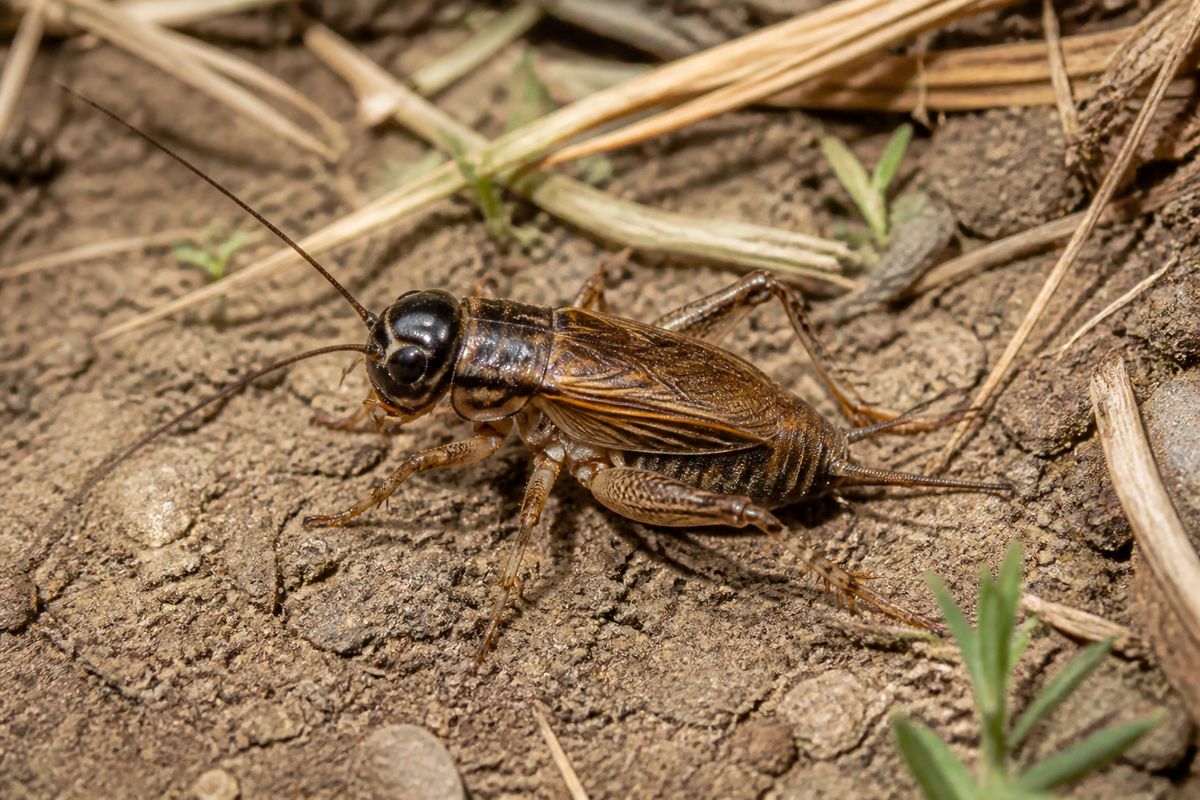
- Field crickets (Gryllus species): In North America, the fall field cricket (Gryllus pennsylvanicus) ranges from southern Ontario into parts of northern Mexico, burrowing into soil in fields, forest edges, and grassy disturbed ground near houses and roadsides. Adults run 15 to 25 millimeters long and are dark brown to black.
- Ground crickets (Nemobiinae): Smaller and quieter than field crickets, these live in leaf litter and thatch, where their mottled brown color hides them from birds and shrews.
Trees, Shrubs, and Tall Vegetation
Tree crickets (genus Oecanthus) skip the ground entirely. According to the Singing Insects of North America reference maintained by the Orthopterists' Society, most Oecanthus species live in herbaceous vegetation, while a few are tied to specific plants: O. pini sticks to conifers such as pine, spruce, and juniper, and O. laricis is known only from tamarack and hemlock. Their pale green or straw-colored bodies blend into leaves and stems, which is as much camouflage from predators as it is from people trying to spot the source of their song.
Basements, Crawl Spaces, and Caves
Two groups of crickets specialize in damp, dark places instead of open air.
- Cave and camel crickets (Ceuthophilus species): These humpbacked, wingless crickets lack the ability to chirp and rely on long antennae to navigate in the dark. University of Maryland Extension notes that their preference for dark, moist places almost always restricts them to damp basements and crawl spaces, along with the caves and rock piles they're named for.
- House crickets (Acheta domesticus): Gray-brown and slender, house crickets are drawn indoors by warmth. The same University of Maryland Extension resource notes they are especially fond of warmth but can turn up in any part of a home, not just kitchens or basements. Outside of houses, they're also the species most commonly raised commercially as reptile and bird feed.
Wetlands and Damp Ground
Marshy edges and floodplains support their own cricket populations, drawn by the combination of standing moisture and dense plant cover. These crickets feed on decaying vegetation and detritus rather than living plant material, and the wetland itself does double duty as habitat for the birds, amphibians, and small mammals that eat them.
How Range Shifts by Continent
Cricket ranges track climate and vegetation more than political borders.
North America
Field crickets and ground crickets dominate from Canada to Mexico. Northern populations overwinter as eggs and die off as adults each fall, which is why the fall field cricket gets its name, while southern populations in warmer states stay active for more of the year.
Europe
The European field cricket (Gryllus campestris) is the best-known species on the continent, common in meadows and dry grassland from the Mediterranean north into the UK, where it has been the subject of active reintroduction projects after local declines.
Asia
Asia's climate range, from arid steppe to tropical rainforest, supports an unusually wide mix of cricket species. In China and parts of Southeast Asia, crickets are also raised and kept for cricket fighting and as food, which has shaped local breeding and trade in a few species beyond their wild range.
Africa
Tropical and subtropical Africa hosts dense cricket populations wherever rainfall supports grassland and understory vegetation, and several species are harvested as a protein source in local diets.
Australia
Australia's native crickets have adapted to the continent's dry interior as well as its wetter coastal fringe, with species turning up everywhere from arid scrub to suburban gardens.
What Pushes Crickets to Move
Temperature and Season
Cricket activity is temperature-driven: warmer nights speed up their chirp rate, and sustained warm spells can push populations into higher elevations or further north than their historical range, particularly at the edges of a species' range.
Habitat Loss
Converting grassland to farmland or pavement removes the loose soil and plant cover crickets need to burrow and feed, and it's a bigger driver of local population decline than any single predator.
Predators
Birds, shrews, toads, and ground beetles all take a share of the local cricket population, which is why species without wings or a strong jump, like cave crickets, lean so heavily on staying hidden in the dark instead of fleeing in the open.
Backyard and Indoor Crickets
If you're hearing chirping near a house foundation at night, it's almost always a field cricket or house cricket that's wandered in looking for warmth or moisture as temperatures drop. Sealing foundation cracks and reducing outdoor lighting near doors, which attracts them at night, does more to keep them out than any single indoor treatment.