What Is the Life Cycle of Fireflies? Eggs to Glowing Adults
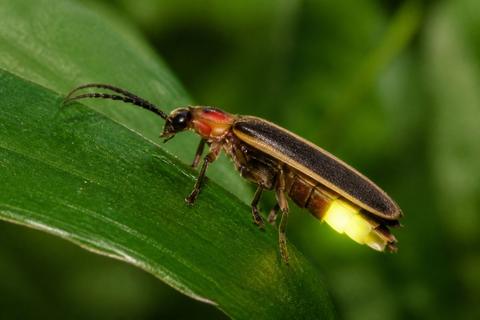
What Is the Life Cycle of Fireflies? Lightning bugs (family Lampyridae) pass through four stages, egg, larva, pupa, and adult, and spend most of that time nowhere near a summer evening light show. These are beetles, not flies, and the vast majority of a firefly's one-to-two-year life is spent underground as a larva hunting prey in the soil.
Four Stages, One Long Wait Underground
A firefly's life is front-loaded toward the larval stage. Depending on the species and climate, a firefly may spend one to two years developing in soil or leaf litter before it ever flashes a light pattern in the air.
1. Egg Stage
Females lay eggs in moist soil or on low vegetation after mating, often depositing several dozen at a time. The eggs are small, round, and pale yellow to brown, frequently laid in loose clusters.
- Incubation: Eggs typically hatch a few weeks later.
- Early glow: Some species' eggs are faintly bioluminescent even before hatching.
2. Larval Stage
This is where a firefly spends most of its life, often one to two years living in the soil as they develop. Firefly larvae look like small, segmented, armored caterpillars, usually brown or black with pale markings along the sides.
- Diet: Larvae are active predators that feed on snails, slugs, earthworms, and other soft-bodied invertebrates, injecting prey with digestive enzymes before consuming it.
- Bioluminescence: Many larvae glow too, a trait thought to warn predators that they contain defensive chemicals and taste bad.
- Growth: Larvae molt several times as they grow, overwintering in the soil and resuming feeding when temperatures warm.
3. Pupal Stage
Once a larva reaches full size, it burrows into soil, bark, or leaf litter and pupates, typically for one to two and a half weeks.
- Pupation site: Most species pupate underground or inside rotting logs; some use bark furrows on tree trunks instead.
- Transformation: Legs, wings, and reproductive organs form during this immobile stage as larval tissue is restructured.
- Emergence: The adult beetle breaks free of the pupal case once development finishes.
4. Adult Stage
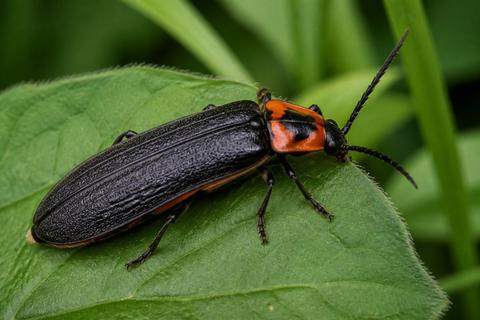
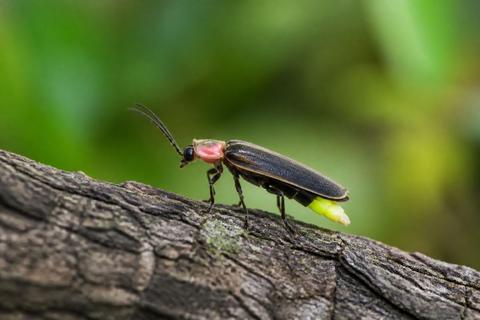
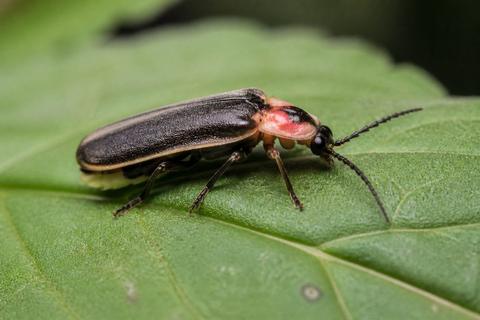
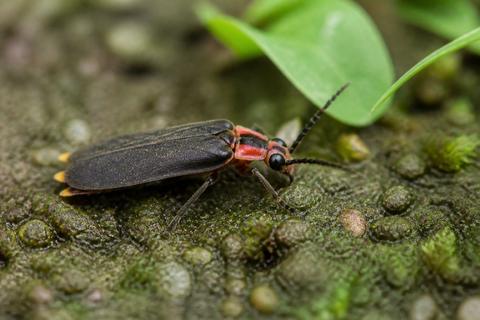
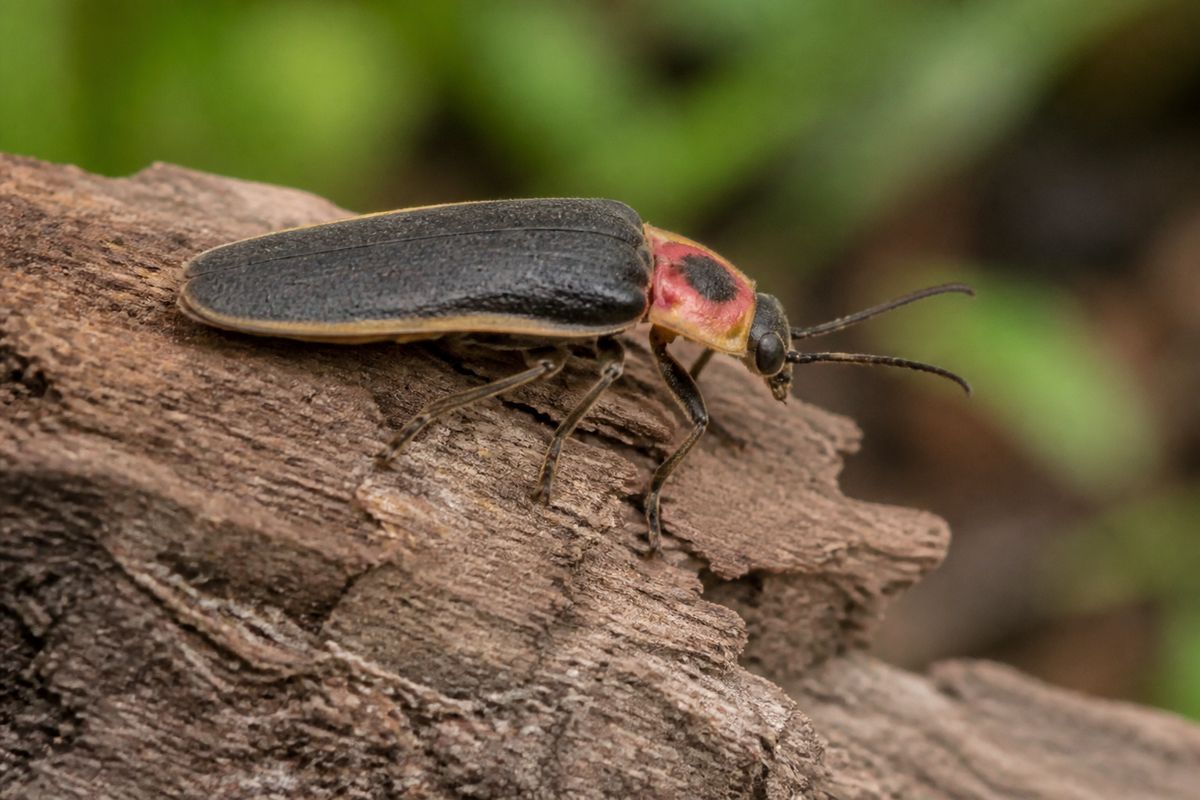
Adult fireflies live only a few weeks, generally through the warm summer months, and their brief window is built almost entirely around reproduction.
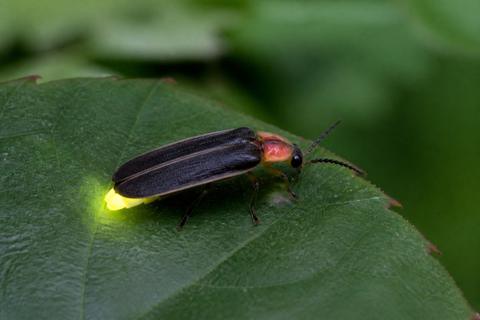
- Mating displays: Males fly and flash species-specific light patterns; females typically wait in vegetation and flash back to signal interest. Photinus pyralis, the common Eastern firefly, is known for its J-shaped flight flash.
- Diet: Many adults eat little or nothing at all; a few species feed on nectar or pollen, and some, like Photuris females, prey on males of other firefly species by mimicking their flash pattern.
- Lifespan: Adults survive only a few weeks before dying.
How the Glow Actually Works
Firefly light comes from a chemical reaction inside light-producing cells called photocytes, located in the lower abdomen. An enzyme called luciferase combines with luciferin in the presence of magnesium ions, ATP, and oxygen to produce light with almost no heat loss, which is why the glow is often called cold light.
- Attraction: Flash color, rhythm, and duration vary by species and are how males and females of the same species find each other in the dark.
- Defense: The glow doubles as a warning signal; fireflies contain lucibufagins, steroid-like compounds that make them distasteful or toxic to many predators.
- Species recognition: Because each species has a distinct flash pattern, the light also prevents fireflies from wasting energy courting the wrong species.
Notable Firefly Facts
-
Species count: There are approximately 2,200 firefly species found worldwide, with around 171 species documented in North America.
-
Habitat: Fireflies favor humid environments with standing water, tall grass, or leaf litter, which is why they're common near ponds, marshes, and forest edges but scarce on mowed, dry lawns.
-
Population pressure: Light pollution, pesticide use, and habitat loss from development are cited by conservation groups as the main drivers behind declining firefly populations in parts of the United States.
-
Larvae as pest control: Terrestrial firefly larvae predate on land snails, earthworms, and other soft-bodied prey, making them a natural check on garden pests like slugs.
-
Research use: Firefly luciferase is widely used in laboratories as a marker enzyme in bioluminescent assays, including gene expression studies and rapid bacterial contamination tests.
-
Cultural meaning: In parts of Japan, the summer firefly-viewing tradition called hotarugari draws crowds to rivers and rice paddies to watch synchronized displays.
What This Means for Your Backyard
Because larvae spend one to two years in soil and leaf litter, a lawn that gets mowed short and sprayed regularly has almost nowhere for that stage to survive. Leaving a damp, unmowed edge near a tree line or pond, skipping pesticides, and cutting back outdoor lighting during summer evenings are the changes most likely to bring flashing adults back to a yard the following year.