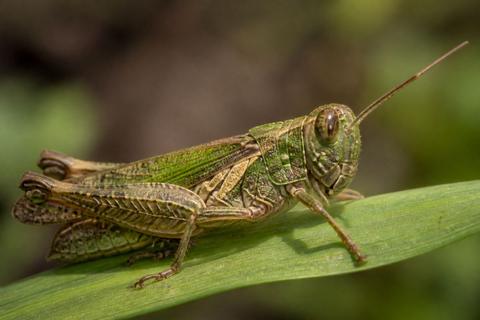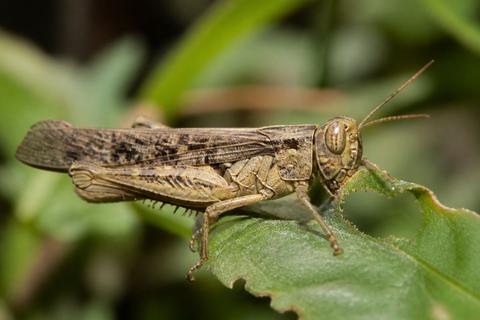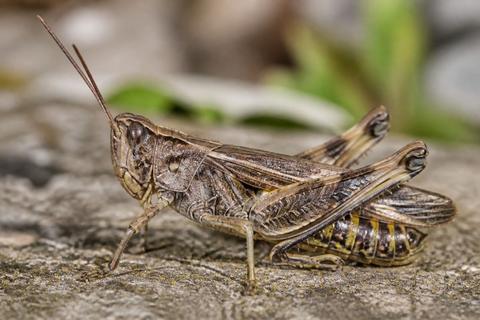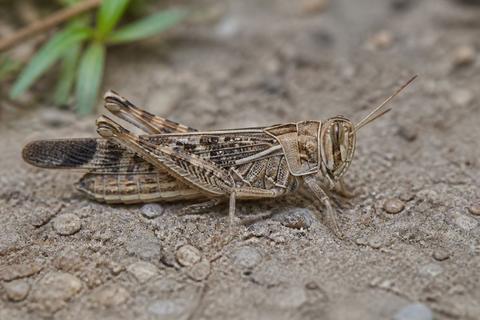
What Do Grasshoppers Eat? Mostly Grasses and Forbs
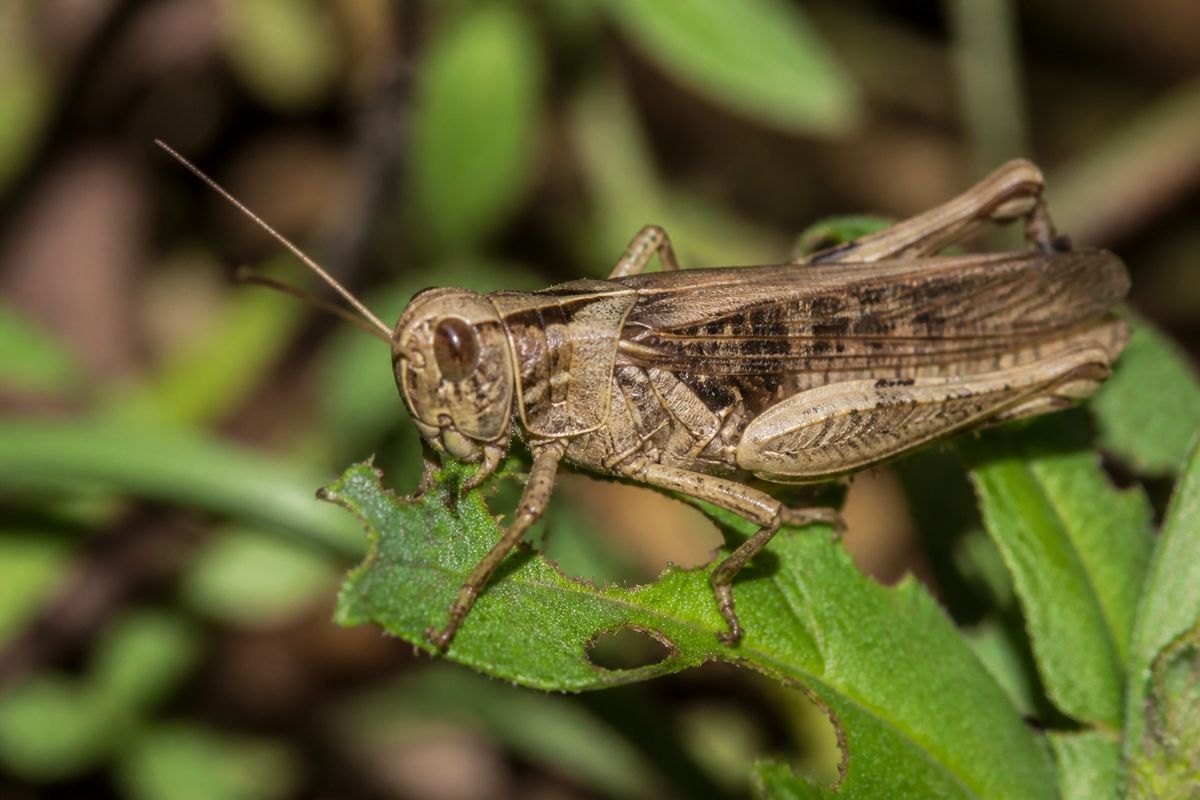
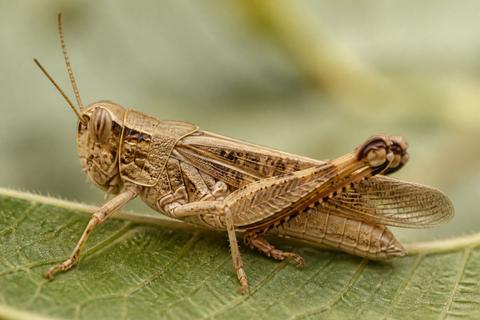
What Do Grasshoppers Eat? Grasses first, then whatever else is green and within reach. Grasshoppers (order Orthoptera, family Acrididae) are herbivores that chew through leaves, stems, flowers, and seeds with a pair of hard, toothed mandibles, and most species shift their menu with the season, the habitat, and their own life stage.
What Grasshoppers Actually Eat
Grasshoppers are almost entirely herbivorous, and grasses make up the bulk of most species' diets. Beyond grasses, they browse legumes such as alfalfa and clover, broadleaf plants like lettuce and cabbage, and, when the opportunity arises, flowers and seed heads. Utah State University Extension notes that grasshoppers "will also feed on flowers, fruits, seed heads, stems, and essentially all above ground plant parts," and that individual species often show strong preferences, with some feeding almost exclusively on one or a few closely related plants. The migratory grasshopper, for instance, has a broad enough host range to damage small grains, alfalfa, clover, corn, vegetables, and ornamentals in the same season.
Grasses and Legumes
Grasses form the largest single share of the diet in most grassland habitats. Legumes such as alfalfa and clover run a close second, supplying protein that grasses lack in comparable amounts.
Broadleaf Plants and Garden Crops
Tender young leaves get eaten before tough, mature foliage, since new growth is easier to cut and higher in nutrients. This is why grasshoppers show up on garden lettuce, cabbage, and bean seedlings well before they touch older, fibrous plant tissue.
Flowers and Seeds
Flowers supply nectar along with protein and carbohydrates, and seeds pack in the calories nymphs need to fuel rapid growth. Neither makes up a large share of the diet, but both get eaten opportunistically when available.
How Grasshoppers Eat
Grasshoppers have chewing mouthparts built for cutting and grinding rather than piercing or sucking. Each mandible carries a sharp cutting edge near the tip and a flatter molar surface near the base. The NC State General Entomology mouthparts reference describes mandibles that "operate from side to side with scissor-like edges for cutting and molar surfaces for grinding or crushing." That combination lets a grasshopper slice off a piece of leaf, then mash it before swallowing.
Grazing Habits
Most grasshoppers graze the surface of leaves and grass blades, stripping soft tissue first and leaving tougher stems and ribs for later, or skipping them entirely unless food runs short. A feeding grasshopper works in short bouts, moving to a new leaf or plant every few minutes rather than stripping one stem bare.
What Changes Their Feeding
-
Season: Spring and summer growth gives grasshoppers a steady supply of fresh, high-moisture plant tissue. By late summer and into drought, that supply thins out and grasshoppers turn to drier, less nutritious plants, including crop residue and weeds they would otherwise ignore.
-
Local food supply: Overgrazed pasture or a drought year pushes grasshoppers onto plants they normally skip, which is part of why outbreak years often coincide with dry conditions.
-
Life stage: Nymphs molt several times before reaching adulthood and need more protein relative to their body size than adults, who lean more on carbohydrates for flight muscle and egg production.
Nutrients Grasshoppers Need
A grasshopper's plant diet has to supply carbohydrates, protein, a small amount of fat, and a handful of vitamins and minerals.
Carbohydrates for Energy
Sugars and starches in grasses and other plant tissue are the main fuel source, particularly during active growth phases when the plants themselves are carbohydrate-rich.
Protein for Growth
Protein demand is highest during the nymphal stage, when the insect is molting and building new tissue repeatedly on its way to adulthood. Legumes and other protein-dense plants matter more to nymphs than to adults for this reason.
Fats, Vitamins, and Minerals
Fat is a minor part of the diet but supports cell function and energy reserves. Grasshoppers also pull vitamins A and B-complex, along with minerals like calcium, from the plants they eat, both needed for molting and for building the cuticle.
Environmental Pressure on Food Supply
Grasshopper feeding doesn't happen in a vacuum. The plants available to them shift with the climate, the land use around them, and human pest control efforts.
Drought and Shifting Growing Seasons
Warmer, drier conditions push flowering earlier and thin out the vegetation grasshoppers rely on, which can concentrate populations onto the remaining green plants, including crops.
Habitat Loss
Converting native grassland to farmland or pavement removes the mix of host plants grasshoppers depend on, forcing populations either to specialize on whatever crop remains or to decline.
Pesticide Use
Broad-spectrum insecticides aimed at grasshoppers or other pests can also kill the predators and parasitoids that normally keep grasshopper numbers in check, which sometimes leads to a rebound the following season.
When Grasshoppers Turn Into Crop Pests
Most grasshoppers never reach pest densities, but a handful of species can, especially the migratory grasshopper and, in the case of true locusts, swarming phase-change species.
Swarming and Band Behavior
Under crowded, favorable breeding conditions, some species shift into a gregarious phase and move in dense bands or swarms. The FAO's Desert Locust overview notes that "an adult Desert Locust can consume its own weight in fresh food per day," and that a single square kilometer of swarm can eat as much in a day as roughly 35,000 people, which is why a swarm can strip a field bare within hours.
Cost to Growers
Where outbreaks hit wheat, corn, alfalfa, or vegetable fields, growers face both direct yield loss and the added cost of insecticide applications, which is why most extension programs monitor grasshopper density in rangeland before it reaches crop edges.
Why This Matters Beyond the Field
Grasshopper feeding choices ripple outward. The plants they favor shape which grasshopper species dominate a given field or prairie, and grasshoppers themselves are a major food source for birds, reptiles, and small mammals. A shortage of the grasses and forbs they prefer shows up first in grasshopper numbers, then in everything further up the food chain that depends on them.