What Are the Characteristics of Crickets? Size to Song
What Are the Characteristics of Crickets? Members of the family Gryllidae (order Orthoptera) are built for two things: staying hidden and being heard. Their size, coloring, and behavior all trace back to those two pressures, from a burrowing mole cricket's shovel-shaped legs to the file-and-scraper wings that produce every chirp.
Size
Cricket length runs from about 5 mm up to 50 mm depending on the species. The house cricket (Acheta domesticus) measures 16 to 21 mm long as an adult, with wings that cover the abdomen, and it is the one most people actually encounter indoors.
Size by species
-
House cricket: 16-21 mm, light yellowish brown, the species most commonly sold as feeder insects and most often found indoors.
-
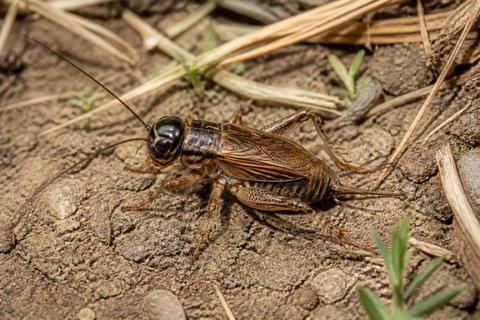
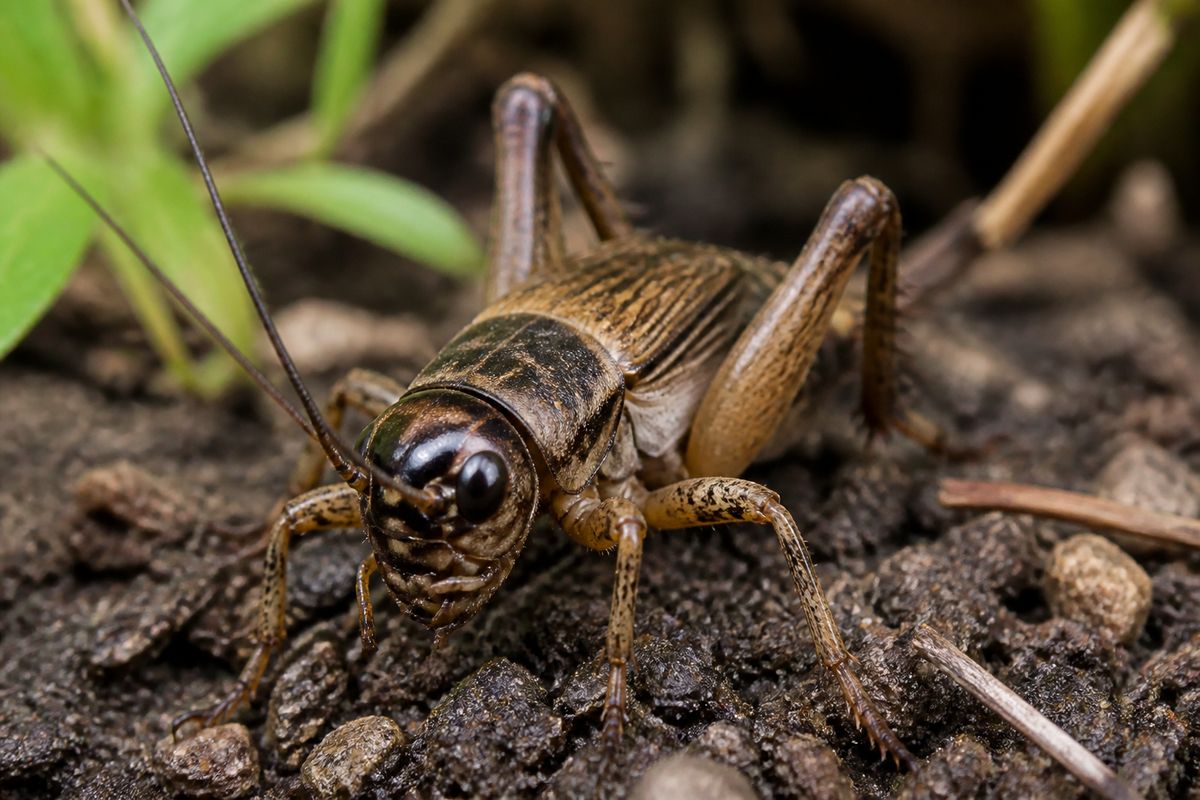
Field cricket (Gryllus pennsylvanicus and related species): larger and stockier, up to about 30 mm, common in lawns, fields, and under garden debris.
-
Mole cricket (Gryllotalpa spp.): the largest common type, reaching roughly 50 mm. Its forelegs are enlarged with blade-like projections (dactyls) used for digging rather than jumping.
-
Tree crickets (subfamily Oecanthinae): slimmer and smaller, 10-20 mm, pale green to blend against leaves and stems.
Why size matters
Larger males can produce louder, lower-pitched calls, which tends to win them more mating opportunities. Smaller crickets trade that advantage for speed: less mass to move means faster reflexes when a bird or spider gets close.
Color
Coloring lines up closely with where a species spends its time.
Common patterns
-
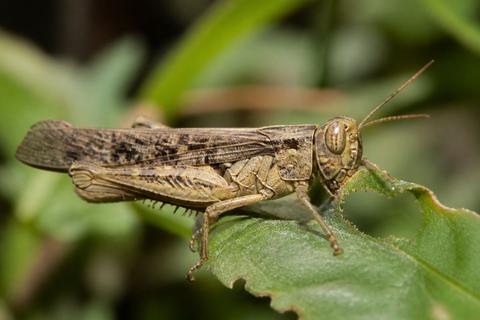
Black to dark brown: the default for ground- and litter-dwelling species like field crickets, matching soil and dead leaves.
-
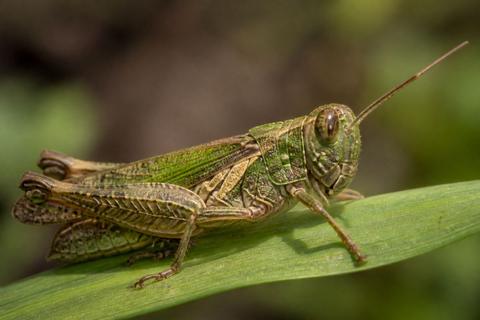
Green: tree crickets, matching foliage they live and sing in.
-
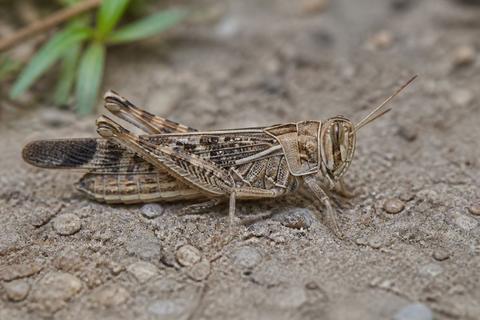
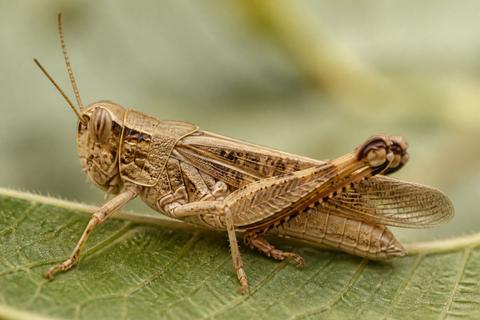
Tan and straw brown: common in grassland species, breaking up their outline against dry grass.
-
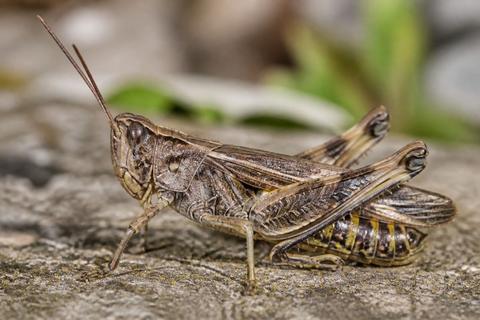
Banding and mottling: some species carry darker markings across the head or wings that further disrupt their outline against leaf litter.
What color does for a cricket
- Camouflage: matching soil, bark, or foliage is the main defense against birds, toads, and small mammals.
- Heat absorption: darker cuticle absorbs more solar heat, which can matter for species active at cooler times of day.
- Signaling: in a few species, brighter or contrasting coloring shows up during courtship alongside the male's calling song.
Sound and Communication
Chirping, technically called stridulation, is produced by rubbing the forewings together rather than by vocal cords. One wing carries a ridged "file" and the other a hardened "scraper" edge, and the cricket rubs the two together to chirp. Raising and lowering the wings drags the scraper across the file, and a resonating patch on the wing called the harp amplifies the resulting vibration into the chirp you hear.
Calling songs
- Males chirp to attract females; each species has a distinct pulse rate and pattern that females use to find a mate of the right species.
Rivalry and territory
- A separate, more aggressive song is used between competing males, and the louder or more persistent singer typically holds the better calling spot.
Feeding
Most crickets are omnivorous scavengers rather than picky eaters. Typical diet items include:
- Grass and broadleaf plant material
- Fallen fruit
- Decaying plant matter and detritus
- Other insects, including dead or injured crickets
Social Behavior
Most crickets live and forage alone, but crowding changes their behavior.
-
Solitary by default: adults typically defend a small territory around a burrow or crevice rather than living in groups.
-
Density-driven hierarchy: where crickets are forced into close quarters, such as high-density rearing bins or unusually crowded field populations, dominant males claim the best shelter and calling positions through repeated aggressive encounters.
Grooming
Crickets regularly clean their antennae and legs with their mandibles and palps, removing dirt, fungal spores, and mites that would otherwise interfere with sensing and movement.
Escaping Predators
Crickets rely on three main defenses when threatened:
-
Jumping and short flight: powerful hind legs launch a cricket several body lengths in an instant, and winged species can follow up with a short glide or flight.
-
Retreating to cover: diving under leaf litter, into a crevice, or down a burrow.
-
Freezing: holding still to avoid triggering a predator's motion detection.
Activity Patterns
Most cricket species are nocturnal, becoming active after dusk when temperatures drop and the risk of water loss through their cuticle is lower. Night activity also cuts down encounters with day-hunting birds. A few tree cricket species are exceptions and sing through the day as well as at night.
Reproduction
Courtship
A male's calling song draws females within range; some species follow up with a softer courtship song and antennal contact once a female approaches, before mating occurs.
Egg-Laying
After mating, the female uses her ovipositor, a slender tube extending from the rear of her abdomen, to insert eggs directly into moist soil or plant tissue. She can easily lay 100 eggs, and sometimes as many as 200, during her life, typically depositing them in small batches rather than all at once. Eggs hatch after several weeks, with timing driven mainly by soil temperature and moisture.
Reading a Cricket's Characteristics in the Field
Size, color, and behavior are not independent traits, they are a single package shaped by where a species lives. A pale green, slow-flying insect singing from a shrub at night is almost certainly a tree cricket; a stout dark insect digging into turf is a mole cricket; a mid-sized brown insect chirping from a lawn edge is very likely a field cricket. Matching those three traits together is usually enough to identify what is singing in your yard without ever seeing it.