Top 10 Facts About Locusts: Swarms, Crowding, and Outbreaks
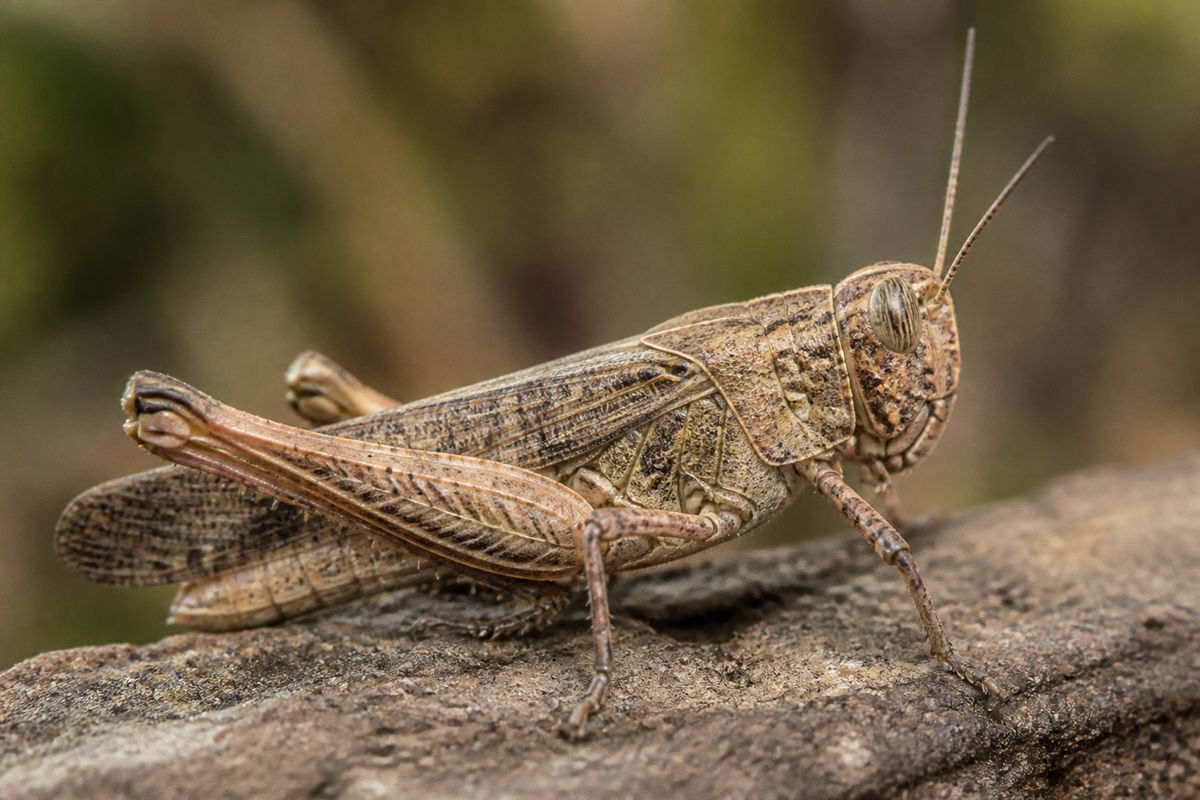
Top 10 Facts About Locusts starts with one distinction: a locust is a grasshopper that changes behavior under crowding. Locusts belong to the family Acrididae, and only a subset of the world's grasshopper species can trigger this shift, called phase polyphenism, that turns solitary insects into a coordinated swarm.
1. Locusts Are Grasshoppers With a Switch
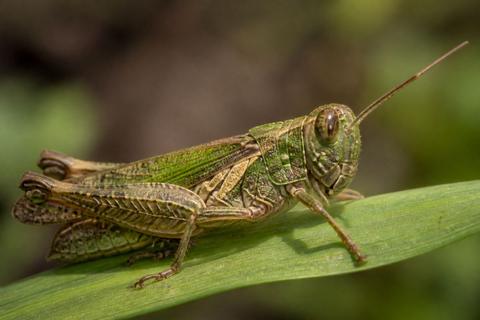
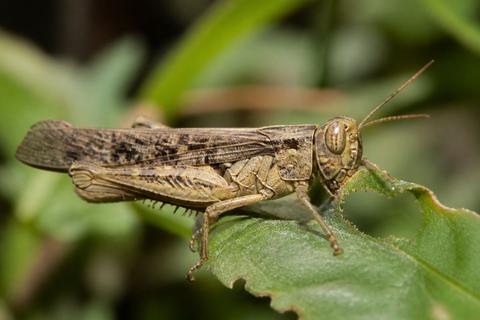
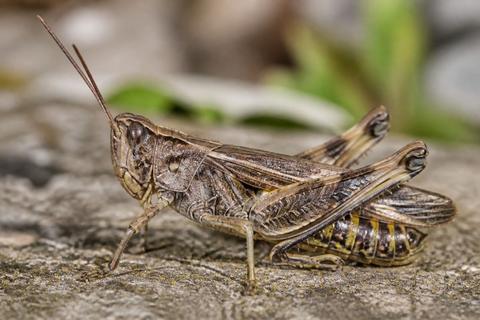
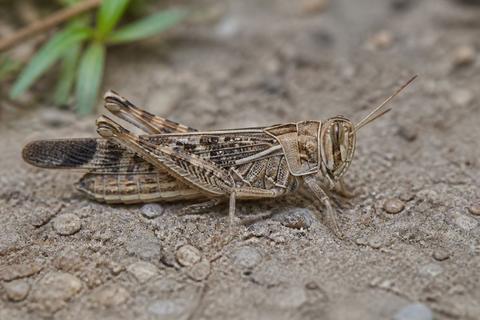
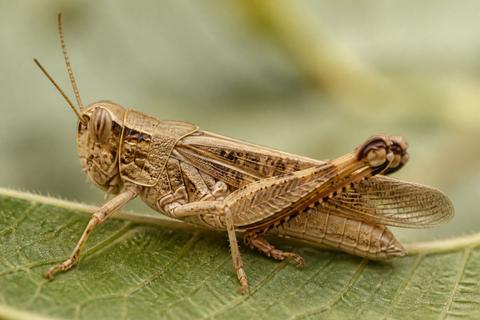
Locusts are short-horned grasshoppers in the family Acrididae. The best-known species is the desert locust, Schistocerca gregaria, which forms the swarms most associated with crop devastation in Africa, the Middle East, and South Asia. What sets locusts apart from ordinary grasshoppers is phase polyphenism: under low population density they live and look like typical grasshoppers (the solitarious phase), but crowding triggers a shift in behavior, coloring, and even wing length toward the gregarious phase.
2. Crowding, Not Instinct, Triggers Swarming
Swarming is not a fixed trait, it is a response to density. When locust populations become crowded, repeated physical contact between individuals, especially touching on the hind legs, pushes them from solitary to gregarious behavior within hours. Over successive generations under continued crowding, gregarious locusts also change color and shape, becoming more mobile and more attracted to each other. Desert locust swarms can then travel roughly 5 to 130 kilometers (3 to 80 miles) or more in a single day, riding the wind in search of new vegetation.
3. Egg to Adult in About a Month or More
A locust's life cycle runs through three stages: egg, nymph (hopper), and adult. Females lay egg pods in the soil, and the eggs typically hatch within two weeks under warm conditions. Nymphs then pass through several instars, or growth stages, separated by molts, before fledging into a winged adult; the exact number of instars and how long each takes varies by species and depends heavily on temperature and food availability. Once they fledge into winged adults, locusts still need two to four weeks of feeding before they are sexually mature, though maturation can stretch to several months if food or weather conditions are poor.
4. A Square Kilometer of Swarm Eats Enough for 35,000 People
Locusts feed on leaves, flowers, bark, stems, fruit, and seeds, and each locust eats roughly its own body weight in fresh vegetation daily, about two grams. That sounds small until it is multiplied: a swarm covering just one square kilometer can hold around 40 million locusts, and the FAO estimates that swarm eats as much food in a day as roughly 35,000 people. Large swarms spanning hundreds of square kilometers can strip a field bare within hours.
5. Where Locust Species Are Found
Locust species occur on every continent except Antarctica. The desert locust ranges across a wide belt spanning North Africa, the Arabian Peninsula, and South Asia during major outbreaks. The migratory locust (Locusta migratoria) is established across Europe, Asia, Africa, Australia, and New Zealand, while the Australian plague locust (Chortoicetes terminifera) is confined to the interior of Australia. Each species has its own outbreak zones tied to breeding habitat and seasonal rainfall.
6. Outbreaks Can Cost Billions
Locust plagues hit farming regions hardest. The 2019 to 2022 desert locust upsurge across East Africa and the Arabian Peninsula was described as the worst in decades for several affected countries, damaged cropland and pasture across multiple nations, and prompted an international response coordinated by the FAO, with control and recovery costs estimated at well over a hundred million dollars and potential agricultural losses estimated in the billions. Affected countries typically see reduced cereal and pasture yields for one to two growing seasons following a major swarm event, which drives up local food prices and disrupts livestock feed supplies.
7. Birds, Fungi, and Satellites Keep Swarms in Check
Locust nymphs and adults have plenty of natural predators, including birds, rodents, reptiles, and predatory insects, and these keep populations low in most years. Outbreaks happen when heavy rain after drought produces a flush of vegetation that lets survival and breeding rates spike faster than predators can respond. Control programs respond with targeted pesticide spraying, biopesticides based on the fungus Metarhizium acridum, and satellite-based monitoring of rainfall and vegetation that the FAO uses to forecast where breeding is likely before a swarm forms.
8. From Biblical Plague to Dinner Plate
Few insects carry as much cultural weight as the locust. The eighth plague of Egypt in the Book of Exodus describes a locust swarm stripping the land bare, and locust plagues appear as omens of famine and divine judgment across other historical and religious texts. At the same time, locusts are eaten in parts of Africa, the Middle East, and Mexico, where chapulines (typically grasshoppers, though locusts are prepared the same way) are toasted with chili and lime and sold as a common street food in Oaxaca.
9. Rainfall Patterns Are Shifting Outbreak Risk
Locust breeding is tightly linked to soil moisture and vegetation, so shifts in rainfall patterns change where and how often outbreaks occur. The 2019-2022 upsurge followed an unusually active cyclone season in the Indian Ocean that dumped heavy rain on parts of the Arabian Peninsula that rarely get enough moisture to support locust breeding. Researchers who study locust ecology expect this kind of rainfall-driven breeding boost to become more relevant as regional weather patterns continue to shift.
10. Tracking Swarms From Orbit
Modern locust control depends more on forecasting than on reacting after a swarm has formed. FAO's Locust Watch combines satellite rainfall and vegetation data, ground surveys, and historical breeding records to issue country-by-country risk bulletins, giving national control teams a window to treat hopper bands on the ground before they fledge into mobile swarms. Researchers are also mapping the genes involved in gregarious behavior, aiming at treatments that could interrupt the swarming switch itself rather than relying on broad-spectrum pesticides after the fact.
Why These Facts Matter for Farmers and Food Security
Locusts are grasshoppers that a handful of environmental triggers, crowding, rainfall, and vegetation flushes, can turn into one of agriculture's most destructive pests. Knowing the biology behind that switch, and the scale of forecasting now used to catch outbreaks early, explains why a locust plague still makes international headlines when it forms.