Where Do Longhorn Beetles Live? Dead Wood to Backyards
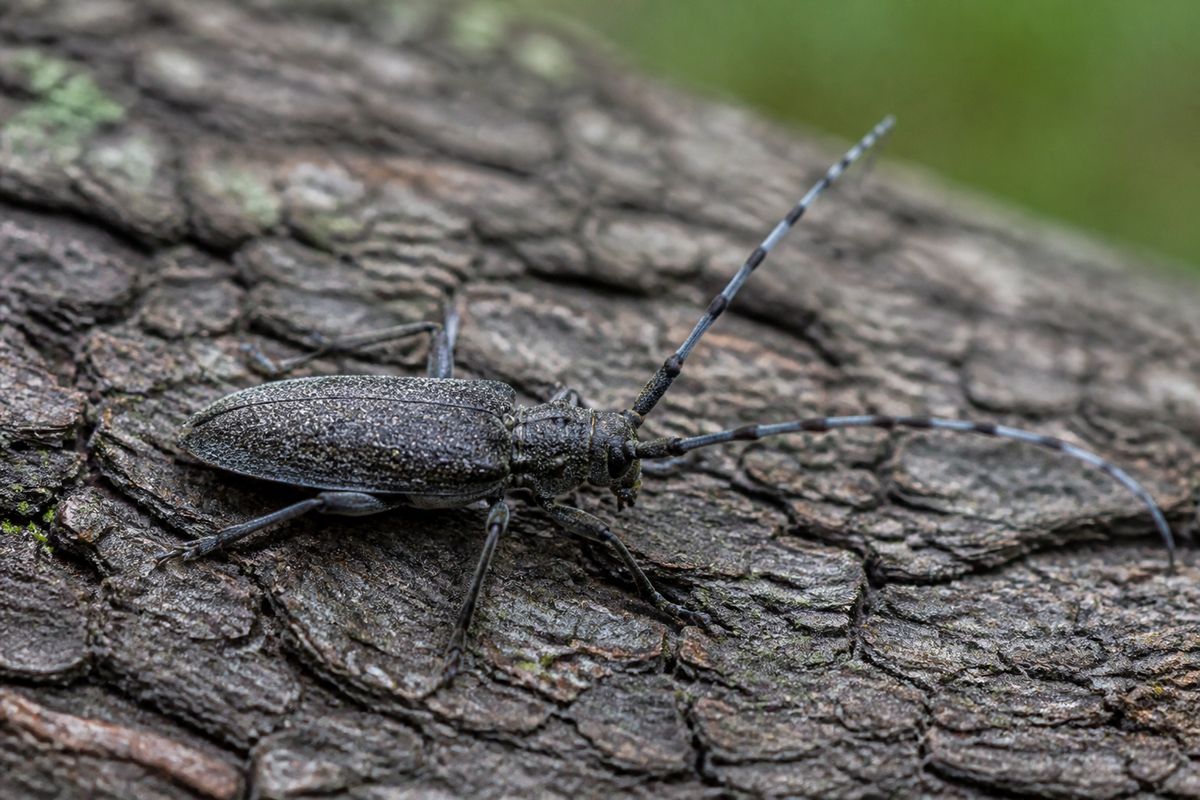
Where Do Longhorn Beetles Live? Almost anywhere there is wood in decline. Members of the family Cerambycidae turn up on every continent except Antarctica, with more than 35,000 described species split mostly between two subfamilies, Lamiinae and Cerambycinae. The antennae, often as long as or longer than the body, are the giveaway in the field. The larvae are the ones doing the real work: they tunnel into bark, sapwood, or roots and stay there for months or years before an adult ever emerges.
What Kind of Wood They Need
Adults are usually found resting on or near whatever plant their larvae are developing in. That's not incidental; females lay eggs in bark crevices on a specific host, and the larvae can't travel far once they hatch. Larvae chew through the inner bark and, in older infestations, the wood of limbs, trunks, and main roots, and nearly any woody species can end up hosting them. Deadwood in the early stages of decay is the sweet spot: soft enough to tunnel through, but still holding enough structural cellulose to feed on.
Deciduous and Mixed Forests
Oaks, maples, and willows carry a disproportionate share of North American longhorn species, partly because broadleaf forests generate a steady supply of fallen limbs and standing dead trees in different stages of rot. A single dead oak can host several cerambycid species at once, each specializing in a different layer of the wood, from the bark down to the heartwood.
Conifer Stands
Pines and firs support their own set of specialists. Resin is a deterrent to most insects, but sawyer beetles (genus Monochamus) and several pine-associated cerambycids are adapted to it, and they're the main reason quarantine officials watch conifer lumber and firewood for hitchhiking larvae.
Yards, Parks, and Woodpiles
Firewood stacks, mulch beds, and street trees are enough to sustain a population. A backyard with an aging maple or a pile of unseasoned firewood can host the same species you'd find in a forest interior, just at lower density. Heavy pesticide use and the removal of dead limbs for tidiness are the two things most likely to push them back out of a yard.
Grasslands and Scrub
Where trees thin out into grassland or scrub, longhorn beetles concentrate around whatever woody shrubs remain. Adults of several species visit flowers to feed on pollen and nectar between mating bouts, while females still seek out the nearest suitable shrub or root system to lay eggs.
Farmland
In orchards and timber plantations, the relationship with growers is mixed. Some species are minor players that break down storm-damaged wood. Others, like the Prionus longhorn beetles that feed on blueberry roots for three to five years before pupating in the soil, cause real economic damage because the larvae work underground and out of sight for so long that plants are already declining by the time growers notice.
Regional Distribution
North America hosts several thousand described species, including the invasive Asian longhorned beetle (Anoplophora glabripennis), which the USDA identifies as a destructive wood-boring pest of maple and other hardwoods and which is now under active federal quarantine and eradication in parts of Massachusetts, New York, Ohio, and South Carolina. European forests hold their own native cerambycid fauna, several of which are used as indicator species for old-growth forest health. Tropical Asia and the Neotropics (Central and South America) carry the highest diversity of all, together accounting for roughly 60% of described species worldwide. Australia's longhorn beetles range from rainforest specialists to species adapted to arid scrub.
Elevation
Cerambycids turn up from sea level to high mountain forests. In temperate zones, species counts drop off sharply at higher elevations, where colder temperatures shorten the growing season for host trees and limit deadwood turnover. In the tropics, mountain ranges often do the opposite, adding species as microclimates shift with altitude.
What Actually Controls Where They Show Up
Wood Condition
Freshly dead or stressed wood draws females first. As decay progresses and fungi soften the cellulose, the wood becomes easier for young larvae to process, which is why a single fallen tree attracts different cerambycid species over the several years it takes to fully break down.
Temperature and Moisture
Adult activity tracks warm weather closely; most species fly and mate in late spring through summer. Larval survival depends more on moisture in the wood itself. Wood that dries out too fast can strand larvae mid-tunnel, while consistently damp deadwood supports longer development.
How the Forest Is Managed
Selective logging that leaves standing dead trees and downed limbs in place keeps a supply of breeding material available. Clear-cutting, aggressive deadwood removal, and broad-spectrum pesticide use all cut that supply and push populations out of managed areas, sometimes for good.
Conservation Pressure
Deforestation and the routine removal of dead and dying trees from parks and woodlots are the biggest threats to native longhorn beetle populations. Because many species are host-specific, losing a single tree species from a region can eliminate the beetles that depend on it, even where forest cover otherwise looks intact. Programs that leave standing deadwood (called snags) in managed forests and urban green spaces are one of the more direct ways to keep populations stable.
Finding Them Yourself
The most reliable way to find longhorn beetles is to check dead or dying wood directly: fallen branches, stressed trees, cut firewood, or old fence posts. Exit holes, sawdust-like frass at the base of a trunk, and adults resting on bark in late spring or summer are the clues to look for. Reporting suspected Asian longhorned beetle sightings to state or USDA extension offices matters more than casual observation, since early detection is what keeps a local infestation from becoming a regional one.