How Do Dung Beetles Contribute to the Ecosystem?
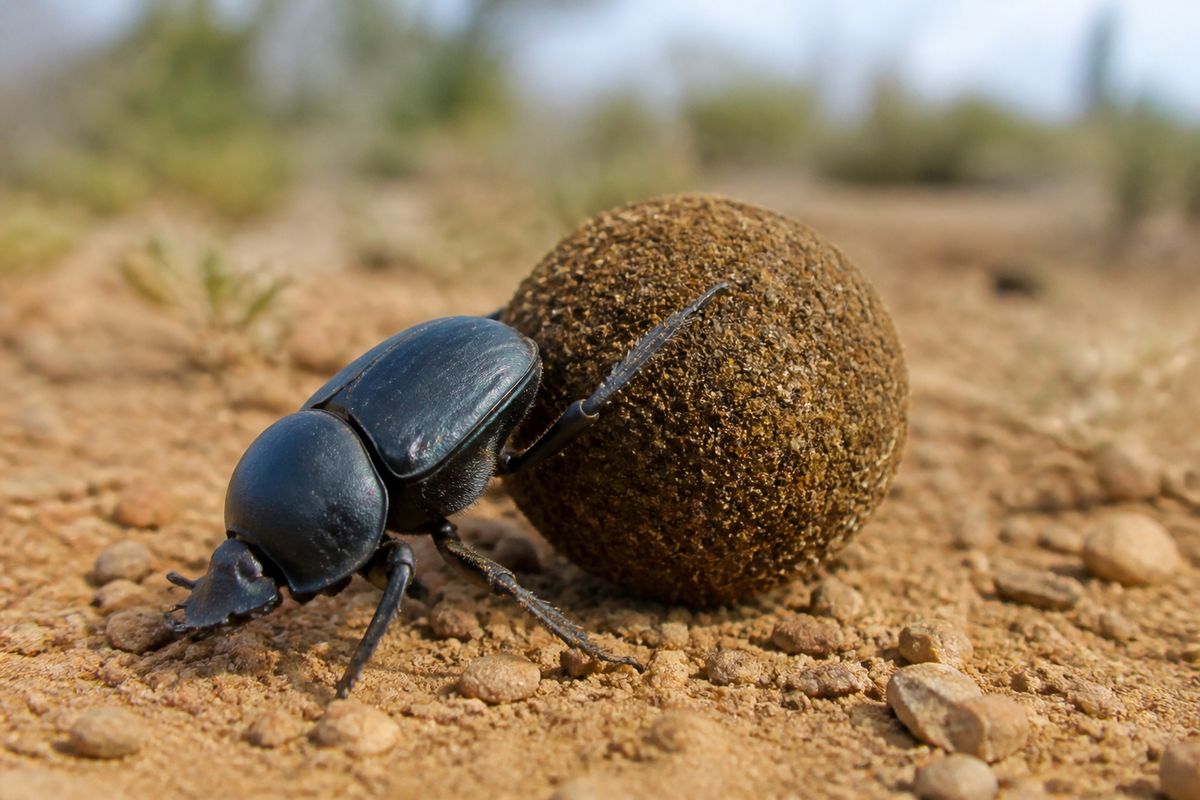
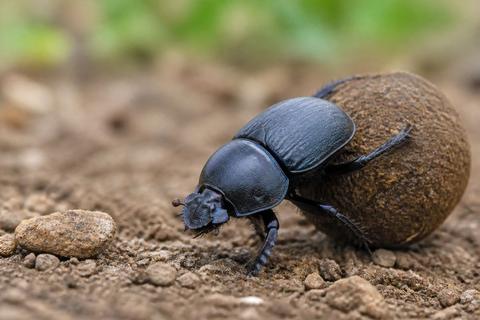
How do dung beetles contribute to the ecosystem? Mostly by moving other animals' waste underground fast enough that its nutrients, water, and hitchhiking seeds get put to use instead of drying out or washing away on the surface. Roughly 6,000 dung beetle species are known worldwide, split into rollers that shape dung into balls, tunnelers that dig straight down beneath a pat, and dwellers that live inside the pat itself.
Nutrient Cycling
Tunneling species feed on the liquid and microbial fraction of herbivore dung, and in the process they haul solid dung down into burrows below the pat. Burial matters because nitrogen in manure left exposed on the surface volatilizes quickly, especially on hot, windy days, so a large share can be lost as gas within a couple of days. Mixing dung into the soil profile instead keeps that nitrogen where plant roots can reach it.
Breaking Down Organic Matter
Burial also speeds decomposition by putting dung in direct contact with soil bacteria and fungi instead of leaving it to crust over on top. A controlled study measuring soil nutrient uptake found that large-bodied tunneling beetles enriched surrounding soil by an average of 44.51% across nitrogen, phosphorus, potassium, and carbon compared with dung left undisturbed on the surface.
Improving Soil Fertility
Because buried dung sits closer to root zones, the nutrients it releases reach growing plants directly instead of running off with rain. Ranchers who track pasture productivity treat active dung beetle populations as a free fertilizer input, not a curiosity, since the nutrient return happens without any extra tillage or spreading.
Soil Aeration and Water Infiltration
A single tunneling species can dig dozens of vertical shafts beneath one dung pat, some reaching well below the topsoil layer. West Virginia University Extension reports that these tunnels can improve water infiltration up to 30 centimeters down while reducing soil compaction.
Reducing Runoff
Open tunnels give rainwater a path into the subsoil instead of letting it pool and run off compacted pasture. On grazed land this cuts erosion and helps groundwater recharge, which matters most during the short, heavy storms common in summer.
Loosening Compacted Ground
Cattle and other grazers compact topsoil simply by walking on it. Beetle tunnels break that compaction back open, giving plant roots room to spread and letting other soil organisms, such as earthworms, move through layers they otherwise couldn't penetrate.
Seed Dispersal
Dung from fruit-eating mammals often contains intact, viable seeds. When a dung beetle rolls or buries that dung, it buries the seeds along with it, a process researchers call secondary seed dispersal.
Burial Depth and Survival
Field studies on tunneling species have recorded a meaningful share of seeds getting buried along with the dung, typically ending up a few centimeters below the surface. Burial at that depth protects seeds from rodents and birds that would otherwise eat them off open ground, though the survival benefit varies by seed size and beetle species.
Effects on Plant Populations
Because beetles move between dung pats and territories, seeds end up scattered farther from the parent plant than gravity alone would carry them. Over many generations this spreads gene flow across a plant population instead of clustering offspring near a single source.
Parasite and Fly Control
Horn flies and many gastrointestinal parasites of livestock complete part of their life cycle inside fresh manure. Every dung pat a beetle buries or dismantles is one less nursery for their eggs and larvae.
Cutting Parasite Loads
Extension research on pasture beetle activity found that aggressive dung beetle activity in a pat reduces helminth (parasitic worm) egg counts by four- to fifty-fold compared with undisturbed dung, a direct cut to the parasite load cattle and wildlife pick back up while grazing.
A Caveat: Dewormers Kill Beetles Too
Ivermectin and similar livestock dewormers pass through the animal into the manure, where residues can remain toxic to dung beetles for some time after treatment. Ranchers trying to keep beetle populations intact often switch to moxidectin-based products or time deworming for cooler months when beetles are less active.
Habitat for Other Species
The tunnels and vacated dung balls left behind don't disappear once a beetle is done with them. Earthworms, nematodes, and soil bacteria colonize the loosened, nutrient-rich burrows, and ground-foraging birds prey on the beetles themselves, making dung beetles a working link between a single dung pat and the rest of the food web above and below it.
Why Beetle Numbers Are Slipping
Habitat loss, pasture conversion, and routine deworming chemicals have measurably reduced dung beetle populations in parts of North America and Europe. Because most of the benefits above scale directly with how many beetles are working a given pasture, a thinner beetle population means slower nutrient cycling, more surface-crusted manure, and more undisturbed habitat for flies and parasites to complete their life cycle.