Where Do Click Beetles Live? Forests, Fields, and Soil
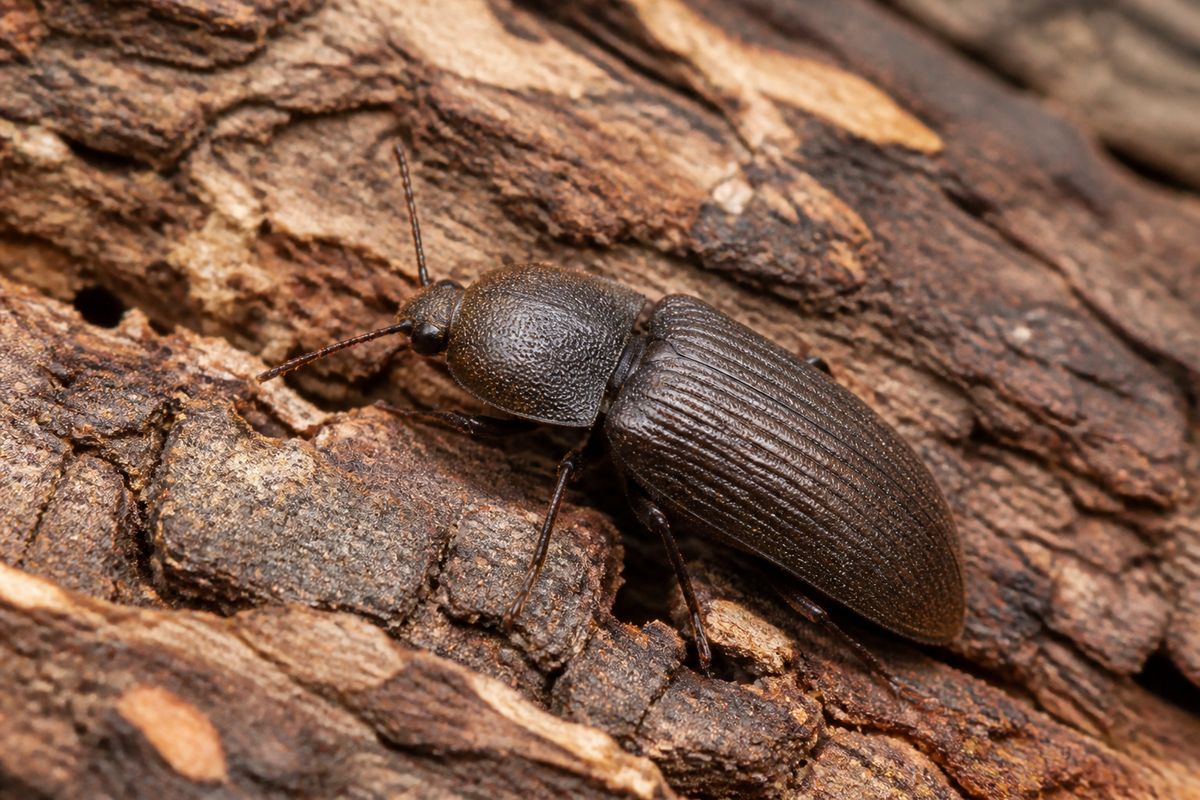
Where do click beetles live? Members of the family Elateridae turn up almost everywhere on land except Antarctica, from forest floors and hay fields to backyard mulch beds. About 9,300 species are known worldwide, with roughly 965 recorded in North America, and each one has its own preferred mix of moisture, food, and shelter.
What Makes a Click Beetle a Click Beetle
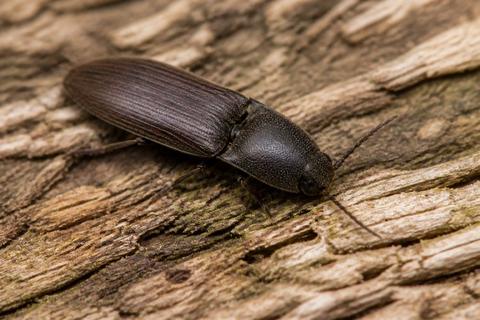
Adult click beetles have narrow, tapered bodies and a hinge between the prothorax and mesothorax. A blunt spine on the underside of the prothorax locks into a slot on the mesothorax; when the beetle flexes its thoracic muscles, the spine snaps free and launches the beetle into the air with an audible click. The trick works as a defense against predators and as a way to right itself after landing on its back. The eastern eyed click beetle (Alaus oculatus), one of the largest species in North America, reaches 2.5 to 4.5 cm in body length and carries two large eyespots on its pronotum.
Wireworms: The Larval Stage
Click beetle larvae are called wireworms for their slender, hard, wire-like bodies. Depending on the species, they live in soil, in rotting logs, and other protected places, and they stay in this larval stage for one to four years before pupating. Diets vary widely: some wireworms feed on decaying wood and leaf litter, some attack the roots and seeds of living plants, and a few are predatory. A single eastern eyed click beetle larva has been recorded eating around 200 long-horned beetle larvae over its development.
Habitats Where Click Beetles Are Found
Forests and Woodland
Deciduous and mixed forests hold some of the highest click beetle diversity. Dead and decaying wood, leaf litter, and loose bark give wireworms both food and cover, and species such as the eastern eyed click beetle spend their entire larval stage inside rotting logs and stumps.
Grasslands and Open Fields
Prairies, meadows, and pastures support wireworm species that develop in root systems and organic-rich topsoil. These open habitats also draw adult beetles at night, when many species are most active.
Farmland
Cropland is a major click beetle habitat, for better and worse. Wireworms of several species damage root crops such as potatoes, beets, carrots, and onions, along with corn, wheat, and cotton, by feeding on seeds, sprouts, and roots. Other species in the same fields are predatory and help control soft-bodied pest larvae, which is why growers using integrated pest management try not to wipe out click beetle populations along with the pests.
Yards, Gardens, and Mulch Beds
Adult click beetles are common in residential landscaping wherever there is enough plant cover and moisture. They are mostly nocturnal and are frequently drawn to porch lights and other light sources after dark, which is often the first time homeowners notice them.
Coastal and Wetland Habitats
Some species tolerate the salt spray and fluctuating moisture of coastal dunes and marshes, while others are restricted to consistently damp wetland soils where organic matter stays plentiful year-round.
Geographic Range
Elateridae is a cosmopolitan family, and species composition shifts by region and climate.
North America
Click beetles range from Canadian boreal forest to Mexican desert scrub, with especially dense populations in the agricultural belt of the eastern and midwestern United States, where wireworm species such as those in the genus Agriotes are a recurring concern for row-crop growers.
Europe
Temperate forests, meadows, and farmland across Western and Eastern Europe host a large number of species, several of which are studied closely because their wireworm larvae attack cereal and potato crops.
Asia
Species range from the humid rainforests of Southeast Asia to the dry steppe of Central Asia, with Japan alone home to dozens of described species adapted to its forest and agricultural landscapes.
Africa
Click beetles occupy habitats from the arid margins of the Sahara to the Central African rainforest belt, with wireworms contributing to decomposition and soil turnover across those very different climates.
Australia
Australian species have adapted to both arid interior habitats and wetter coastal areas, tracking whatever pockets of organic-rich soil or decaying wood are available.
Why Habitat Selection Changes by Life Stage
Adult females lay eggs near decaying organic matter or moist soil so hatching larvae have food within reach. Wireworms stay underground or inside rotting wood for one to four years, feeding and molting, before forming a pupa in a soil chamber or cavity in the wood. Adults typically emerge in spring through fall, and once they can fly, they range more widely than the larvae ever did, moving between habitats to find mates and food.
What Drives Where Click Beetles Settle
- Moisture: Wireworms need damp conditions to develop, so consistently dry sites hold far fewer click beetles.
- Organic matter: Dead wood, leaf litter, and rich topsoil supply the food that both larvae and many adults depend on.
- Temperature: Regional climate sets the length of the breeding season and how many years the larval stage takes.
- Vegetation cover: Dense plant growth offers shelter from predators and a steady supply of roots, seeds, or prey.
Habitat Loss and Click Beetle Populations
Deforestation, tillage, and heavy pesticide use all reduce the dead wood, leaf litter, and undisturbed soil that click beetles depend on. Because some species are agricultural pests and others are predators of pest insects, losing the predatory species can end up making wireworm damage worse rather than better. Preserving patches of native vegetation and limiting broad-spectrum pesticide use are the most practical ways to keep both types of click beetle populations in balance.