What Is the Life Cycle of Yellowjackets? Four Stages, One Season
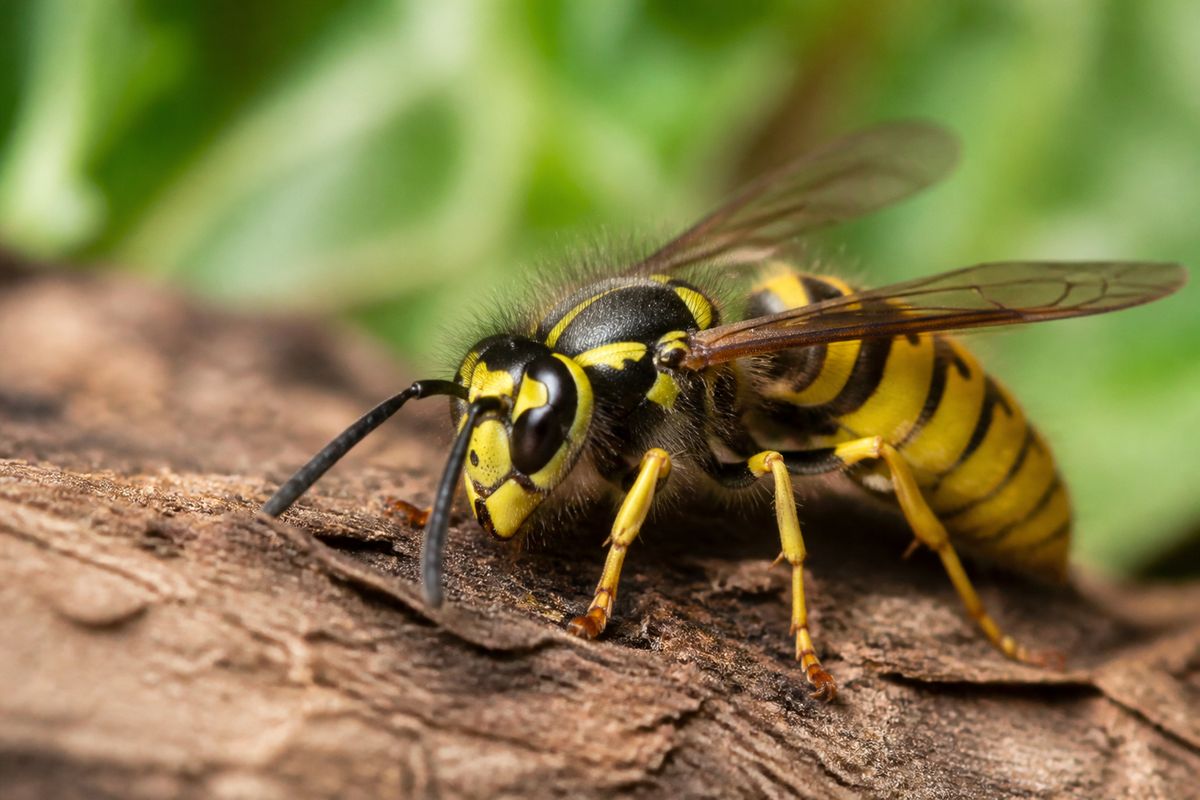
What Is the Life Cycle of Yellowjackets? It runs through four stages, egg, larva, pupa, and adult, and the entire colony collapses after a single season. A lone mated queen starts the whole process alone each spring, and by the time frost arrives the nest she built can hold thousands of workers descended from her.
Who Counts as a Yellowjacket
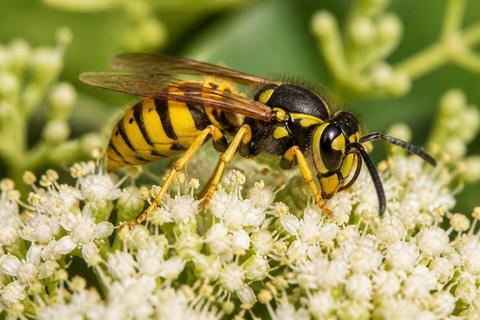
Yellowjackets are social wasps in the family Vespidae, genus Vespula and Dolichovespula. In North America the most common species include the eastern yellowjacket (Vespula maculifrons), the western yellowjacket (Vespula pensylvanica), and the German yellowjacket (Vespula germanica), an introduced species now widespread in the US. Colonies can range from roughly 1,500 to 15,000 individuals depending on the species, and unlike solitary wasps, every yellowjacket in a nest is the offspring of one queen.
Egg Stage: One Queen, One Nest
The cycle starts in late winter or early spring, when a queen that mated the previous fall leaves her hibernation spot and searches for a nest site, often an abandoned rodent burrow, a wall cavity, or a hollow log. She builds the first paper cells herself from wood fiber mixed with saliva, then lays one egg per cell. Eggs are small, oval, and pale, and this first batch produces only sterile female workers.
Larval Stage: Protein Only
Eggs hatch in a matter of days, and the larvae that emerge eat almost nothing but protein for the first part of the season, chewed-up caterpillars, flies, and other insects that the queen and later the workers hunt down and deliver to the nest. Larvae molt through several instars inside their cells and, in return for food, secrete a sugary liquid that adult wasps feed on, a direct exchange between generations rather than the queen foraging for herself once workers take over.
Pupal Stage: Sealed Cells
A mature larva spins a silk cap over its own cell and pupates inside it, invisible from outside the nest. Metamorphosis restructures the body into an adult wasp, wings, legs, and reproductive organs included, over roughly one to two weeks. The first adults to emerge from this stage are always workers, and they take over foraging and nest-building so the queen can stay inside and lay eggs full time.
Adult Stage: Three Castes
From here the colony runs on three castes:
- Queen: the original founder, confined to the nest once workers take over, laying eggs for the rest of the season.
- Workers: sterile females that forage, feed larvae, defend the nest, and expand the paper envelope as the population grows.
- Males and new queens: produced from mid-to-late summer onward, they leave the nest to mate, after which males die within days and mated females search for a place to overwinter.
Why the Colony Dies Every Fall
Yellowjacket colonies normally live only one season, workers, old queen, and all, once cold weather arrives. Only newly mated queens survive winter, tucked into leaf litter, loose bark, or soil cavities until they emerge to start the cycle over. That means a nest is never reused the following spring, even if it survived undisturbed all summer.
The Late-Summer Diet Shift
Through spring and early summer, colonies focus on protein, insects, to raise larvae. By late summer, growth slows or stops and workers switch their foraging toward sugar to feed the queen and each other, which is exactly when yellowjackets start showing up at soda cans, fruit, and picnic trash. Fewer larvae to feed means fewer protein deliveries and more scavenging for sweets.
Sting Behavior
A yellowjacket's stinger is smooth and can be used repeatedly, injecting a dose of venom each time, unlike a honeybee's barbed stinger, which lodges in skin and kills the bee. That difference is why a disturbed nest can produce dozens of stings from the same handful of defending workers rather than one sting per bee.
Nesting and Range Notes
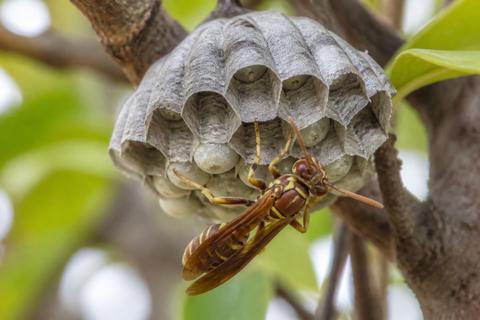
- Nest sites: below ground in abandoned burrows, inside wall voids and attics, or as exposed gray paper nests under eaves.
- Range: Vespula species are established across most of the continental US, with some regional overlap between eastern and western species.
- Polygyny: a small number of yellowjacket species allow multiple queens to share one nest, which can push colony size well beyond the single-queen norm.
Managing an Active Nest
Options scale with how close the nest is to foot traffic:
- Cut off food access: seal trash cans, rinse recyclables, and clean up food and drink spills right away outdoors.
- Act early: a nest found in spring, when it's still small and holds only the queen or a few workers, is far easier and safer to deal with than one found in August.
- Call a professional for ground nests, wall-void nests, or any colony near doorways or high foot traffic, since a disturbed nest can send out many workers at once.
Do Yellowjackets Help Anything
Outside of picnics, yellowjacket workers spend most of the summer killing caterpillars, flies, and other garden pests to feed their larvae, functioning as an unpaid pest-control crew for whatever plants are nearby. That predation, not their reputation at cookouts, is the main reason entomologists count them as a net benefit to the ecosystems they occupy.