What Do Longhorn Beetles Eat? Wood, Bark and Sap
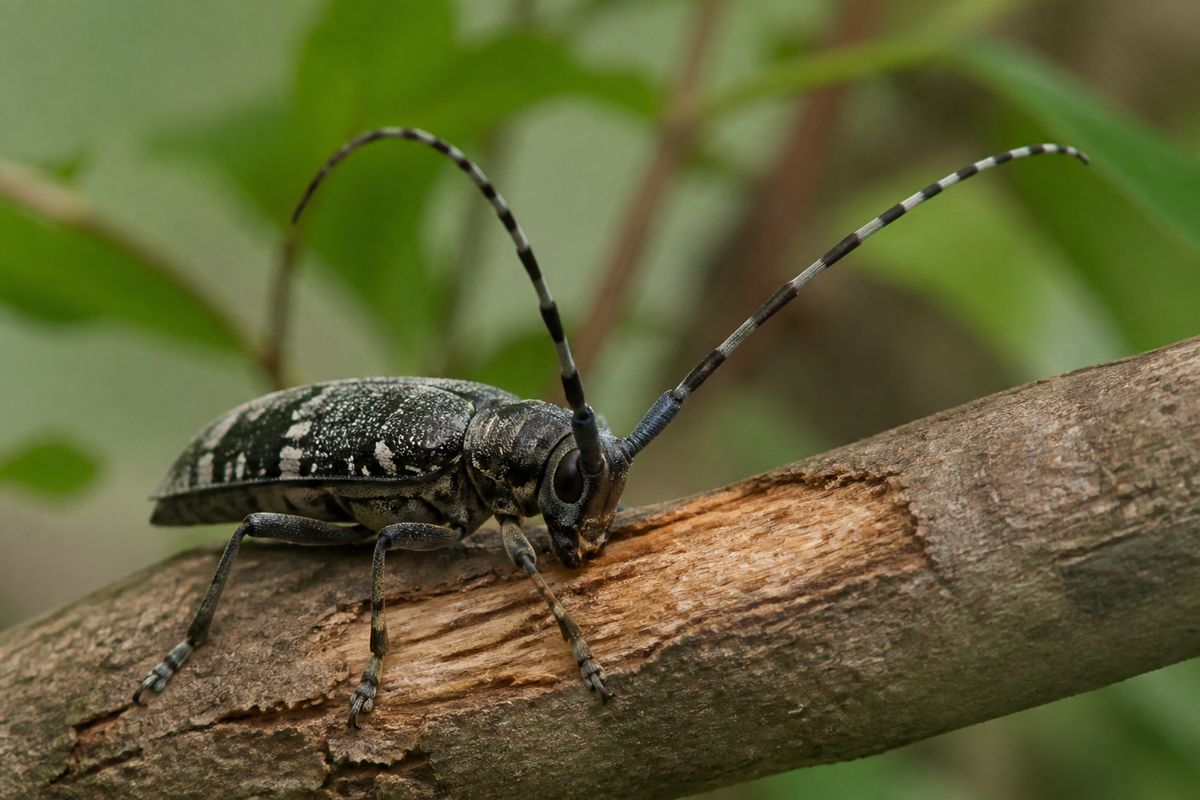
What do longhorn beetles eat? The answer depends entirely on life stage: larvae of most Cerambycidae species tunnel through wood and eat it, while adults switch to a much lighter diet of flowers, leaves, bark, fungi, or sap. With roughly 35,000 described species worldwide, the family covers everything from tiny bark-feeders to the invasive Asian longhorned beetle (Anoplophora glabripennis), so exact diet varies by species, but the wood-then-flowers pattern holds for most of them.
Diet by Life Stage
A longhorn beetle passes through egg, larva, pupa, and adult stages, and feeding behavior changes sharply at each one.
Eggs
Females lay eggs in bark crevices or slits they cut into the wood surface, usually on dead, dying, or stressed trees. The egg itself draws on yolk reserves and takes in no outside food before hatching.
Larvae
This is the feeding stage that does almost all the eating. After hatching, larvae bore into the inner bark and sapwood, and some species tunnel deeper into the heartwood. A single generation can take one year or more to complete, depending on the species, the condition of the wood, and the climate; some house-infesting species stretch larval development out for several years within the same timber.
Cerambycid larvae carry their own set of plant cell wall-degrading enzymes, and many also host gut bacteria and fungi that help break down cellulose and lignin. That combination lets them digest a food source most insects cannot touch. As they chew, they pack their tunnels behind them with frass, a mix of wood fragments and digested material.
Pupae
Inside a chamber built from compacted wood fibers, the pupa does not feed at all. It runs entirely on fat reserves stored up during the larval months until the adult beetle chews its way out.
Adults
Adult diet is far more varied than larval diet. Adults eat flowers, leaves, bark, fungi, and sap, and a few drink only water. Some, like newly emerged Asian longhorned beetle females, chew through the bark of small twigs to reach the sugar-rich phloem underneath before mating.
What the Wood-Boring Larvae Target
Larvae are not picky about tree species as a family, but individual species specialize.
Living, Dying, and Dead Wood
Some longhorn larvae need freshly dead or badly stressed wood; others, like the old house borer, keep feeding in seasoned structural lumber for years. Hosts span both hardwoods (oak, maple, willow, birch) and softwoods (pine, spruce, fir), and the choice of host often marks the difference between a beetle that only weakens dying trees and one that becomes a structural pest.
Effects of larval wood-boring:
- Tunneling breaks down dead and dying wood, moving nutrients back into the soil faster than fungi alone would manage.
- Old galleries become shelter and access points for fungi and other wood-dwelling insects.
- In commercial timber and orchard trees, larval boring causes real economic damage, which is why species like the mango stem borer (Batocera rufomaculata) are tracked as agricultural pests across South and Southeast Asia.
Bark and Phloem
Some species, including newly emerged Asian longhorned beetle adults, feed on the phloem just under the bark of twigs before they start laying eggs. This maturation feeding is minor compared to the damage larvae do, but repeated feeding on young shoots can cause dieback.
What Adult Longhorn Beetles Eat
Once they emerge, adults of most species stop eating wood altogether.
Pollen, Nectar, and Foliage
Many adult longhorns visit flowers for pollen and nectar, and in the process move pollen between blooms, acting as incidental pollinators alongside bees. The wasp beetle (Clytus arietis), a black-and-yellow mimic common across the UK and much of Europe, is a good example: its larvae live in warm, dry, dead wood such as fence posts and dead branches, favoring willow and birch, while the adults feed on flowers along woodland rides and hedgerows in summer.
Species With Narrower Diets
Diet breadth narrows fast once you look past the family level:
- Asian longhorned beetle (Anoplophora glabripennis): larvae bore through the heartwood of maples and other hardwoods; newly emerged adults briefly nibble leaf veins, petioles, and twig bark before mating, which begins just a few days after they emerge.
- Mango stem borer (Batocera rufomaculata): this species and its larvae attack mango, fig, guava, and jackfruit trunks, and it is a documented pest across mango- and fig-growing regions of Asia.
- Wasp beetle (Clytus arietis): larvae stay confined to dead hardwood; adults feed on flower pollen and are sometimes mistaken for actual wasps because of their coloring and quick, darting movement.
How Larvae and Adults Actually Feed
Larval Mouthparts and Tunneling
Larval mandibles are built for cutting, not chewing in the usual sense. They shear through wood fiber in short, repeated bites, widening the tunnel as the larva grows and packing the space behind it with frass.
Adult Mouthparts
Adults that feed on nectar often have elongated mouthparts suited to reaching into flowers, while foliage feeders use shorter, stronger mandibles to scrape or bite leaf tissue and bark.
Why This Matters Beyond the Beetle
Longhorn beetle feeding does three concrete things in a forest or orchard: it recycles nutrients locked up in dead wood, it opens habitat that fungi and other insects use afterward, and in a handful of species it does enough damage to matter economically. The Asian longhorned beetle is the clearest case: it is regulated as an invasive pest in North America and parts of Europe precisely because its larvae kill healthy hardwoods rather than sticking to dead or dying ones. Most native longhorn species are the opposite story, quietly breaking down wood other insects cannot process and feeding the beetles, fungi, and birds that come after them.