What Are the Characteristics of Houseflies? Stripes and Speed
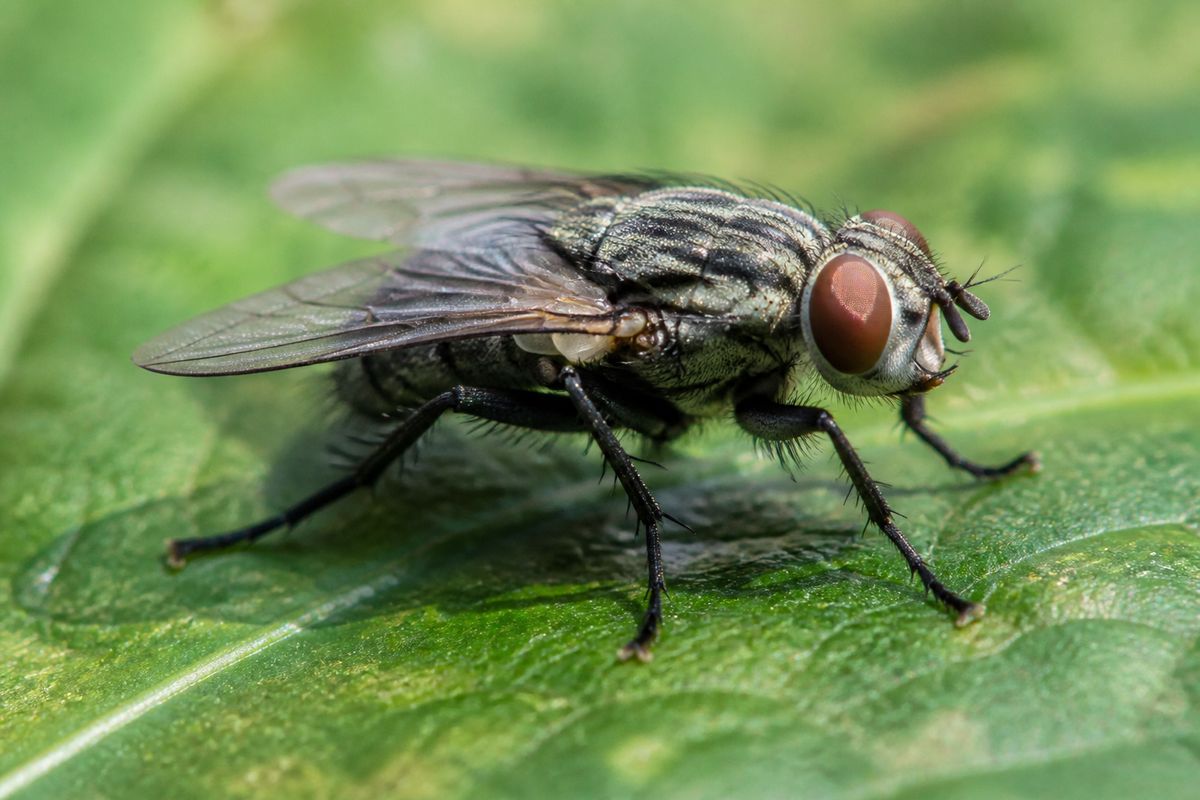
What Are the Characteristics of Houseflies? Musca domestica is built around a short list of traits: a gray-to-black body about 4 to 7 millimeters (roughly 1/5 to 1/4 inch) long, four dark stripes running down the thorax, red compound eyes, and a sponging mouth that can't bite. Those features, plus a feeding and breeding cycle tuned to speed, explain why the species has followed humans into nearly every warm climate on earth.
Size and Build
Adult house flies measure about 5/32 to 17/64 of an inch, or about 4 to 7 millimeters, from head to wingtip, with females running slightly larger than males. The body has the standard three-part insect plan: head, thorax, and abdomen, with the thorax carrying a single pair of membranous flight wings (Diptera means "two wings") and a reduced second pair, the halteres, that work as gyroscopic balance organs during flight.
Flight
House flies are slow, unremarkable fliers in sustained flight, closer to a brisk walking pace than anything dramatic, though they can burst to higher speeds for a second or two when startled. What makes them hard to swat isn't raw speed. It's the halteres and a visual system built to catch motion, which let a fly plan its escape route and launch in the opposite direction almost as soon as a hand starts moving toward it.
Color and Markings
The identifying mark on a house fly is a set of four narrow, dark longitudinal stripes running down the top of the thorax, set against a dull gray body. That gray-black coloring comes from short body hairs (setae) rather than pigmented plates alone, and it does double duty as camouflage against weathered wood, soil, and garbage.
Eyes
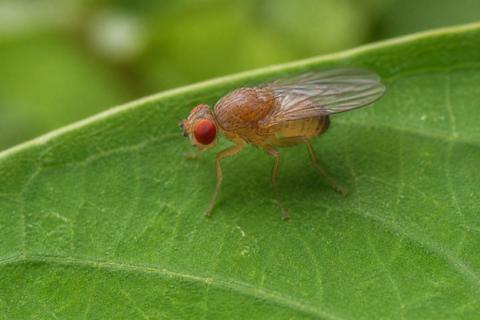
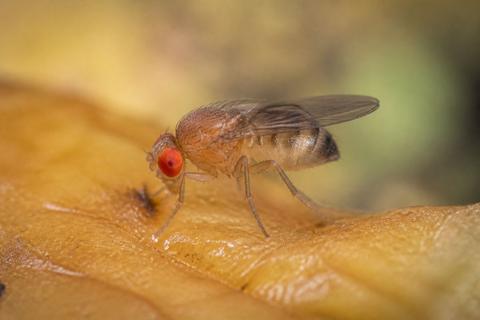
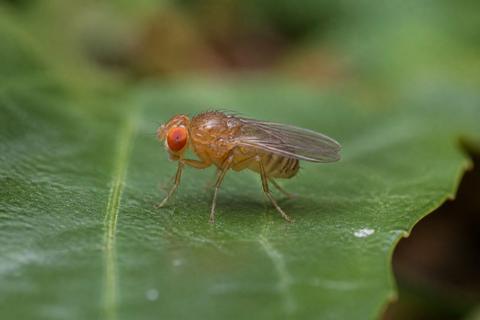
House fly eyes are large, compound, and typically red, taking up most of the head and giving the fly a nearly panoramic field of view with few blind spots. Each eye is made of thousands of individual lenses (ommatidia), giving the fly wide-angle motion detection instead of sharp focus at a distance.
Legs and Feet
Legs are dark brown to black and end in a pair of claws plus adhesive pads (pulvilli) covered in fine hairs that secrete a sticky fluid. That combination is what lets a house fly walk upside down across glass or a ceiling without falling, and it's also how the species picks up and redistributes bacteria from one surface to the next.
Feeding Behavior
House flies can't chew or bite. Their mouthparts end in a labellum, a spongy pad used to mop up liquid. On solid food, a fly regurgitates saliva and digestive enzymes onto the surface, waits for the enzymes to break it down into a liquid slurry, then sponges the liquid back up. Diet is almost entirely decaying organic matter: rotting fruit, garbage, manure, and other food waste, which is why houseflies concentrate around compost piles, dumpsters, and livestock operations.
Reproduction and Life Cycle
A female house fly mates once, shortly after emerging as an adult, then lays eggs in batches. Each batch runs 75 to 150 eggs, laid on decaying matter or manure where larvae will have food immediately after hatching, and a single female can deposit roughly 350 to 900 eggs total across her lifetime. Eggs typically hatch into larvae within about a day under warm conditions.
Egg to Larva
Larvae, commonly called maggots, are legless and creamy white. They feed continuously on the surrounding organic material and molt through three instars before pupating; larval development can take from under two weeks to over a month depending on temperature and food supply, with cooler conditions slowing growth considerably.
Pupa to Adult
The pupal stage happens inside a hardened, reddish-brown case called a puparium, formed from the last larval skin. Pupation typically completes in two to six days in warm weather. Once an adult emerges, it reaches full size and reproductive maturity within a few days.
Adult Lifespan
Adult house flies live roughly 25 days to two months depending on temperature and food availability, but only two to three days if food is unavailable. Because a full generation can complete in as little as two to three weeks under ideal warm-weather conditions, a single breeding season can produce many overlapping generations.
Where They're Found
House flies favor warm climates and stay close to whatever is feeding them: compost heaps, garbage bins, farm manure, and kitchens. Cold weather pushes them indoors looking for shelter and residual warmth, which is the main reason they show up inside homes and outbuildings as outdoor temperatures drop.
Why the Traits Matter
Small body size, rapid reproduction, a liquid-only diet, and sticky adhesive feet aren't separate quirks. Together they describe an insect built to exploit whatever organic waste humans generate, breed through it fast, and move on before conditions turn unfavorable. That combination is also what makes house flies effective at moving bacteria between surfaces, which is the practical reason pest control programs target breeding sites (manure, garbage, compost) rather than chasing individual adult flies.