Top 10 Facts About Longhorn Beetles: Antennae and Wood
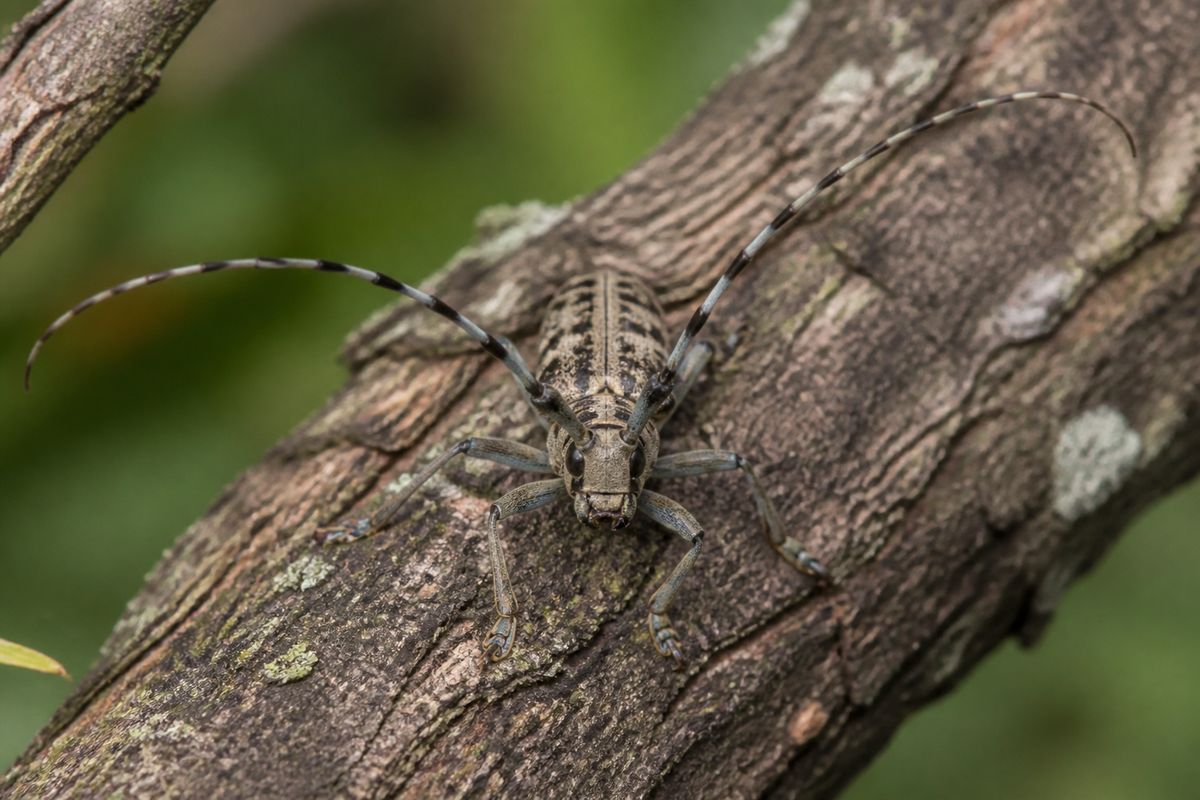
Top 10 Facts About Longhorn Beetles starts with the antennae: in family Cerambycidae, they routinely run as long as the body and, in some males, several times longer. Roughly 35,000 described species make this one of the largest beetle families on Earth, and the ten facts below cover what actually sets them apart.
1. Antennae Longer Than the Body
Longhorn beetle antennae are at least half the length of the body, and often much longer, which is where the family gets its common name. Males typically carry longer antennae than females of the same species. The antennae are segmented and constantly in motion, sweeping the air to pick up pheromones, host-plant odors, and the presence of rivals.
2. Around 35,000 Species Worldwide
The Cerambycidae family includes over 35,000 described species, split across subfamilies such as Cerambycinae, Lamiinae, and Lepturinae. Body length across the family spans from a few millimeters to more than 15 centimeters in the largest tropical species. That range in size and shape is why field guides split the family into so many separate genera rather than treating longhorns as one uniform group.
3. A Larval Stage That Can Last Years
Longhorn beetles pass through four life stages: egg, larva, pupa, and adult. Females lay eggs in bark crevices or wounds on a host tree, and larval development inside the wood can take one to two years depending on species and temperature, with some large species taking considerably longer before an adult finally chews its way out.
4. Larvae Tunnel Through Living and Dead Wood
Longhorn larvae are legless grubs that feed inside wood, boring meandering tunnels through the sapwood and sometimes the heartwood as they grow through several instars. Most species target dead, dying, or freshly cut wood, but a handful, including invasive species like the Asian longhorned beetle, attack living trees and can girdle limbs by cutting off the flow of nutrients. Those same tunnels also open dead wood to fungi and speed decomposition, cycling nutrients back into forest soil.
5. Warning Colors, Mimicry, and Camouflage
Color patterns vary widely across the family: solid black or brown species that blend into bark, metallic blues and greens, and banded black-and-yellow species that mimic stinging wasps to deter predators. A few longhorns have no chemical defenses at all and rely entirely on that wasp-like pattern to bluff their way past birds and other predators.
6. Adults Visit Flowers and Move Pollen
Unlike most nocturnal longhorns, beetles in the subfamily Lepturinae are active by day and feed on pollen and nectar at flowers, showing a strong preference for the umbel-shaped blooms of the carrot family, Apiaceae, such as Queen Anne's lace. As they move between flowers they carry pollen with them, and they're considered plant pollinators, though the size of their contribution compared to bees and flies hasn't been well studied.
7. Few Predators as Adults, More Risk as Larvae
Adult longhorns have a hard exoskeleton and, in some species, distasteful chemical compounds that discourage birds and small mammals from eating them. Woodpeckers are a notable exception and will dig larvae directly out of infested wood. Wood-boring larvae are also vulnerable to parasitic wasps that lay their own eggs inside the beetle grub, and to fungi that specifically target insects living in wood.
8. Found on Every Continent Except Antarctica
Longhorn beetles occur on every continent except Antarctica, with the greatest diversity concentrated in tropical forests where warm temperatures and abundant dead wood support far more species than temperate regions manage. Individual longhorn species tend to have fairly narrow native ranges even though the family as a whole is nearly worldwide.
9. A Recurring Motif in Folk Art and Craft
Longhorn beetles show up repeatedly in folk art, jewelry, and traditional craft across different cultures, usually because of their long antennae and metallic or patterned coloring. Preserved specimens and beetle-inspired motifs appear in decorative work from several regions where large, showy longhorn species are common.
10. Habitat Loss and Invasive Species Threaten Native Longhorns
Many native longhorn species are losing ground to deforestation, the clearing of dead and downed wood that larvae depend on, and competition from invasive longhorns introduced through shipping and untreated wood packaging. The Asian longhorned beetle is the clearest example: since being detected in the United States, it has triggered large-scale quarantines and tree removals because of the damage it does to live hardwoods, and its spread has made monitoring native longhorn populations a lower priority for stretched conservation budgets.
Why Longhorn Beetles Matter for Forest Health
Between their role recycling dead wood, their overlooked contribution to pollination, and the outsized economic damage a single invasive species can cause, longhorn beetles affect forests in ways that go well beyond their striking looks. Recognizing a longhorn beetle, and knowing whether it belongs in your yard or should be reported as a possible invasive, starts with these ten facts.