Peppermint Oil for Flies: Will It Repel or Attract Them?
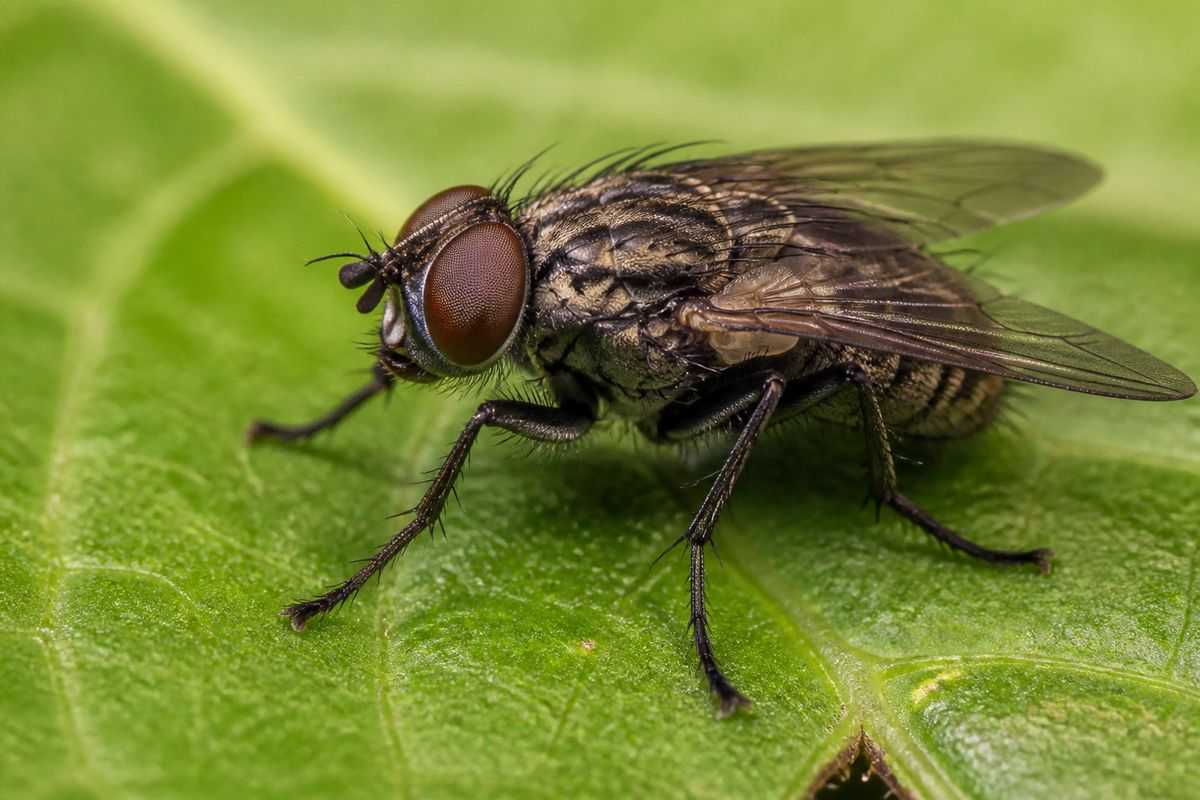
If you're dealing with flies indoors, or fighting them around trash cans and windows, peppermint oil for flies is one of the first home remedies people try. It has a real, documented effect on some fly species in lab conditions, but it is a mild, short-lived deterrent, not a substitute for sanitation or pest control. Here is what the evidence actually shows, how to mix and apply it correctly, and how often you need to reapply for it to do anything at all.
For more help, see our Homemade Peppermint Pest Repellent Spray (DIY Recipe) guide.
How peppermint affects flies
Why flies react to strong mint scent
Flies locate food, mates, and breeding sites largely through smell, and a strong menthol scent can interfere with that. In a controlled lab study on spotted wing fruit flies (Drosophila suzukii), peppermint oil applied to wicks prevented almost all flies from landing on the treated surface, and it kept working for up to six days because peppermint evaporates more slowly than most essential oils tested. That is a genuinely strong result, but it was measured in a small enclosure with a known concentration of oil on a wick, not in an open kitchen or backyard, and it was one fly species out of thousands. Researchers reporting this in a peer-reviewed study also found that reaching a high repellency rate required a specific minimum amount of oil per surface area, so a light spritz in open air is not the same treatment that produced those numbers.
In a home, the scent disperses fast, competes with cooking smells and trash odors, and is rarely applied at the concentration used in a lab test. So expect a smaller, shorter-lived effect: fewer flies lingering right where you sprayed, not an invisible wall they refuse to cross.
What “repelling” actually means in real life
“Repelling” with peppermint oil means some reduction in landing and lingering near the treated spot, not fly-free air. Flies are pulled in by food residue, garbage, and moisture, and peppermint only interferes with part of how they find those things. If they are breeding nearby, or entering through a gap you haven't sealed, you will still see flies even where you've sprayed.
Treat peppermint as a zone deterrent for entry points and problem spots, not a whole-house fix. Spraying the air once and expecting lasting results is the most common way people conclude peppermint “doesn’t work,” when really the dose and reapplication schedule were too thin to matter.
When peppermint may seem ineffective
Peppermint often looks ineffective when the actual attractant is untouched. If trash bins, dirty drains, pet food, or standing water are still available, flies keep showing up regardless of the mint smell nearby. A common mixing mistake also plays a role: peppermint extract or peppermint flavoring (used for baking) contains little to no real peppermint essential oil and will not produce a noticeable scent barrier.
Timing matters too. If you clean and spray once, then let spills and humidity build back up over the following days, the scent fades on its own schedule while the attractants regenerate on theirs. Peppermint also can't do anything about flies that are already developing in a blocked drain or a wet mop head, since that's a larval problem, not an adult-behavior problem.
What the evidence actually supports
What research says, and what it doesn't
University extension entomologists are blunt about the limits of plant-oil sprays as pest control. One Extension entomologist, asked directly whether peppermint oil or other plant oils sprayed on foliage could control mosquitoes, stated plainly that there is no scientific data supporting plant oil sprays as a reliable way to control mosquitoes, and that Extension recommendations have to be based on tested research rather than home remedies. While that answer is about mosquitoes specifically, it reflects the same broader pattern seen with flies: plant-oil sprays are a mild home remedy, not a validated substitute for proven pest control.
At the same time, lab research on specific fly species does show peppermint oil has measurable repellent activity at the right concentration and delivery method, as in the wick study above. The honest summary: peppermint oil has some short-term repellent effect on some flies, backed by real research, but it is not a proven, reliable pesticide for general fly control in a home or yard, and no serious source claims it kills flies or eliminates an infestation.
Mint oil in general is also sold as an active ingredient in EPA “minimum risk” pesticide products, a category exempt from standard EPA registration precisely because these ingredients are considered low-risk, not because their pest-control efficacy has been independently verified by EPA. That regulatory status is worth knowing before you assume a peppermint spray on a store shelf has been tested the way a registered pesticide has.
Why results vary by fly species and setting
Different fly species key in on different cues: some are driven mostly by fermenting or rotting food, others by moisture and decaying organic matter, and their sensitivity to scent shifts with life stage. That's why peppermint can visibly cut down landing in one kitchen and do almost nothing in another, using the identical mix.
Airflow changes the outcome as much as species does. A drafty room or a breezy patio disperses scent within minutes. A small enclosed space, like under a sink or inside a cabinet, holds it far longer. Outdoor trash areas are the hardest setting for peppermint to compete in, since flies there have a constant supply of stronger odors.
How concentration and freshness change performance
Fresh peppermint essential oil works better than old oil because the aromatic compounds that make it a deterrent break down over time in storage, especially once a bottle has been opened repeatedly. Oil that still smells “minty” to a human nose can already be too diminished to create a meaningful barrier for insects, whose detection thresholds work differently from ours.
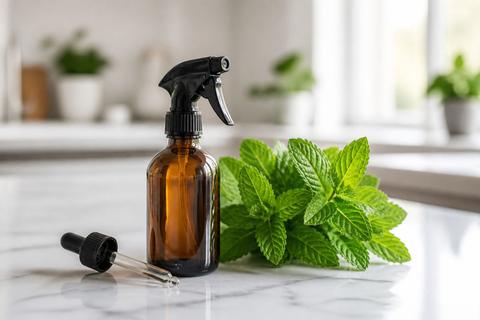
For a spray, use 100% pure peppermint essential oil (Mentha piperita), not extract or flavoring. Mix 10 to 15 drops per cup of water, then add a small squirt of dish soap so the oil emulsifies instead of floating on top and separating in the bottle. Shake before every use, since it will separate again within minutes of sitting still.
Plan to reapply every 2 to 3 days indoors, and immediately after rain outdoors, since both evaporation and rinsing strip the scent layer fast.
How to use peppermint oil around flies
Simple room spray and surface use
A spray that clings to surfaces holds its scent longer than a mist sprayed into open air, so apply it directly to the spots flies land and rest.
- Mix 10 to 15 drops of 100% peppermint essential oil (Mentha piperita) per cup of water.
- Add a small squirt of dish soap to emulsify, then shake the bottle well.
- Spray lightly along baseboards, window frames, door thresholds, and the underside of cabinets.
- Target cracks and corners where flies pause, and avoid soaking wood or electronics.
Spray after surfaces are clean and dry, not over grease or old spills, since the scent layer works better on a clean surface. Reapply every 2 to 3 days.
Diffusers, cotton balls, and entry points
A slow-release scent source near an entry point does more than a single spray, since it keeps a low level of scent present over hours instead of minutes.
- Soak cotton balls in peppermint essential oil and place them near window sills, behind trash bin lids, or along door tracks, out of reach of kids and pets.
- Replace cotton balls every 2 to 3 days as the scent fades.
- If using a diffuser, run it at a low setting in just the room where flies are a problem.
- Account for airflow. A fan or open window will carry the scent away from the entry point you're trying to protect.
Pair this with physical sealing (screens, door sweeps) so you're reducing entry, not just masking it with scent.
Outdoor spaces, trash areas, and windows
Outdoor fly problems need spot treatment at the places flies actually rest and feed, since open air defeats scent barriers quickly.
- Spray diluted peppermint mixture along fence lines near bins, the base of trash cans, and outdoor seating areas.
- Treat window and door frames, especially the underside of sills where flies land.
- Apply after cleaning the area, so the scent isn't competing with grease and old food odor.
- Reapply after rain or heavy irrigation, since both wash the oil away.
Outdoors especially, peppermint is a support tactic, not a fix. Rinse bins, remove overflowing waste, and address damp soil where flies breed before expecting scent alone to help.
What can make flies worse instead of better
Food, moisture, and garbage attract flies first
Peppermint gets ignored when flies have a stronger, more reliable draw nearby. Food residue, sugary spills, uncovered pet bowls, exposed trash, and damp organic matter in drains all outcompete a mint scent. If those sources stay in place, spraying oil does not remove the reason flies are surviving and reproducing in the first place.
Start with what you control: cover food, rinse smelly recyclables, empty bins often, and keep counters dry. Check sinks, garbage disposals, and the space under the fridge for sticky residue and standing moisture.
Skipping sanitation and relying on scent alone is the most common reason people conclude peppermint “just moves the flies around” rather than reducing them.
Overusing oil can create a strong scent without control
More oil is not a stronger fix. Heavy application creates an overpowering smell that can irritate people in the space and leaves an oily residue that attracts dust and grime, making surfaces harder to clean without doing anything extra against flies.
Stick to the diluted ratio above and apply a light coat along edges rather than flooding surfaces. If flies keep coming despite regular spraying, the fix is sealing entry points and removing breeding or feeding sources, not doubling the concentration.
Why clean-up matters more than fragrance
Flies respond to a mix of cues, smell, moisture, and available breeding material. Peppermint only changes one of those, odor, and does nothing to eggs or larvae already established in a drain, a trash compactor, or a soaked mop head. That's why you can smell mint clearly in a room while the fly count barely changes, or rebounds within a day or two.
Removing the breeding material is what actually reduces the population. Scrub bins, clear gunk from drains, wipe sticky surfaces, and eliminate standing water. Once that's done, peppermint can meaningfully cut down on new arrivals while other measures take hold.
Safer, more effective ways to keep flies away
Pair peppermint oil with sanitation and barriers
Peppermint oil for flies works best as a supporting layer on top of the basics, not a replacement for them. Clean first, then treat, so you aren't trapping food odor underneath a scent layer.
- Clean trash areas and wipe counters, then let surfaces dry fully.
- Seal food in containers, store pet food in closed bins, and empty trash on a set schedule.
- Apply diluted peppermint oil around windowsills, door thresholds, and baseboards.
- Reapply every 2 to 3 days while keeping sanitation consistent.
Use fans, screens, and sealed containers
Physical barriers do more of the actual work than scent does, since they stop flies from entering or landing at all rather than just discouraging them.
- Repair or install window screens, replace torn mesh, and check door sweeps for gaps.
- Point a fan at doorways or window areas. Flies struggle to hover and land in moving air, which stacks with any scent deterrent.
- Keep bins tightly lidded and store compost, if you have it, in a fully covered container.
When to choose other repellents or traps
If flies stay at a high number for several days despite cleaning and spot-treating with peppermint, it's time to add stronger tools rather than keep spraying more oil.
- Use fly traps near active fly paths, especially indoors near windows, for direct reduction.
- Consider a labeled fly bait product if you can't fully remove attractants right away, such as during an ongoing outdoor cleanup.
- If flies keep returning, focus on breeding-site removal: drains, sink traps, trash liners, and outdoor standing water.
Peppermint is one layer in a fly-control plan, not the whole plan, especially once a population is already established.
Common questions about mint and other pests
Does peppermint attract flies or frogs?
Peppermint itself doesn't attract flies. If flies persist despite treatment, the more likely cause is nearby food, trash odor, moisture, or an active breeding site. Peppermint oil is also not a dependable frog repellent. Frogs are drawn far more by damp shelter and nearby water than by any scent.
If frogs are a problem, reduce damp hiding spots, fix leaks, remove standing water, and trim vegetation along entry paths. For flies, prioritize trash management, drain care, and sealing gaps, and use peppermint oil as a secondary deterrent near windows and doors.
Can peppermint oil help with other insects too?
Peppermint essential oil has shown some deterrent effect on a handful of other insects in research settings, generally by disrupting the scent cues they use to find food or resting spots. It's commonly tried on ants, spiders, and other nuisance pests around doors and windows, with the same short-lived, concentration-dependent pattern seen with flies.
Response varies widely by species, and outdoor conditions like wind, rain, and sun exposure weaken the effect faster than indoors. Use peppermint oil as a supplement to sanitation and barrier methods, never as your only line of defense against an established infestation.
When to avoid using essential oils around pets
Essential oils call for real caution around animals, especially cats, whose liver metabolism handles certain plant compounds poorly. Many essential oils can irritate a pet's airways or skin, and concentrated oil is dangerous if ingested. Keep peppermint products out of reach, use them only in ventilated areas, and don't place cotton balls where a pet can knock them over and chew them.
If you have cats, birds, or small pets, consider skipping peppermint oil and relying on screens, sealed containers, and traps instead. Never apply it directly to surfaces a pet can lick, and wipe down treated areas if pets have access. If an animal shows coughing, drooling, lethargy, or unusual behavior after exposure, stop use and contact a veterinarian.
Frequently Asked Questions
Do flies like peppermint smell?
No. Flies are more likely to avoid a strong peppermint scent than seek it out, though the effect is inconsistent and depends heavily on concentration and setting. If real attractants like garbage odor, spilled food, or moisture are still present, flies can still show up even in a treated area. Peppermint may reduce settling right where it's applied, but it won't remove what's actually drawing them into the space.
Does peppermint oil repel flies reliably?
Not on its own. Lab research shows a real, measurable repellent effect on some fly species at a specific oil concentration, but that doesn't translate into a reliable home fix by itself. Results are best when peppermint is paired with cleaning, sealed food, and physical barriers. Spraying the air occasionally, without addressing sanitation, is the most common reason people see little to no effect.
Will peppermint keep flies away indoors?
It can discourage some flies from lingering near treated spots indoors, especially windows and doors, but it works as part of a broader plan rather than a standalone fix. If flies are breeding in a drain, trash area, or damp spot, the scent will fade well before the underlying problem does. Remove attractants and seal entry points first, then use peppermint to reduce landing near edges while you address the source.
Can peppermint oil attract flies?
No, peppermint itself does not attract flies. If flies are still showing up, the more likely explanation is food, trash, moisture, or standing water nearby, or an oil that's too diluted or too old to register as a deterrent. Before assuming peppermint is backfiring, check what's actually drawing flies in and adjust sanitation and placement.
Does peppermint oil repel frogs?
Not reliably. Frogs respond to habitat conditions, like moisture and shelter, far more than they respond to scent, so removing standing water and damp hiding spots is a more effective approach. If frogs are gathering in your yard or near a doorway, fix leaks, remove standing water, and clear away dense ground cover or damp debris piles.