Peppermint Oil for Fleas: How to Use It as a Deterrent
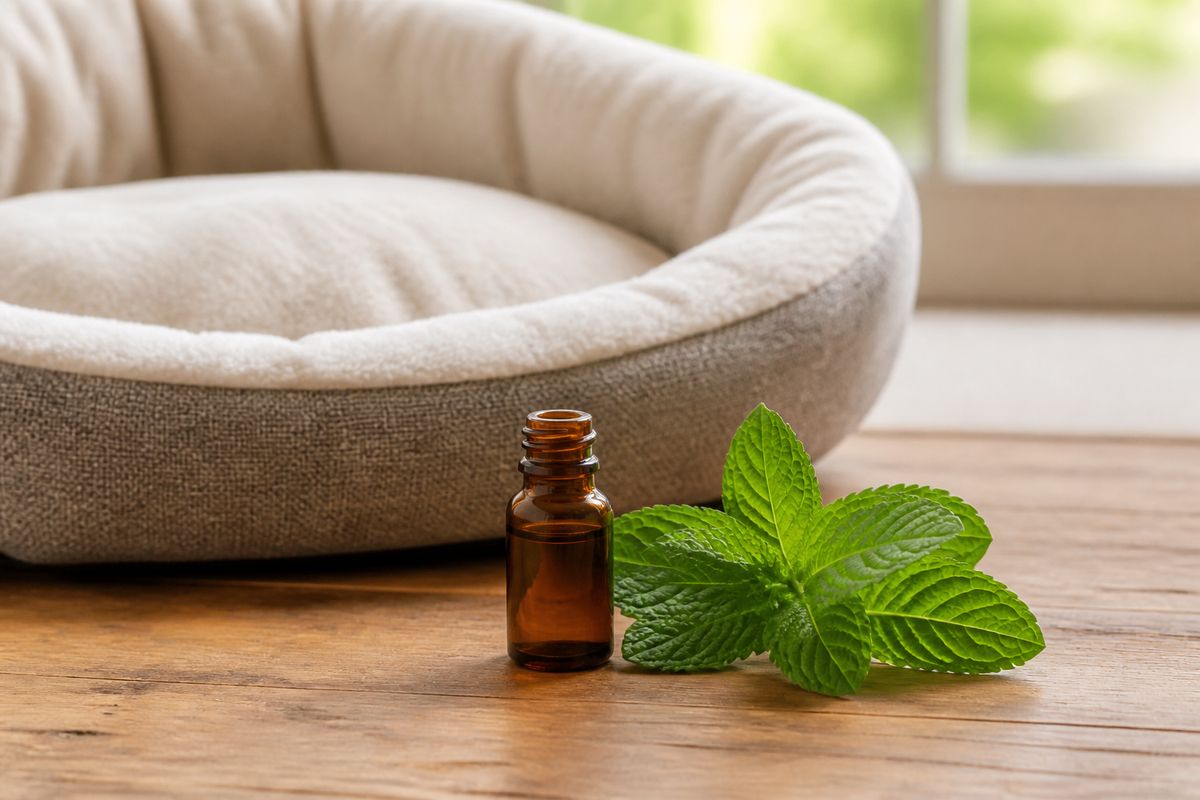
If you are reaching for peppermint oil for fleas, you want relief fast without turning your whole house into a chemical zone. The honest answer: peppermint oil can act as a mild, short-lived deterrent in specific spots, but it does not kill fleas reliably and it will not resolve an infestation on its own. Used correctly, alongside real cleaning and pet treatment, it can support a cleaner home.
For more help, see our Homemade Peppermint Pest Repellent Spray (DIY Recipe) guide.
What Peppermint Oil Can and Cannot Do
Peppermint oil's strong scent can make fleas less likely to linger in a treated spot for a short window, but that is the limit of what it reliably does. It is a deterrent, not a pesticide, and it should not be the centerpiece of a flea control plan. Fleas breed in carpet fibers, bedding, cracks, and on the animals themselves, so scent alone cannot stop an established infestation.
Does peppermint oil actually repel fleas?
The scent can make a treated area less inviting for a short window, but the effect is inconsistent and fades fast as the oil evaporates. Peppermint oil is not registered or tested as a flea pesticide, and there is no strong evidence that it kills fleas in normal home use at safe dilutions. Treat it as a short-term nudge, not a barrier fleas cannot cross.
Why fleas may avoid strong mint scents
Fleas track hosts using body heat, carbon dioxide, and skin odor, and a sharp peppermint smell can interfere with that search in the immediate area. The menthol in peppermint oil is what pests tend to dislike. In a closed space, that odor can make a treated spot temporarily less attractive, especially along entry points, pet bedding edges, and baseboards where fleas travel. Once the scent fades, the deterrent effect goes with it.
What peppermint oil cannot do on its own
Peppermint oil cannot break the flea life cycle. Fleas develop through egg, larva, pupa, and adult stages, and only adults are exposed to a surface spray at any given time. NC State Extension explains that flea pupae can remain dormant for weeks to months before emerging, which is why scent-only strategies fail. If you skip vacuuming, washing, and pet treatment, the population keeps rebuilding from eggs and pupae that a spray never reaches, including deep in carpet pile and hidden cracks.
Using Peppermint Oil Safely Around Pets and Home
Use peppermint oil with restraint. Essential oils are concentrated, and pets, children, and sensitive surfaces can react badly if the mixture is too strong. Keep the oil diluted, keep it off skin and fur, and use it only in places where a temporary scent barrier is the actual goal.
Safe dilution and carrier oils
For home use, mix peppermint essential oil with water and a small amount of dish soap so it disperses evenly instead of beading up. A basic spray starts with 10 to 15 drops of 100% pure peppermint essential oil per cup of water, plus a few drops of mild dish soap to emulsify it. If you want an oil-based mix instead, dilute peppermint oil into a carrier oil like fractionated coconut oil at a similar ratio, then apply it sparingly to non-porous surfaces only, never to pet skin or fur.
Where to apply it in your home
Target places where fleas enter, hide, or travel.
- Spray baseboards, door thresholds, and window sills.
- Treat cracks near pet crates, bedding corners, and under furniture.
- Apply lightly to entry mats, vacuum canister exteriors, and around utility openings.
- Use it on washable fabric surfaces, not on untreated wood or delicate upholstery without a spot test.
What areas to avoid on pets and surfaces
Do not apply peppermint oil near a pet's eyes, nose, mouth, genitals, or broken skin, and do not apply it to fur or skin at all. Skip cats entirely: peppermint oil is toxic to cats and exposure has been linked to vomiting, altered mental status, and liver injury, since cats lack the liver enzymes to break it down efficiently. Avoid porous finishes, raw wood, leather, silk, and painted surfaces that can stain or warp. Keep spray off food bowls, toys, litter boxes, and any place a pet licks directly.
Peppermint Flea Spray: A Practical DIY Approach
A peppermint flea spray works best as a light perimeter treatment, not a pet shampoo substitute and not a fogging agent. Use it on fabrics and entry points where fleas move through the home, and keep expectations modest: you are adding a mild scent barrier, not laying down a pesticide.
Simple spray recipe for fabrics and entry points
Use a clean 16-ounce spray bottle.
- Add 1 cup of water.
- Add 10 to 15 drops of pure peppermint essential oil.
- Add 1 teaspoon of unscented liquid castile soap or a few drops of mild dish soap to help it emulsify.
- Shake well before every use, since the oil and water will separate between applications.
Spray lightly along baseboards, crate edges, porch thresholds, and the outer edges of rugs. Avoid soaking fabric, since wet spots can leave marks and do not make the deterrent effect any stronger or longer-lasting.
How to test a small area first
Spot test before spraying any fabric or finish.
- Choose a hidden corner or underside of the item.
- Apply one light mist.
- Wait 24 hours.
- Check for discoloration, sticky residue, or a strong lingering scent.
If the test spot looks clean, use the spray in a wider area. If the fabric darkens or the finish turns cloudy, stop there and choose a different surface.
How often to reapply for continued deterrence
Reapply every 2 to 3 days in active areas, and immediately after rain, vacuuming, or washing removes the scent outdoors or on fabric. For entry points that get foot traffic, reapply after cleaning that spot. The smell fades as the oil evaporates within a day or two, so a steady reapplication routine matters far more than one heavy first coat. Do not assume a single application will hold for a week.
Peppermint Oil for Dogs: Important Precautions
Peppermint oil is not a casual flea treatment for dogs. A small amount in the wrong place can irritate skin, upset the stomach, or trigger a stronger reaction in smaller or older dogs. Use caution, and do not assume that what is fine on a baseboard is fine on a coat or collar.
When peppermint may be too strong for dogs
Skip peppermint oil around dogs with asthma, skin disease, open sores, or a history of sensitivity to scents. Do not use it on puppies, toy breeds, pregnant dogs, or dogs that lick themselves constantly. Concentrated oil on fur can spread as the dog grooms, which raises the risk of ingestion and irritation. Dogs in close quarters also breathe in the scent directly, which can bother them fast.
Signs of irritation or sensitivity
Watch for head shaking, sneezing, drooling, watery eyes, skin redness, pawing at the face, vomiting, or unsteady behavior after exposure. If a dog acts restless or avoids the area after you spray, the scent is too strong. Stop using the oil, move the dog to fresh air, and wash any treated fur or skin with mild soap and water if the product touched the coat.
Safer alternatives for flea control on pets
For pets, flea control should come from products made for animals, not essential oils. Use veterinarian-approved flea preventives, flea combing, and bathing with a pet-safe shampoo. For dogs, ask your vet about oral or topical flea treatments based on weight and health history. For cats, use only cat-specific flea products, because dog products and peppermint oil can both harm them. Essential oils are not a substitute for labeled pet medication.
How Peppermint Fits Into a Real Flea Control Plan
Peppermint works best as one small layer in a larger routine, not the routine itself. The goal is to reduce flea pressure in the house while removing eggs, larvae, and adult fleas from pets and fabric surfaces. If you pair light scent deterrence with physical cleaning, the results are far better than using oil alone, because the oil is doing almost none of the actual work.
Combining deterrents with vacuuming and washing
Start with a strict cleaning routine.
- Vacuum carpets, rugs, couch seams, and baseboards every day during an outbreak.
- Empty the vacuum canister or bag outside right away.
- Wash pet bedding, throw blankets, and cushion covers in hot water.
- Dry items on high heat for at least 30 minutes.
- Use peppermint spray on cleaned entry points and along room edges after surfaces dry.
This cuts down the flea load first, then uses scent as a minor deterrent to make the area less inviting between cleanings.
Why breaking the flea life cycle matters
Adult fleas on your pet are only part of the problem. Eggs fall into carpets and bedding, larvae hide in dark fibers, and pupae can sit protected for weeks or months until vibration or heat signals a host nearby. Extension entomologists describe fleas going through a full egg-larva-pupa-adult cycle, with pupae able to stay dormant far longer than the visible adult problem suggests, and no scent product reaches pupae hidden deep in carpet or cracks. If you only chase the adults you can see, the next wave appears from the same rooms. Breaking the cycle means treating pets, washing fabrics, and removing debris where immature fleas develop, not spraying harder.
When to escalate to proven flea treatments
Escalate when fleas keep showing up after 2 weeks of cleaning, or when you see flea dirt, bites, or live fleas every day. Use a vet-recommended flea treatment for pets and a home plan that targets the environment. Strong infestations need products that actually kill multiple life stages, not a strong smell. Peppermint belongs in a support role at most, never the lead role.
Ticks and Other Pests: What to Expect
Peppermint has a broad reputation as a general pest deterrent, and that reputation outruns the evidence, especially for ticks. Set expectations low here and use the oil only where a mild, temporary scent barrier is genuinely the goal.
Can peppermint oil repel ticks as well?
Not reliably. In contact and spatial repellency testing against the lone star tick, peer-reviewed research found peppermint oil ranked near the bottom of the essential oils tested, with weak contact repellency and no meaningful spatial repellent effect, well behind oils like clove, thyme, and geranium and far behind synthetic repellents. Ticks latch onto hosts through vegetation, clothing, and skin contact, so a surface spray inside the house does little against outdoor exposure anyway. If ticks are the real concern, use an EPA-registered tick repellent, yard management, and clothing checks after time outside.
Why pest claims should be treated cautiously
Many essential oil claims come from small lab studies under controlled conditions, not real home conditions, and results vary widely by species and concentration. A pet bed, damp carpet, or warm doorway changes how fast the scent fades and how pests respond to it. A product that smells strong to you can still fail to stop insects in a lived-in space. Use peppermint for limited, short-term deterrence, and do not treat its use as proof that a pest problem is handled.
Best uses for peppermint as a general deterrent
Peppermint makes the most sense at thresholds, cracks, storage areas, and fabric edges where a brief scent barrier is genuinely useful, such as freshening a room while you clean through a flea problem. Keep the application light, targeted, and outside direct pet contact. For ticks, ants, and larger pest issues, do not substitute peppermint for a labeled product; pair light scent use with physical cleanup and real treatment.
When Peppermint Oil Is Not Enough
Peppermint oil stops being useful the moment fleas are reproducing faster than you can remove them. At that point the problem is not scent, it is an active infestation, and no amount of reapplication will keep up. Look for clear signs and move to stronger control before the issue spreads to every room and every pet.
Signs of an active flea infestation
Live fleas in pet fur, flea dirt on bedding, bites around ankles, and constant scratching point to an active infestation. You may also see fleas jumping onto light-colored socks after walking across carpet. If pets are restless at night, or if you keep finding black specks that turn reddish when wet, fleas are breeding in the home already.
How to tell when professional help is needed
Call a pest professional when fleas return after repeated vacuuming, washing, and pet treatment. Get help if the infestation reaches multiple rooms, if you have carpeting wall to wall, or if household members are getting bitten daily. If you have cats, kittens, puppies, or anyone with respiratory issues, professional guidance reduces the risk of misusing essential oils or over-relying on them.
What to do if fleas keep coming back
If fleas keep coming back, treat the pet and the home at the same time. Keep vacuuming, wash fabrics on a schedule, and replace or deep-clean pet bedding. Check for untreated animals, wildlife under decks, or gaps that let fleas re-enter. If your current flea medication is failing, ask a vet about resistance, timing, and product choice instead of adding more peppermint spray.
Frequently Asked Questions
Does peppermint oil get rid of fleas?
No. Peppermint oil may act as a mild, short-lived deterrent in some situations, but it does not reliably eliminate an infestation. Treat it as a short-term scent barrier, not a flea killer.
Do fleas hate peppermint?
Some fleas may avoid a strong, fresh peppermint scent for a short time, but results vary by environment and the effect fades quickly as the oil evaporates.
Will peppermint oil keep fleas away?
It may reduce flea presence in a small treated area for a day or two, but it is not dependable enough to guarantee lasting prevention, and it needs frequent reapplication to do even that much.
Is peppermint oil safe for dogs?
Not automatically. Peppermint essential oil is concentrated and can irritate skin, eyes, and airways or cause illness if ingested, so keep it off fur and skin and consult a veterinarian before using it around a dog.
Can peppermint oil kill fleas?
There is no strong evidence that dilute peppermint oil kills fleas in normal home use. It is better understood as a weak, temporary repellent than a cure, and it should never replace a real flea treatment plan.