How Do Praying Mantises Contribute to the Ecosystem?
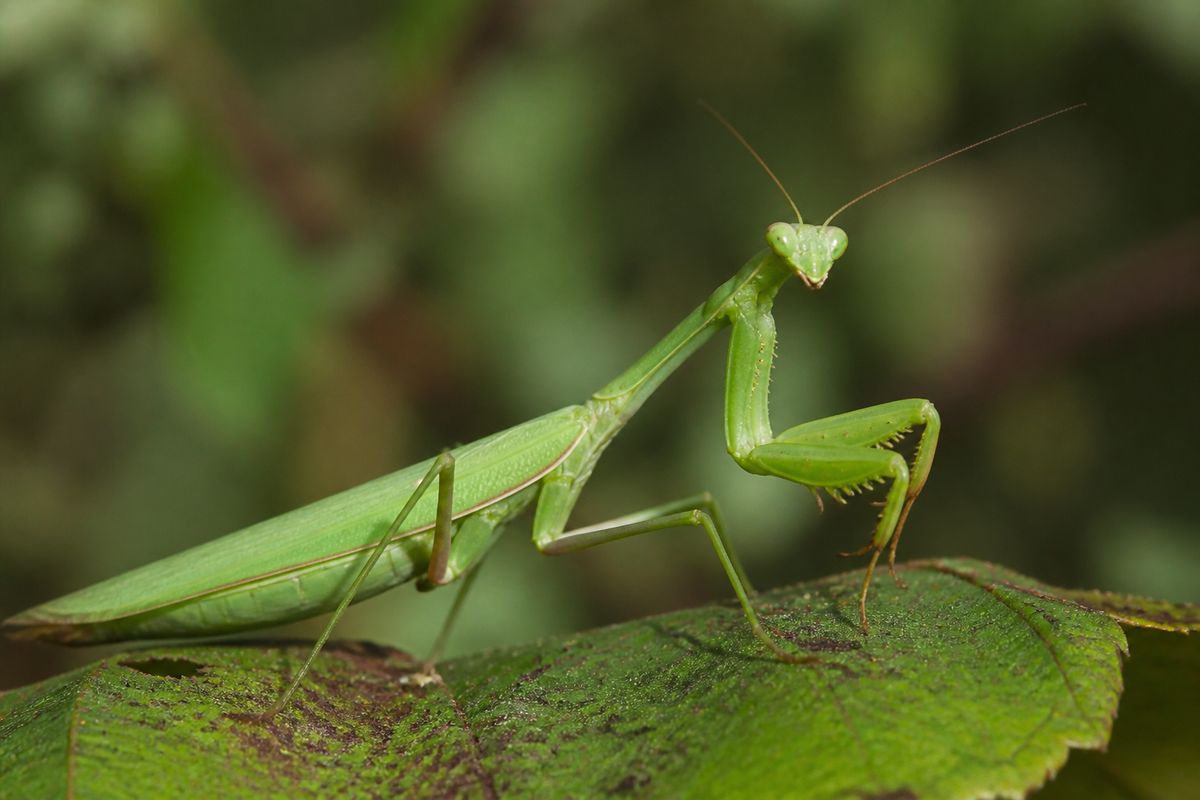
How do praying mantises contribute to the ecosystem? Mostly by eating things, and by being eaten. The order Mantodea includes roughly 2,500 species worldwide, ranging from inch-long species to the African species Ischnomantis gigas, the longest mantis on record at about 17 centimeters (roughly 6.75 inches). Every one of them is an ambush predator, and that single fact ripples through gardens, farm fields, and food webs in several distinct ways.
What Mantises Actually Are
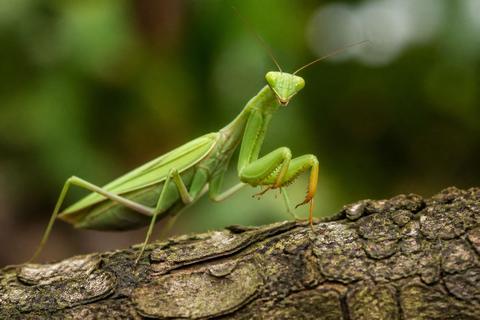
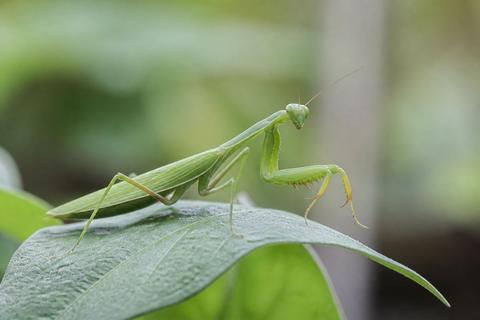
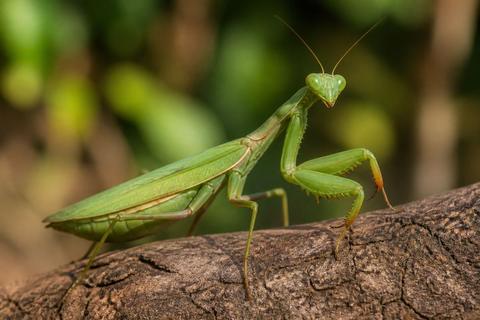
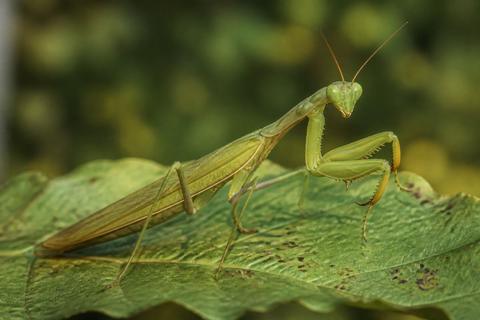
Mantises are built around one adaptation: a pair of raptorial front legs lined with spines, used to snatch prey and pin it in place. Their triangular head swivels up to 180 degrees, and large compound eyes give them sharp depth perception for judging strike distance. Most species sit motionless on foliage, colored to match bark, leaves, or flowers, and wait for something to walk or fly within reach. A strike takes a fraction of a second.
They're generalist carnivores. Common prey includes flies, moths, crickets, aphids, and other soft-bodied insects, but larger species will also take small frogs, lizards, and even hummingbirds at backyard feeders. Nothing about their diet is selective for pests specifically.
Pest Control, With a Catch
Because mantises eat garden and crop insects, some gardeners release them as a form of biological control instead of spraying. The problem is that mantises don't distinguish between a cabbage looper and a honeybee. As the University of Florida's entomology program notes, mantises are generalist predators that won't discriminate between pests and beneficial insects like bees. A mantis camped out near a flowering plant is just as likely to grab a pollinator as an aphid.
That doesn't make them useless for pest management, but it does mean they work best as one predator among many (lady beetles, lacewings, parasitic wasps) rather than a standalone fix. Gardeners who skip broad-spectrum insecticides give all of these predators, mantises included, a better shot at keeping pest numbers down on their own.
Prey Today, Predator Tomorrow
Mantises aren't apex anything. Birds, frogs, bats, and larger spiders all eat them regularly, and juvenile mantises are cannibalized by their own siblings shortly after hatching. That two-way position, hunting insects while getting hunted by vertebrates, is what actually ties them into a food web rather than just a pest-control checklist. Remove mantises from a habitat and you remove a meal source for the birds and bats that rely on them, not just a predator of aphids.
Egg Cases and Population Swings
A female mantis lays a single egg case, or ootheca, that holds 200 to 300 eggs inside a hardened, foam-like case, usually fixed to a twig, stem, or fence line. The ootheca overwinters outdoors and the nymphs hatch the following spring, emerging as miniature versions of the adults with no larval stage in between. Because a single case produces hundreds of nymphs and most don't survive to adulthood, mantis numbers in a given yard can swing sharply year to year based on how many egg cases made it through winter.
A Rough Gauge of Habitat Quality
Mantises need dense, undisturbed vegetation to ambush prey and avoid becoming prey themselves, so a yard or field that's been recently cleared, mowed short, or heavily sprayed tends to lose them fast. Their presence isn't a certified biological metric the way certain aquatic insects are used to grade stream water quality, but a steady mantis population is a reasonable sign that a patch of ground has structural cover and isn't being doused in broad-spectrum insecticide.
Getting Mantises Into a Yard
A few concrete steps make a yard more attractive to mantises without buying anything:
- Plant a mix of natives: different heights and bloom times draw the range of small insects mantises hunt.
- Cut out broad-spectrum pesticides: these kill mantis prey and mantises themselves, along with the other predators that would otherwise help.
- Leave some cover: tall grass, shrubs, or brush piles give nymphs and adults places to hide from birds.
- Add a shallow water dish: a dish with pebbles or stones gives them a way to drink without the drowning risk of open water.
Egg cases are also sold by garden suppliers for gardeners who don't want to wait for mantises to find the yard on their own. Once a case hatches, dozens of pinhead-sized nymphs disperse within a day or two to hunt on their own.
The Bigger Picture
Praying mantises aren't a pest-control silver bullet and they aren't picky about what they eat, bees included. What they do reliably provide is a mid-tier link between small insects and the birds, bats, and spiders that eat mantises in turn, plus a rough signal of how much cover and chemical exposure a piece of land actually has. Skipping the pesticide and leaving some brush does more for them, and for the predators around them, than any single planted flower bed.