What Do Zebra Longwing Butterflies Eat? Pollen for Protein
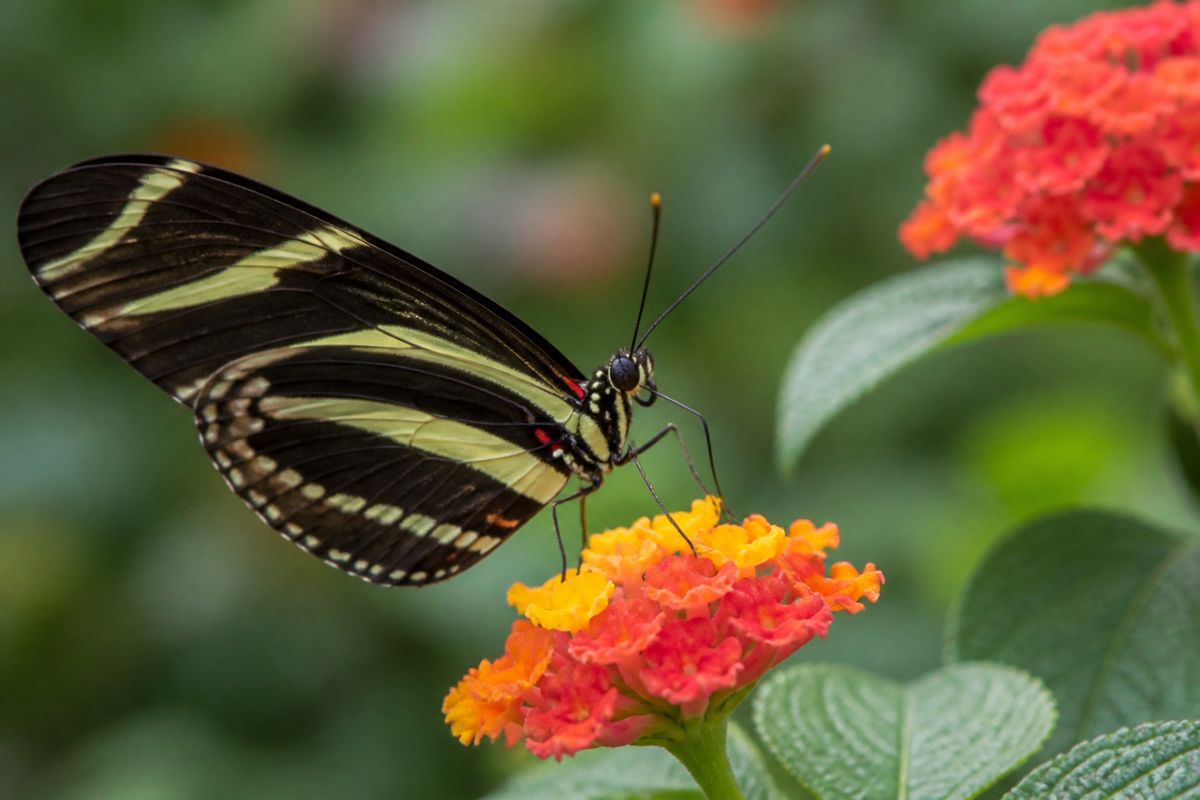
What do Zebra Longwing butterflies eat? Heliconius charithonia is one of the only butterflies that eats pollen as an adult, not just nectar. That habit, combined with a caterpillar diet of toxic passionflower leaves, is why this black-and-yellow striped species can live for months instead of weeks and can be found gliding through Florida gardens well into old age by butterfly standards.
Native Range and Wing Pattern
Zebra Longwings range from South and Central America north through Texas and peninsular Florida, with occasional strays into other southern states in warm months. Florida named it the official state butterfly in 1996. The wings are black with narrow white and yellow stripes on top and a paler, red-spotted version of the same pattern underneath, spanning 72 to 100 mm.
Adult Diet: Nectar Plus Pollen
Nectar Sources
Adults use a long, coiled proboscis to drink nectar from tubular flowers. Favored nectar plants include:
- Lantana (Lantana camara): dense flower clusters that draw repeat visits.
- Shepherd's needle (Bidens alba): a common Florida roadside bloomer.
- Verbena (Verbena spp.): long bloom windows that keep nectar available across seasons.
- Passionflower (Passiflora spp.): doubles as both a nectar stop for adults and the required host plant for caterpillars.
Why Pollen Matters
Unlike most butterflies, which can only sip liquids, Zebra Longwings scrape pollen onto their proboscis, mix it with saliva, and absorb the resulting amino-acid-rich fluid. Pollen is rich in protein where nectar is almost entirely sugar, and that protein is what lets a Zebra Longwing keep producing eggs and stay active for several months rather than the two to four weeks typical of most adult butterflies. Preferred pollen sources include Psiguria and Lantana flowers with exposed, easily reachable anthers.
Caterpillar Diet: Passionflower Only
Zebra Longwing caterpillars are specialists: they eat only Passiflora leaves and nothing else. Common host plants are purple passionflower (Passiflora incarnata), corkystem passionflower (Passiflora suberosa), and yellow passionflower (Passiflora lutea), along with several related vines. Passionflower leaves are loaded with cyanogenic compounds meant to kill leaf-eating insects, but Heliconius caterpillars have evolved the enzymes to process them without harm, then carry the toxins forward into the adult stage, which is part of why predators leave the striped adults alone.
Feeding Behavior
Trap-Lining
Rather than wandering at random, Zebra Longwings memorize a fixed route, called a trap line, between the same flowers and pollen sources day after day, often for the rest of their adult lives. This lets them return to reliable pollen plants instead of gambling on new ones.
Roosting
Adults often form small communal roosts at night, clustering together on the same twigs or vine tangles, which is thought to reduce the odds any one individual is picked off by a nocturnal predator.
Puddling for Minerals
Like many butterflies, Zebra Longwings will land on damp soil, sand, or mud and draw up moisture to obtain sodium and other minerals that flowers do not supply. This is usually seen on warm, still days near the same passionflower patches the caterpillars feed on.
Ecological Role
Every stop for nectar or pollen moves pollen grains between flowers, so Zebra Longwings function as pollinators for the same passionflower vines their caterpillars depend on, along with lantana, verbena, and other nectar plants in their range. Their long adult lifespan means a single butterfly can make many more flower visits over its life than shorter-lived butterfly species.
Attracting Them With the Right Plants
A garden that supports Zebra Longwings needs both layers of their diet: a passionflower vine for caterpillars and nectar- or pollen-rich flowers such as lantana or shepherd's needle for adults. Vines left unpruned through the growing season give caterpillars a continuous food supply, and a mix of bloom times keeps nectar and pollen available across the months a single adult may be alive to use them.