How Do Blue Morpho Butterflies Contribute to the Ecosystem?
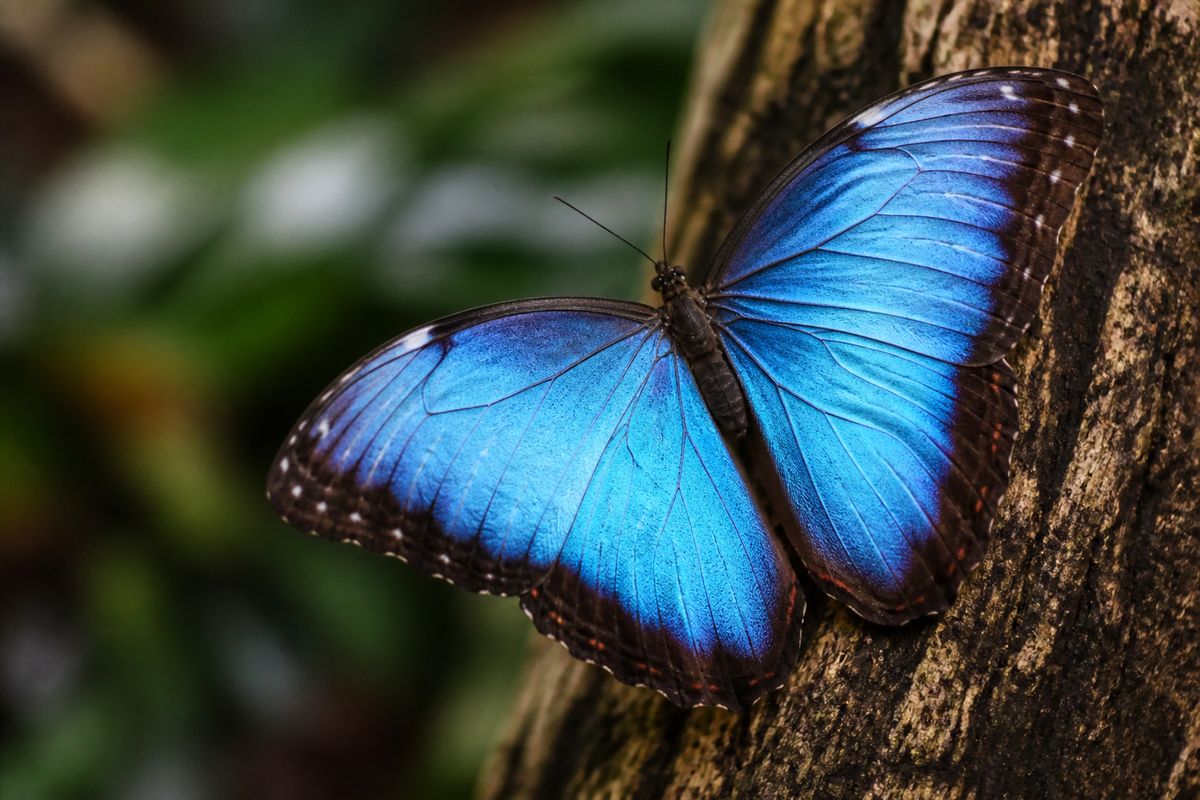
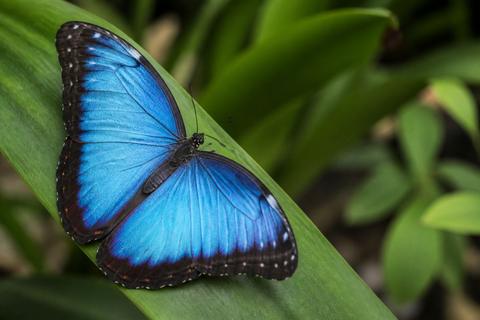
How do Blue Morpho butterflies contribute to the ecosystem? Mostly through what they eat and what eats them, not through pollination the way most people assume. Morpho peleides lives in the lowland tropical forests of Central and South America, with adult wingspans ranging from about 5 to 8 inches (127-203 mm) across, males averaging around 8.5 cm. That size and the flash of iridescent blue in flight make the species easy to track through a forest, which is part of why researchers use it so often in field surveys.
Not a Pollinator, a Fruit Feeder
Adult Blue Morphos do not visit flowers for nectar. Their diet is built around decaying fruit rather than blooms, and the proboscis is shaped more like a short brush than the thin tube nectar-feeders use. They land on fallen mangoes, figs, and other rotting fruit on the forest floor, puncture the skin, and sip the fermenting juice. When fruit is scarce they switch to tree sap, fungi, or the fluids of decomposing animals.
A Cleanup Role, Not a Pollination One
Because they process fallen fruit rather than flowers, Blue Morphos work more like small-scale decomposers than pollinators. Feeding on rotting fruit speeds up how quickly it breaks down and returns nutrients to the soil, and the sugars they extract fuel a flight-heavy adult life that lasts only a few weeks.
Caterpillars and the Legume Connection
The ecological story changes in the larval stage. Blue Morpho caterpillars feed on plants in the legume family, Fabaceae, including Erythrina glauca, Erythrina micropteryx, and several Machaerium and Dalbergia species. Females lay eggs directly on these host plants, and the reddish-brown, hair-covered caterpillars feed mostly at night to avoid predators that hunt by day. Drawing on several legume genera rather than one keeps the species going even where a single host plant is locally scarce.
Camouflage, Eyespots, and Predators
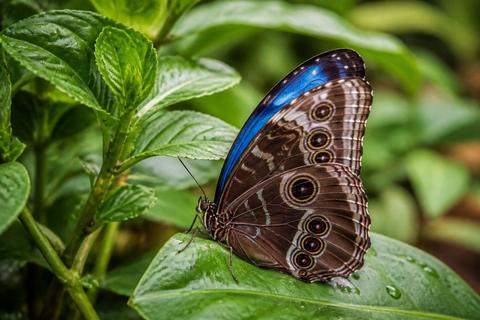
Closed wings show a dull brown underside patterned with large eyespots and gray, black, and reddish markings that blend into leaf litter, giving the butterfly cover while it feeds on the ground where it is most exposed. In flight, the wings flash iridescent blue, then vanish as they close, a flicker that can throw off a pursuing predator. Birds are among the main predators of adult Blue Morphos. The underwing eyespots are thought to startle or misdirect an attack toward the wing margin instead of the body.
What Their Numbers Signal About a Forest
Blue Morphos need intact, humid forest with both host legumes for larvae and a steady supply of fallen fruit for adults, so their populations track forest condition closely. A site that loses canopy cover to logging or conversion to pasture tends to lose its Morphos before many other species show visible decline, which is why field researchers include them in rapid biodiversity surveys.
Butterfly Farming and Local Economies
In several parts of Central and South America, Blue Morphos are raised commercially for butterfly houses, live exhibits, and the specimen trade. Farming them for live release or display gives forest edges a direct economic value tied to keeping the habitat standing rather than clearing it, which is the argument conservation groups make for supporting regulated farming over unregulated wild collection.
Pressure From Habitat Loss
Deforestation for cattle pasture and agriculture is the main threat across the species' range. Because larvae depend on specific legume hosts and adults need year-round fruit fall, fragmented forest can break that cycle even where some tree cover remains. Isolated patches also cut the gene flow between populations that keeps the species resilient to disease and local die-offs.
Living With a Shifting Climate
Changes in rainfall timing affect when host plants flower, fruit, and push out new leaf growth, which in turn affects when females lay eggs and when fruit is available to adults. A Blue Morpho's life cycle from egg to adult typically spans one to two months, so a population can respond quickly to one bad season. What researchers watch more closely is a run of years where host-plant timing and butterfly emergence keep missing each other.