What Do Blue Morpho Butterflies Eat? Rotting Fruit, Not Nectar
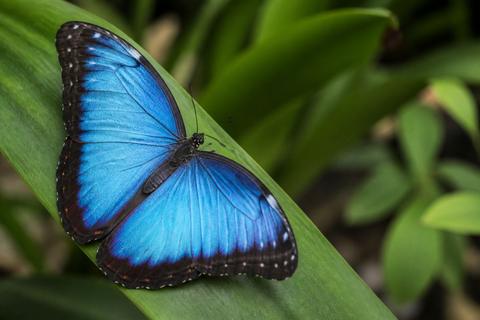
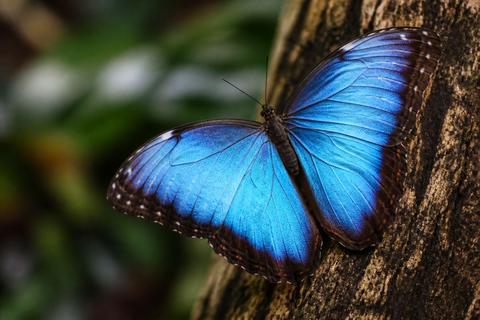
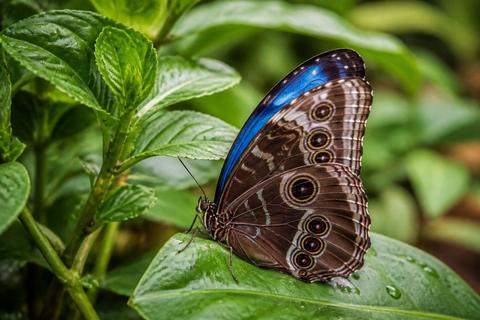
What do Blue Morpho butterflies eat? The short answer surprises most people: adult Morpho peleides rarely visit flowers at all. Instead they feed on rotting fruit, tree sap, and fungi, using a proboscis tipped with brush-like scales that works better as a sponge for pulpy juice than as a straw for thin nectar. Wingspan runs 5 to 8 inches (127-203 mm), among the largest of any Central and South American butterfly, and that size demands a diet dense enough in sugar to fuel long glide-heavy flights through the forest understory.
Two Completely Different Diets: Caterpillar vs. Adult
Blue Morphos pass through four life stages: egg, larva, pupa, and adult. What they eat changes completely between the larval and adult stages, since caterpillars chew solid leaf tissue while adults can only drink liquids through a coiled proboscis.
What the Caterpillars Eat
Larvae are leaf-feeding specialists on legumes (family Fabaceae). Recorded host plants include Machaerium seemannii, Machaerium salvadorensis, Mucuna urens, Erythrina species, Dalbergia, Lonchocarpus, Platymiscium, and Pterocarpus species, along with the vine Paragonia pyramidata. These legumes fix nitrogen in their roots, which translates into nitrogen-rich foliage the growing larvae need to build muscle and cuticle through five instars.
Larvae feed mostly at dawn and dusk. Younger instars start earlier in the evening and finish later in the morning than older caterpillars, likely to avoid daytime predators that hunt by sight. A caterpillar molts through its instars over several weeks before forming a pale green chrysalis that hangs from a leaf or twig, blending in against the foliage around it.
What Adult Butterflies Eat
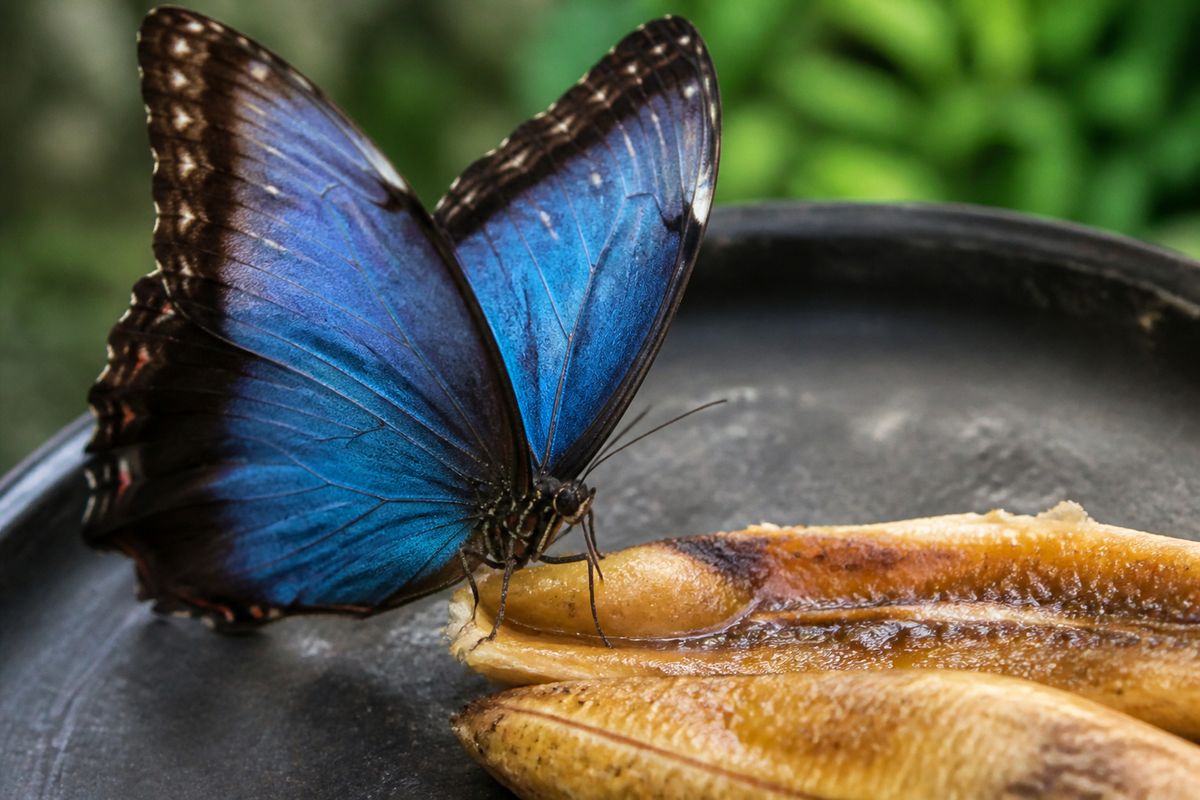
Adult Blue Morphos are frugivores, not nectar-feeders. Their proboscis works as a drinking straw for the juice of rotting fruit, the fluids of decomposing animals, tree sap, fungi, and wet mud. When fruit is scarce, they turn to sap oozing from wounds on Samanea trees. Fallen, fermenting fruit under a fruiting tree, mangoes and figs in particular, will often draw several morphos at once, sometimes still sluggish enough from the fermentation to fly erratically.
Puddling: Drinking Mud for Sodium
Wet mud and damp sand supply something fruit cannot: sodium. Butterflies use their proboscis to slurp mineral-laden moisture from puddle edges, riverbanks, and even damp patches of soil, a behavior known as puddling. In many Nymphalidae, puddling is done almost entirely by males, and researchers have proposed that the sodium supports both flight muscle function and, via the spermatophore passed during mating, the female's reproductive output. Puddling sites frequently draw multiple butterflies at once, which has the side effect of concentrating rival males in one spot and triggering chases and territorial disputes.
Why Diet Shapes Where You'll Find Them
Because adults depend on rotting fruit and sap rather than flowers, Blue Morphos cluster near fruiting trees and forest edges rather than open meadows. Supply shifts with the fruiting calendar: during heavy fruit drop, butterflies concentrate under productive trees; in leaner stretches they range further and rely more on sap flows and mud. This is also why butterfly houses and conservatories bait morpho enclosures with slices of banana or orange rather than nectar feeders, and why field researchers use fruit-baited traps rather than sweep nets to survey wild populations.
Diet, Pollination, and Why It Matters
Because adults skip flowers, Blue Morphos contribute little to pollination compared with bees or nectar-feeding butterflies. Their ecological role runs the other direction: by feeding on rotting fruit and fungi, they help cycle nutrients from decaying plant matter back into the forest floor, and their caterpillars' selective feeding on a narrow band of legume species ties the species tightly to intact tropical forest rather than disturbed or agricultural land. That dependence on specific host plants and fruiting trees is exactly why habitat loss hits Blue Morpho populations harder than more generalist species, and why conservation plans for them focus on protecting forest fragments with both larval host legumes and fruit-bearing canopy trees rather than planting flower gardens.