Do Praying Mantises Eat Hummingbirds?
If you are wondering whether praying mantises eat hummingbirds, the short answer is yes, a mantis can catch and eat a hummingbird, but it is rare. The insect is far more likely to prey on bees, flies, moths, butterflies, and other small insects than on a bird. Still, the idea is real enough that gardeners, bird lovers, and anyone who has seen a mantis at a feeder should know what is happening and what to do about it.
Can a Praying Mantis Eat a Hummingbird?
Yes, a praying mantis can eat a hummingbird if the bird comes close enough for the mantis to seize it. This is not a normal food source, and it is not a sign that mantises are bird hunters by design. It is a size and opportunity issue, with the mantis using lightning-fast front legs to grab prey that lands within reach.
Hummingbirds are fast and agile, so a healthy adult is not easy prey. The risk rises when a mantis waits on a feeder, flower stalk, or trellis where a bird hovers in one spot to feed. That is why this question matters to backyard bird feeders, especially in late summer when both insects and hummingbirds are active.
What makes the attack possible?
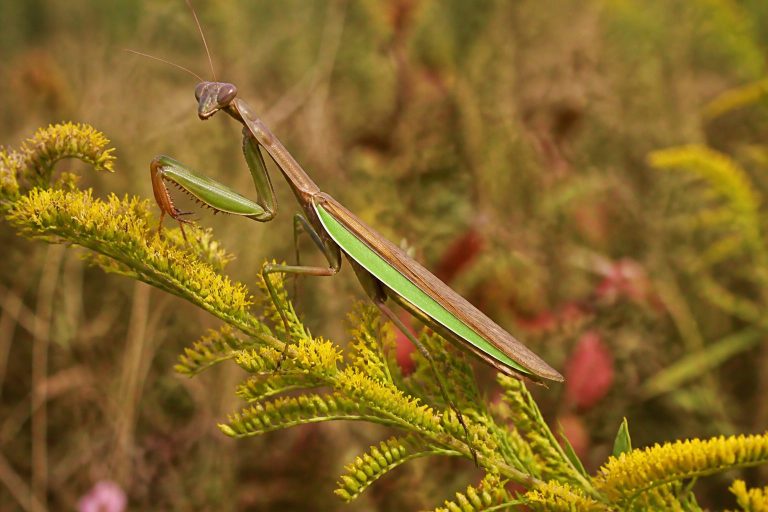
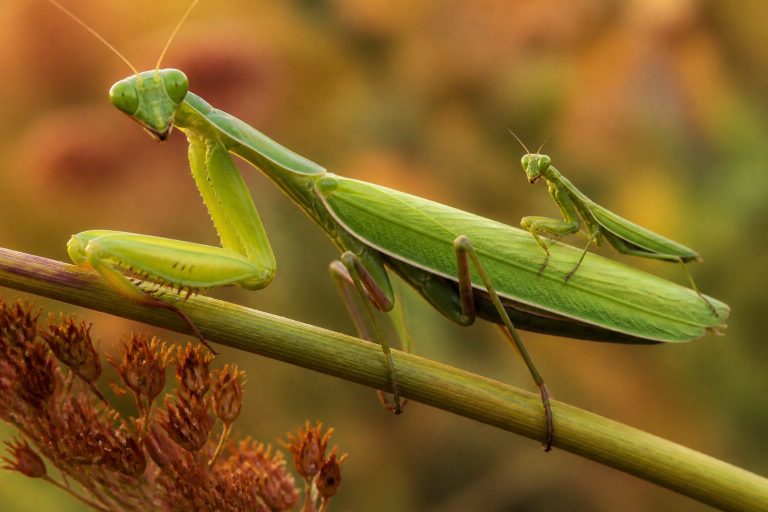
Praying mantises are ambush predators. They stay still, blend in with plants, and strike with spined forelegs that clamp down on whatever gets close. A small hummingbird hovering at a feeder can be within striking distance, and the mantis can hold on long enough to injure or kill it. The mantis does not need to be stronger than the bird, only close enough and fast enough at the first grab.
Are praying mantises dangerous to hummingbirds?
Yes, a large mantis near a feeder is dangerous to a hummingbird. The danger comes from surprise and leverage, not from venom or stingers. The mantis uses its mouthparts to feed after it has immobilized prey. This threat is real enough that bird owners should not place mantis egg cases near hummingbird feeders or leave tall perches directly beside them.
Why People See Praying Mantis Eating Hummingbird Videos
Videos of a praying mantis eating a hummingbird get attention because the behavior is dramatic and unusual. They are not fake just because they look shocking. A mantis eating hummingbird video usually shows the mantis already latched onto the bird at a feeder, then holding on while the bird struggles.
These videos also spread because hummingbirds are popular and familiar, while mantises are viewed as helpful garden insects. That creates a surprise factor. The footage is rare, but the event is believable, and it happens most often where a feeder concentrates birds and a mantis can wait in ambush.
Why the feeder matters
A feeder creates a predictable landing and hovering zone. That gives the mantis a fixed target. In nature, a hummingbird moves constantly among flowers, but a feeder can keep it in one place for several seconds. Those seconds are enough for a mantis strike if the insect is already positioned on the feeder housing, hook, or nearby support.
What Praying Mantises Usually Eat
Praying mantises are generalist predators, and insects make up nearly all of their diet. They eat flies, moths, crickets, grasshoppers, beetles, caterpillars, aphids, and many other small arthropods. Larger mantises also take bees, wasps, and butterflies, which is one reason gardeners see them as both beneficial and risky.
They hunt by sight and motion. A mantis turns its head and tracks movement with large compound eyes, then grabs prey with its front legs. After the catch, it bites with strong mouthparts and feeds on the body. They do not chew plants, sip nectar as a main diet, or search for birds as regular prey.
How their hunting style works
The mantis is built for ambush. Its body can resemble a leaf, stem, or dry twig, and it stays motionless until prey comes close. This patient style makes it efficient in gardens, where pollinators and pest insects pass by flowers and foliage. The same hunting system that helps control caterpillars and flies also creates the rare bird incident.
How to Keep Hummingbirds Safe Around Mantises
If you want hummingbirds at your feeder, move mantis habitat away from feeding spots. The simplest fix is to inspect feeder poles, hooks, and nearby shrubs for mantises and egg cases, especially in spring when young mantises emerge. Remove egg cases from the immediate feeder area and place feeders where there is open space below and around them.
- Hang feeders at least 10 feet from dense shrubs, tall grasses, and trellises.
- Check feeder poles and hooks every few days for a mantis sitting in wait.
- Remove mantis egg cases from the feeder zone before they hatch.
- Keep one or two small branches or perches nearby for birds, but not directly beside the feeder.
- Use more than one feeder location so birds are not forced into a single ambush point.
This approach protects hummingbirds without treating mantises like a pest in the whole yard. In a garden bed, they are still useful predators. The key is separating bird-feeding stations from the mantis’s hunting posts.
Praying Mantis Behavior, Senses, and Role in the Garden
Praying mantises have triangular heads, long prothoraxes, and folded front legs that look prayerful. Their big eyes give them strong motion detection, and their head can rotate to follow movement. They rely on stealth, patience, and sudden speed rather than chasing prey.
In the garden, they help control many soft-bodied and flying insects. That can be useful around flowers, vegetables, and ornamental plants. They are also part of the food web, serving as prey for birds, spiders, and larger predators. Their presence is not a guarantee of pest control, but it does show that the garden supports active insect life.
Do mantises help pollinators or hurt them?
They do both. Mantises can reduce some pest insects, but they also catch beneficials, including bees and butterflies. That is normal predator behavior, not cruelty or selectivity. If your main goal is pollinator support, focus on planting nectar and host plants in clumps and keeping feeders and blooms in balanced, layered spaces where birds and insects can move safely.
Frequently Asked Questions
Do praying mantises eat hummingbirds?
Yes, a praying mantis can eat a hummingbird, but this is rare. It happens when a large mantis grabs a hummingbird at close range, usually near a feeder.
Is a praying mantis dangerous to hummingbirds?
Yes. A mantis positioned at a feeder can injure or kill a hummingbird by ambush. The danger is highest when the mantis is already waiting on the feeder or nearby support.
What is a praying mantis eating hummingbird video showing?
It shows a real predator prey event, usually at a feeder or flower station. The mantis is not hunting birds as a main behavior, it is exploiting a chance to seize a small animal within reach.
Should I remove praying mantises from my garden?
No, not from the whole garden. Keep them away from hummingbird feeders if bird safety is your priority, but mantises can still be useful predators in other parts of the yard.