Can You Attract Native Praying Mantises to a Garden?
If you want to learn how to attract praying mantis to garden spaces, start with the simplest truth, they come for places that support lots of small insects, not for a special bait or food. A mantis-rich yard has layered plants, a steady supply of prey, and very little disturbance. That means your goal is not to lure a mantis directly, but to build a garden where one can hunt, hide, and lay eggs.
What Attracts Praying Mantises
Praying mantises are drawn to abundance and cover. They hunt by sight, so they favor gardens with flowers, shrubs, grasses, and weedy edges that hold flies, moths, beetles, and other soft-bodied insects. They also need places to perch and ambush, plus calm areas where egg cases can survive the winter.
What attracts praying mantis to my yard is simple, a diverse insect population and a garden that is not overly tidy. If your yard has nectar plants, native perennials, ground cover, and brushy corners, it gives mantises both food and shelter.
Plants That Attract Praying Mantises
There are no plants that attract praying mantis the way flowers attract bees with nectar. Instead, plants attract the prey mantises eat and provide the structure mantises use for hunting. The best plants to attract praying mantis are the ones that create layered habitat and support many small insects.
Good plant choices
- Native goldenrod
- Asters
- Yarrow
- Bee balm
- Milkweed
- Dill, fennel, and parsley left to flower
- Ornamental grasses
- Dense shrubs and hedges
These plants do not feed mantises directly. They boost the insects mantises hunt and create stems and leaves where mantises can sit motionless. A mix of flowers and structure works better than a neat bed of one species.
How to Attract Praying Mantis to a Garden Step by Step
If you want a direct plan for how to attract praying mantis to garden beds, focus on habitat first and pest control second. Mantises stay where the hunting stays good.
- Plant a mix of native flowers, herbs, and shrubs that bloom from spring through fall.
- Leave a few sunny, sheltered areas with tall stems, grasses, or low brush.
- Stop broad spraying, including insecticidal soap on everything, since it also removes prey insects.
- Keep a water source nearby, such as a shallow dish with stones or a birdbath with low access.
- Delay heavy fall cleanup so egg cases on stems can remain intact through winter.
- Use mulch and ground cover in sections, but keep some vertical plants and stems standing.
This approach works because mantises need both cover and a food web. A bare yard with no small insects cannot support them, even if you purchase egg cases.
How Praying Mantises Live in the Yard
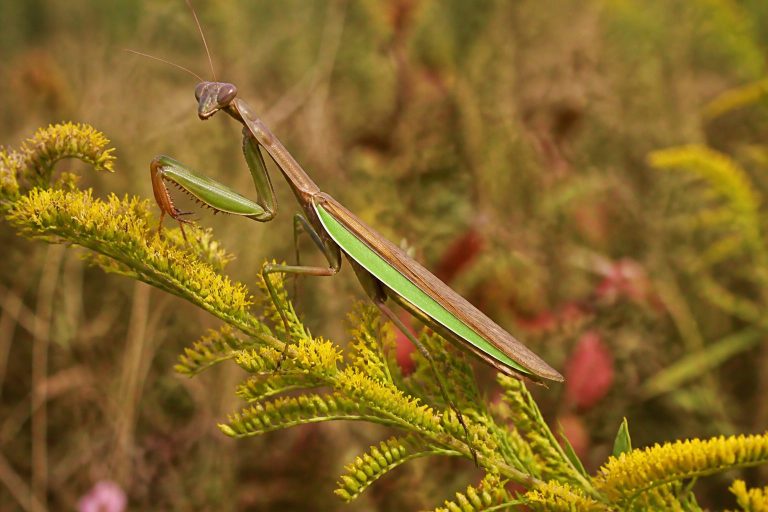
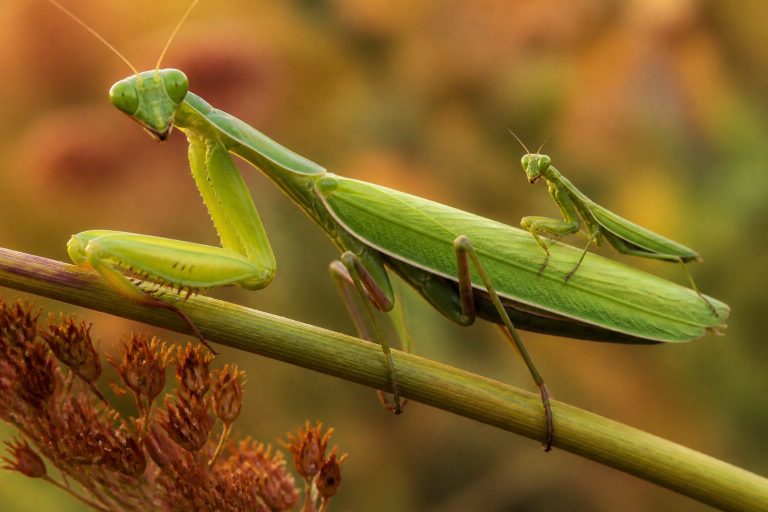
Praying mantises are ambush predators. They hold their front legs folded, stay still, and wait for prey to come within striking range. Their triangular heads and large eyes help them scan movement, and they can rotate their heads far more than most insects.
In a garden, mantises sit on flower stalks, shrubs, weeds, fence lines, and trellises. Nymphs and adults both hunt insects, but larger mantises also grab bees, butterflies, and other beneficials. That is why they fit best in balanced gardens, not in spaces where you want total pest removal. Their role is to reduce insect numbers, not to eliminate every pest.
How to Attract Praying Mantis to My Yard Without Hurting Beneficial Insects
If your main goal is how to attract praying mantis to my yard, keep in mind that mantises are generalist predators. They do not choose only bad pests. A yard that supports mantises also supports ladybugs, lacewings, hoverflies, parasitic wasps, and pollinators, so the balance matters.
Use targeted natural controls instead of broad disruption. Remove aphid-infested stems by hand, spray a hard stream of water on soft-bodied pests, and use row cover on vegetables that need protection. This preserves the insect community that mantises feed on while still reducing problem outbreaks.
Native Praying Mantises, Life Cycle, and Behavior
In the United States, the best-known garden mantises are not native. Native species do exist, and they live a similar hunting lifestyle, but their numbers depend on local habitat. All mantises begin as egg cases, called oothecae, which hold many eggs in a foamy capsule attached to stems, twigs, or garden debris.
Young mantises, called nymphs, hatch in warm weather and look like tiny wingless adults. They grow by molting several times before adulthood. Their camouflage is strong, their movement is slow and deliberate, and their front legs are built for grasping. Gardeners notice them most in late summer and fall, when adults are large and active.
Common Mistakes That Keep Mantises Away
The fastest way to keep mantises out is to make the garden too clean or too harsh. Removing every dead stem in autumn, using broad-spectrum sprays, and mowing every edge short leaves no place for egg cases or prey insects. A bare landscape gives mantises no reason to stay.
Another mistake is overusing pest controls that kill the whole food chain. Diatomaceous earth, neem, and oils belong in specific problem spots, not across every bed. If you want mantises, use them only where needed, and leave enough untreated habitat for hunting and egg laying.
Frequently Asked Questions
What plants attract praying mantis?
No plant attracts them directly. The best answer is plants that build insect-rich habitat, especially native flowers, herbs that bloom, ornamental grasses, and shrubs. Goldenrod, asters, yarrow, bee balm, milkweed, dill, fennel, and parsley left to flower all help by supporting prey and giving mantises places to perch.
How do I attract praying mantis to garden beds fast?
The quickest approach is to stop broad spraying, add flowering plants, and leave some stems and edge cover in place. If your yard already has a strong insect population, mantises can move in on their own. Buying egg cases is not necessary if your habitat is already good.
Can I attract praying mantises and still protect my vegetables?
Yes. Use row cover on vulnerable crops, hand-remove pests, and keep flowering borders nearby for prey and cover. Mantises help reduce insect pressure, but they do not replace direct protection for seedlings and tender vegetables.
Do praying mantises help gardens?
They do. Mantises eat many garden insects and add to the natural predator mix. They are one part of a healthy garden food web, not a complete pest solution.